Read More










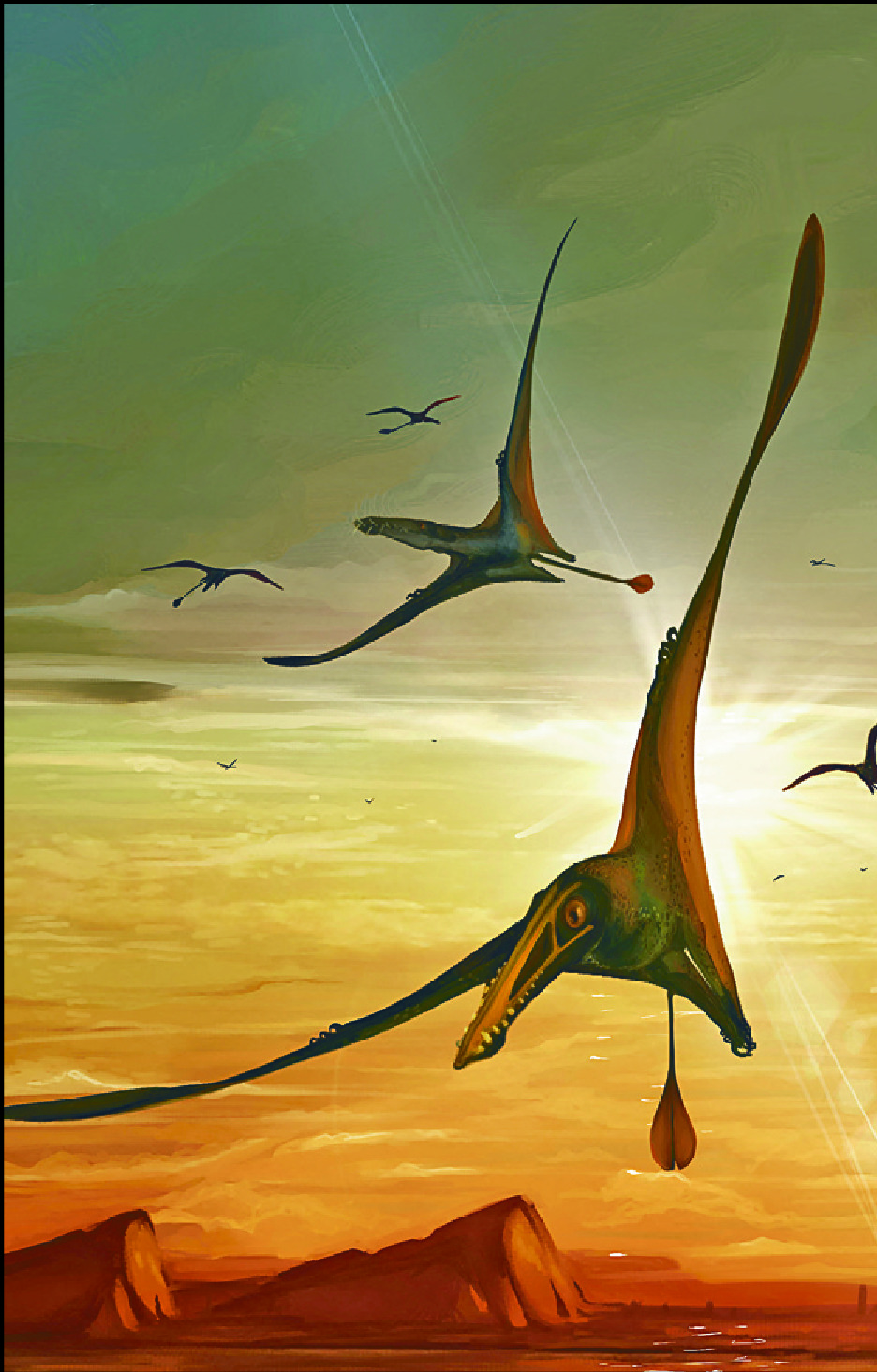
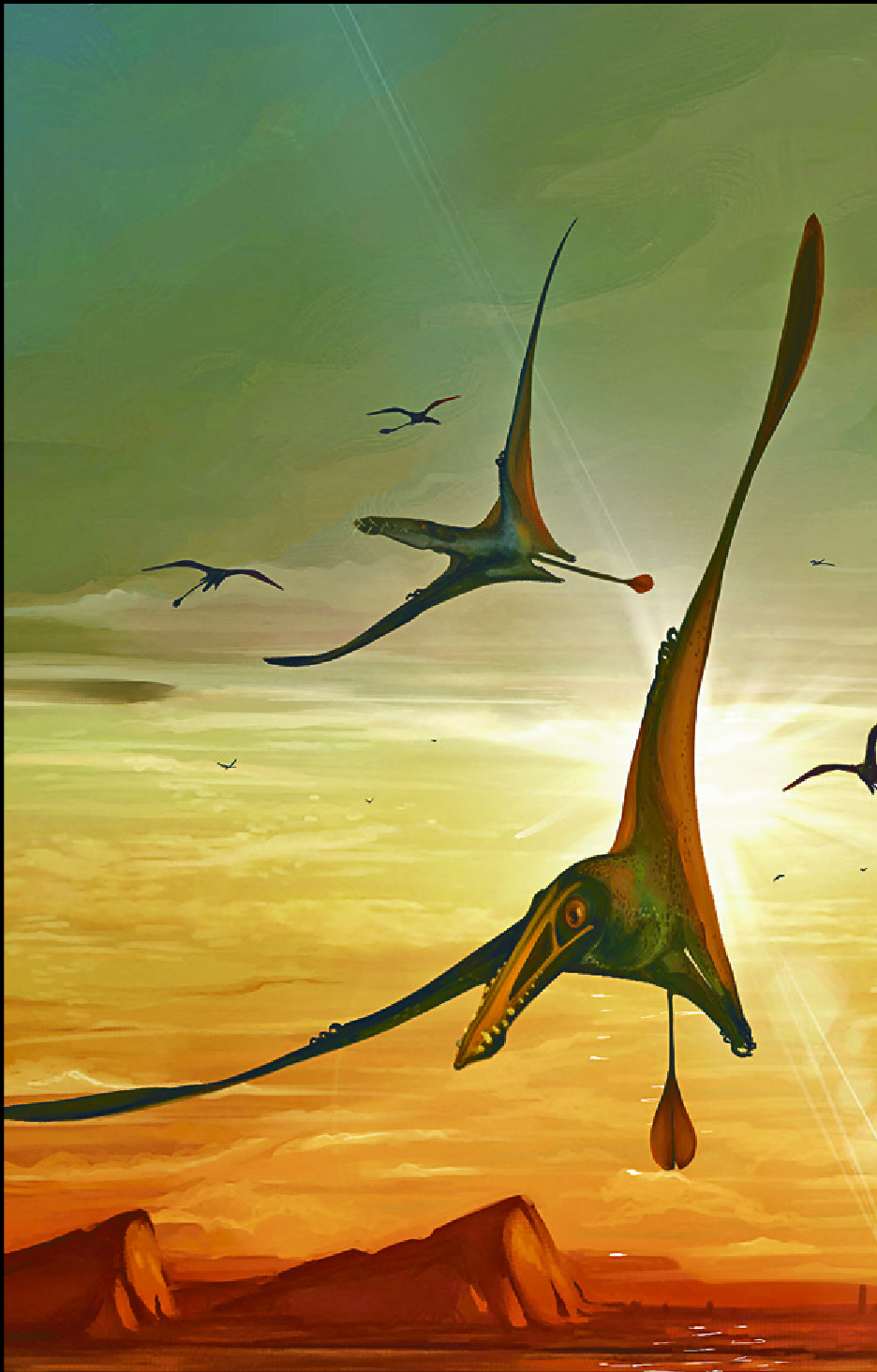
A fossil jawbone peeking out from a limestone seashore on Scotland's Isle of Skye led scientists to discover the skeleton of a pterosaur that showed these remarkable flying reptiles lived tens of millions of years earlier than previously known.
Researchers said yesterday this pterosaur, named Dearc sgiathanach, lived roughly 170 million years ago during the Jurassic Period, soaring over lagoons in a subtropical landscape and catching fish and squid with crisscrossing teeth perfect for snaring slippery prey.
Its scientific name means "winged reptile" in Gaelic.
With a wingspan of about 2.5 meters, Dearc was the Jurassic's largest-known pterosaur and the biggest flying creature that had inhabited Earth to that point in time. Some pterosaurs during the subsequent Cretaceous Period achieved much greater dimensions - as big as fighter jets.
A forensic analysis of its bones indicated this Dearc individual was not fully grown and could have had a three-meter wingspan as an adult.
Dearc weighed very little - probably below 10 kilos - thanks to its hollow, lightweight bones and slender structure, said University of Edinburgh paleontology doctoral student Natalia Jagielska, lead author of the research published in the journal Current Biology. Over millions of years pterosaurs developed wingspans of 11 meters.