Read More









Iran demands transit fees in yuan, stablecoins for Strait of Hormuz passage
03-04-2026 02:45 HKT
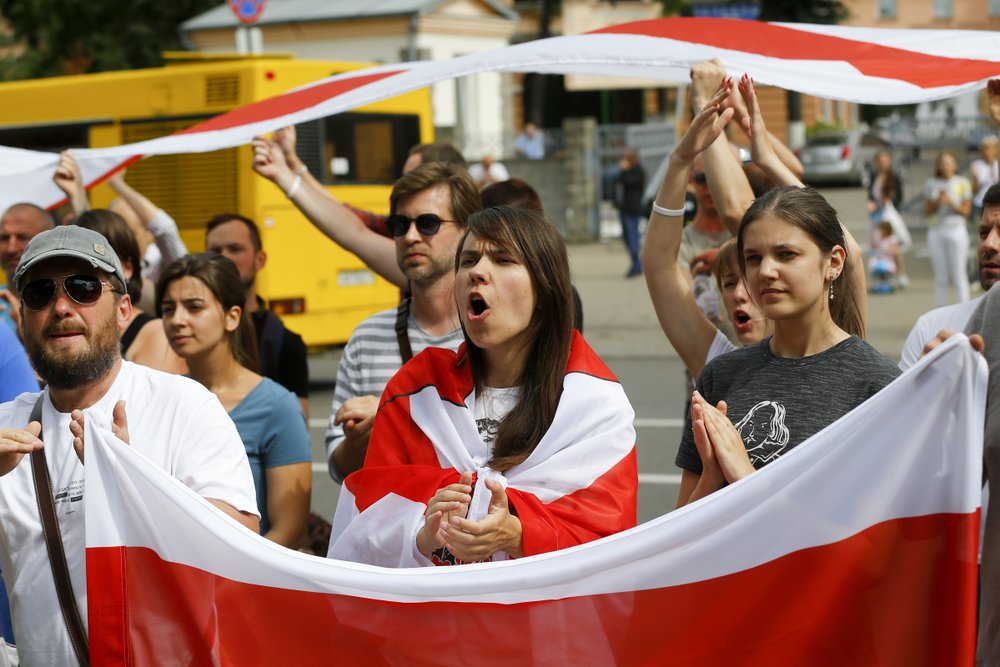
More factory workers in Belarus joined a growing strike on Tuesday, turning up pressure on the country’s authoritarian leader to step down after winning an election they say was rigged.
Workers at more state-controlled companies and factories took part in the strike that began the day before and has encompassed several truck and tractor factories, a huge potash factory that accounts for a fifth of the world’s potash fertilizer output and is the nation’s top cash earner, state television and the country’s most prominent theater.
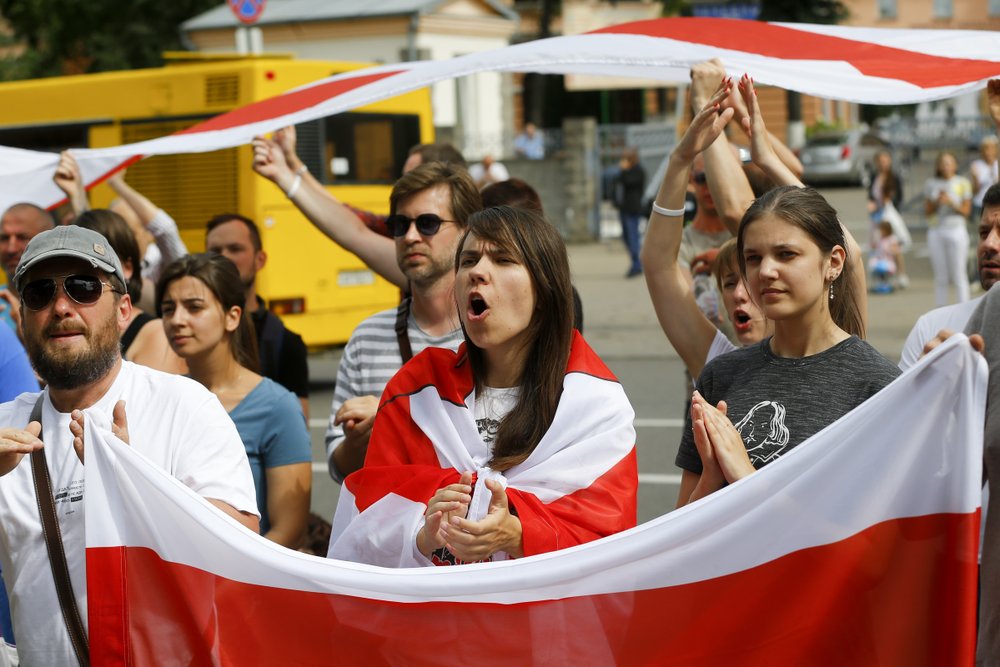
The widening strikes come on the 10th straight day of unprecedented mass protests against election results that handed President Alexander Lukashenko his sixth term with 80 percent of the vote.
“The authorities should understand that they are losing control. Only Lukashenko’s resignation and punishment of those in charge of rigging and beatings (of protesters) can calm us down,” head of an independent miners’ union Yuri Zakharov told The Associated Press on Tuesday.
“The people said their ‘no’ to Lukashenko, and we will not back down. The strike will continue and grow until he steps down.”
Lukashenko on Monday dismissed the strikes as insignificant and said he will not cave in to pressure, but appeared nervous as dissent grew. On Tuesday, reports emerged of factory managers pressuring workers to end the strike by threatening them with dismissal.
Also Tuesday, the Belarusian ambassador to Slovakia, Igor Leshchenya, handed in his resignation after coming out with a statement in support of the protests.
In a video released on Saturday, Leshchenya expressed “solidarity with those who came out on the streets of Belarusian cities with peaceful marches so that their voice could be heard.” The first top government official to support the protests against Lukashenko, Leshchenya said in an interview Tuesday that resigning after that was “a logical move.”
The mass protests that drew hundreds of thousands of people have continued despite a brutal response from the police, who in the first four days of demonstrations detained almost 7,000 people and injured hundreds with rubber bullets, stun grenades and clubs. At least two protesters died.
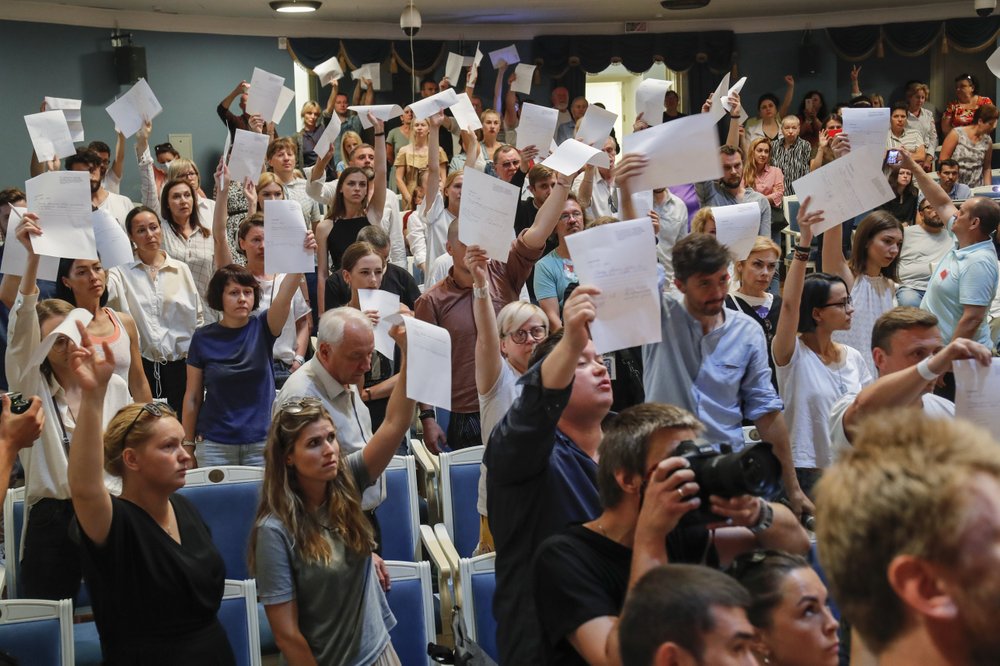
On Tuesday, nearly 1,000 people gathered in front of the Janka Kupala National Theater in Minsk to support the performers there, who that gave notice en masse after the theater’s director, Pavel Latushko, was fired after siding with the protesters.
Culture Minister Yuri Bondar visited the theater in an attempt to assuage concerns. The actors demanded that he reinstate Latushko, a former diplomat and once the culture minister himself, but Bondar refused and left after being heckled and jeered by the performers, who threw a stack of resignation letters at his feet.
“It’s important to speak out, important not to stay silent,” prominent actor Kristina Drobysh told supporters outside the theater. “We’ve overcome our fear, our society has overcome its fear. Belarusians have changed — which means Belarus will change, too.”
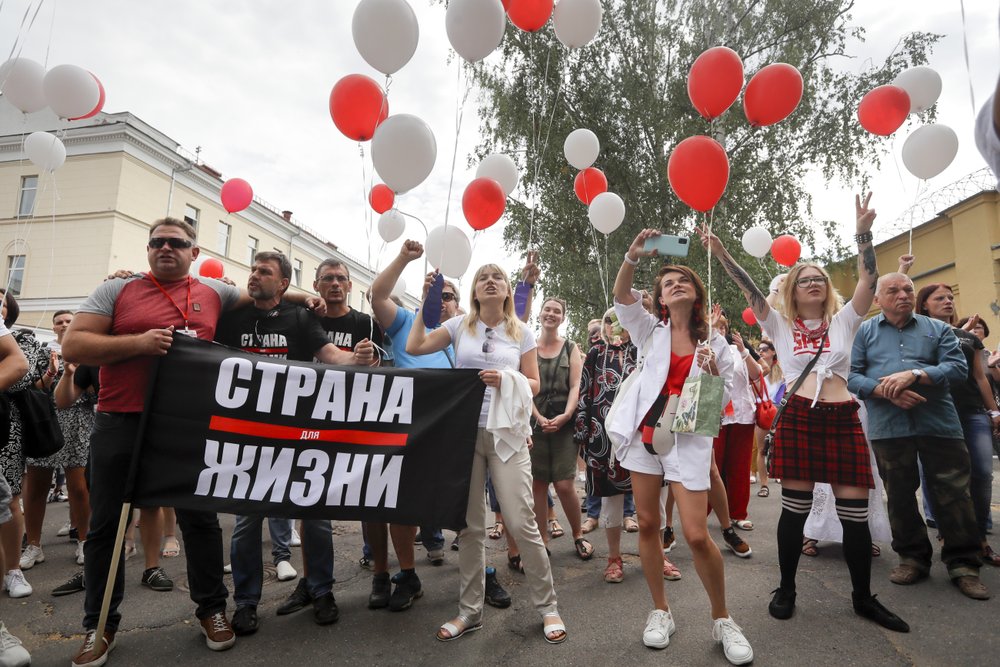
Several dozen people also gathered in front of a detention center in Minsk where Tsikhanouskaya’s husband Sergei, a popular opposition blogger who planned to run for president himself, is being held. Tsikhanouskaya entered the race after he was jailed. The crowd cheered to mark his 42nd birthday.
Last week, Tsikhanouskaya left the country for Lithuania in a move her campaign said was made under duress. On Monday she announced she was ready to act as a national leader to facilitate a new election. Her top ally, Maria Kolesnikova, said Tuesday a “coordination council” is being formed to represent the people and negotiate the transition of power.
Lukashenko, who has run the ex-Soviet nation of 9.5 million with an iron fist since 1994, bristled at the idea of talks with the opposition.
Kolesnikova argued that the embattled president “should hear his society, hear the people — the majority calls him a former (president).”
“Our goal is to unite society, all of Belarus, so that the Belarusian society has a legitimate institution to negotiate and make demands,” Kolesnikova told the AP on Tuesday.
The council, which will convene for the first time on Tuesday evening, will figure out the best way for transition of power, “be it new elections or some other option,” Kolesnikova said.-AP