AXA Hong Kong and Macau chief executive Sally Wan Yuen-wai says the insurer plans to launch packaged products to small and medium enterprises and the riot coverage will be added depending on individual needs.
Wan believes that corporate insurance premiums will rise and more terms and conditions would be added to policies. Some companies in areas such as Mong Kok, where protesters have caused heavy damage, may have difficulty in renewing policies, she says.
AXA has the largest market share in terms of premium in general insurance in Hong Kong in 2018.
"Although premiums will rise, we have been receiving more claims on property and motors in the past few months," says Wan, explaining it may not be fair to say AXA benefits from the chaos.
Wan says it is difficult to make a general comment about the situation as the terms of insurance policies vary.
It is believed that the insurance that many companies especially SMEs have bought do not cover riot damage, but only events such as fires and natural disasters, including typhoons.
Wan wants to launch more SME insurance products.
Most SMEs currently buy insurance via brokers but she hopes to have a higher market penetration by leveraging digital technology.
"We can offer packaged insurance products that can include employee benefit liability to cater to SMEs of various sectors. For instance, for a restaurant with 10 people, we can offer package A, for a restaurant with 50 people, we can offer package C,'' she suggests.
"Using a digital platform will be faster and cheaper, the underwriting process can be as fast as 10 days."
As agents can use iPads to explain policies to clients, she believes putting SME insurance products on a digital platform should not be technically complicated.
"Even banks may not have that many relationship managers to take care of SME clients, therefore, a digital platform can help a lot," Wan says.
Besides, she says the travel insurance business has also been growing well. This is mainly because most people only bought insurance for a single trip, but now they buy annual cover.
The fact that AXA compensated customers affected by flight check-in suspensions during the Hong Kong International Airport chaos also helped, she says.
As for life and health insurance, Wan says the segment has been boosted by business from the tax-deductible Voluntary Health Insurance Scheme and the Qualifying Deferred Annuity Policy, which have offset some of the losses from mainland Chinese clients.
Flexi Plan, which offers more extensive protection than the Standard Plan, constituted 90 percent of AXA's VHIS sales as of November 30, 2019.
Despite the increasing number of people signing up for the VHIS that can form a bigger pool, she says it is unlikely to reduce premiums due to medical inflation.
"It is more realistic to think that the premiums will increase at a slower pace and more services would be added instead," Wan says.
While some insurance agents are said to sign policies with their mainland clients in Macau amid the Hong Kong social unrest, she believes it would not become a trend and AXA does not do so.
Wan explains that most mainlanders usually visit the two SARs in the same trip. Also, policies issued in Macau have to comply with rules and regulations there, whose market is not as mature as that of Hong Kong.
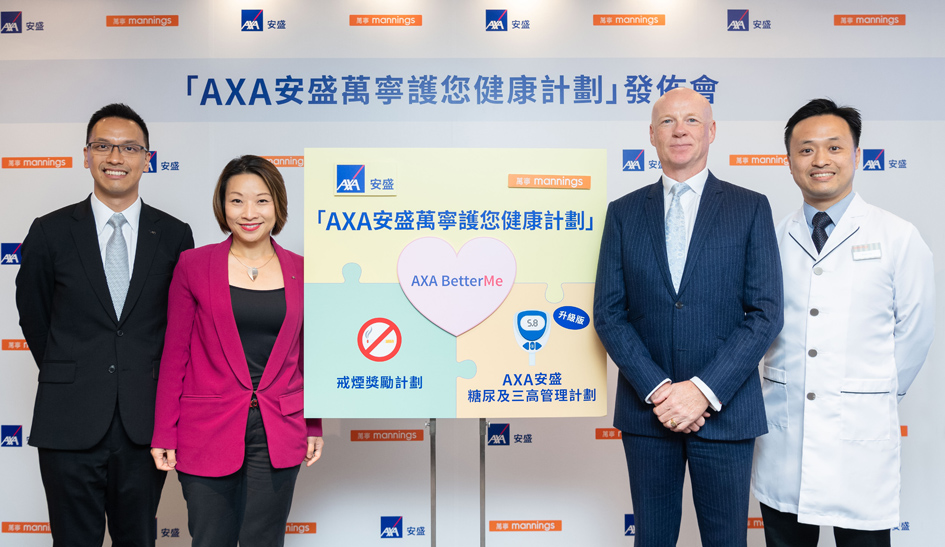
AXA has partnered with Mannings to offer a free quarterly consultation service to customers under designated policy by registered pharmacists at some stores of the health and beauty chain.
If a customer needs long-term medication, the pharmacist will also provide drug consultation. Some customers can also be referred to a dietitian for a free consultation.
Wan hopes in the future when customers go to buy their medicines at the store, they can also file personal accident claims. They can even buy a wider variety of products such as vaccines under the partnership, Wan adds.
AXA currently has a network that covers more than 500 doctors from six private hospitals in Hong Kong and Shenzhen.
Wan says AXA is now expanding the network in the Greater Bay Area and mainland China for customers' increasing cross-border movements.
The French insurer has acquired the remaining 50 percent stake of its joint venture AXA Tianping with 4.6 billion yuan (HK$5.25 billion), making it the biggest foreign-funded property and casualty insurer in China.
AXA China executive chairman and chief executive Xavier Veyry once said the company will diversify its business after the acquisition.
AXA Hong Kong has about 5,600 agents and it aims to increase to 6,600 in one to two years.
She says agents cannot be replaced by technology, as they can sell complicated life and health insurance products.
"Digital technology can help customers better follow their cases, but it cannot offer the human touch."
Wan adds the AXA Academy will launch more programs to train and retain staff.