Though long celebrated as the Hollywood of the East, Hong Kong’s film industry faces a pivotal moment.
Blockbusters including The Last Dance, Twilight of the Warriors: Walled In and The Way We Talk might captivate audiences, but have not stopped cinemas from shutting down.
At least seven cinemas were reported to have closed in 2024 despite box office successes in some films.
The impact of shrinking audiences has more than halved the number of cinemas from a peak of 112 in 1994 to 55 as of late last year.
Twilight of the Warriors: Walled In was remarkable, inspiring exhibitions at shopping malls, airport and government-led initiatives to capitalize on the film’s storytelling of the historic walled enclave in Kowloon City.
Yet, the closure of cinemas across the city signals a deeper challenge: how to achieve a sustainable film ecosystem?
To thrive again, Hong Kong film producers may have to leverage narratives rarely tapped before. In other words, embrace diversity and inclusiveness.
It was evident in recent successful movies a growing number of viewers looking for more than just action thrillers.
The Hong Kong International Film Festival showcases a mix of global productions, from new and experimental independent films to works by renowned film directors who influence their films so much that they also rank as the author.
In short, the event is a rendezvous for filmmakers and cinema lovers.
However, the festival’s duration is limited, leaving a gap requiring year-round programs to fill. Perhaps it is because of this that cinema chains like Emperor Cinemas and others partner with consulates and cultural organizations to host specific festivals including the French May Cinema Programme and themed events like LGBTQ+ film screenings.
What do these initiatives mean?
There exists an appetite for diverse subjects. What is lacking is consistent programming to regularly engage the audience to eventually bring viewers back to cinemas.
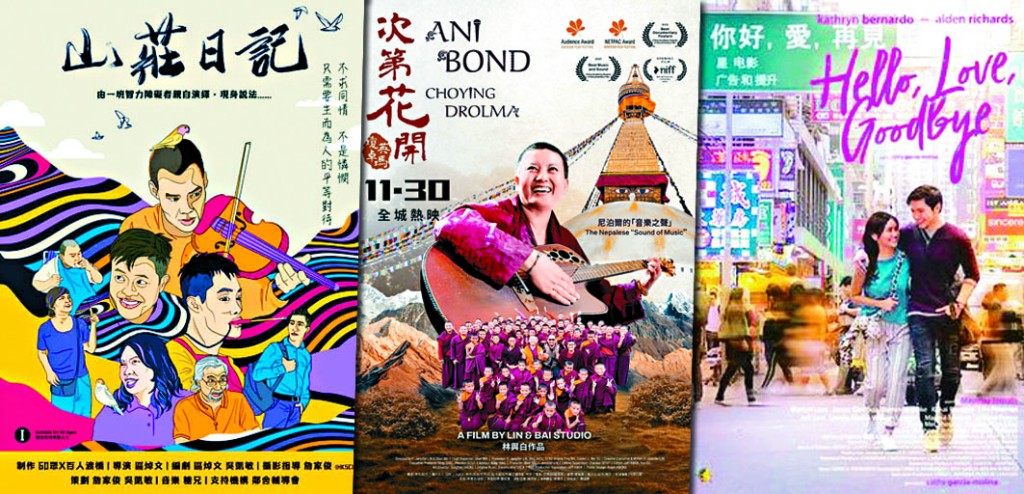
Some films on disadvantaged communities resonate with niche and mainstream audiences. For example, before The Way We Talk about the deaf gained traction, The Manor, a movie on disability, was screened full-house with a goal of 300 screenings to raise funds for charity. Similarly, Jesus: A Deaf Missions Film, which was entirely in sign language, drew not only the deaf community but also general audiences touched by the story.
The narratives of these films go beyond the niche. They build bridges between communities.
Independent films and documentaries are another major area that a diverse film-industry may embrace.
Award winning documentary Ani Bond: Choying Drolma was about a Nepali nun raising fund for girls’ education through concerts held globally. Managed by a team including professionals from Hong Kong, the film serves as an example of what the city may offer.
The movie was produced by a scholar from the City University of Hong Kong.
Institutions including the Hong Kong Baptist University Academy of Film and Hong Kong Academy for Performing Arts are positioned to nurture a new generation of filmmakers when independent voices are considered crucial to Hong Kong remaining a creative incubator.
There are also other examples.
Filipino films Hello, Love, Goodbye (2019) and Hello, Love, Again (2024), are about Filipino migrant workers, and the former was shot in the Hong Kong. Not only were they seen full-house in Hong Kong, they are the highest-grossing Filipino films ever, which were brought to different markets from Asia to North America and the Middle East.
Beyond the mainstream blockbusters, Hong Kong filmmakers still have a lot of opportunities to redefine the landscape by tapping in diverse types of productions.