Read More











HK unlikely to be hit as Typhoon Champi gathers strength
15-10-2026 17:54 HKT

Elon Musk unveils Tesla's 'flying' car
12 hours ago
Ahead of the Easter break, I had written that when the market chases after cryptocurrencies such as bitcoin, it also helps to put a lid on inflation.
This is because cryptocurrencies are not widely used to pay for goods and services at present, so when the prices of such digital assets rise, a massive amount of cash becomes locked by them and consumption will not be stimulated. Thus, the pressure it puts on inflation is limited.
Though digital assets such as bitcoin are on the rise, it will be a long time before they become widely used in consumer or investment markets.
Investors may naturally begin to question whether now is still the right time to invest in cryptocurrencies.
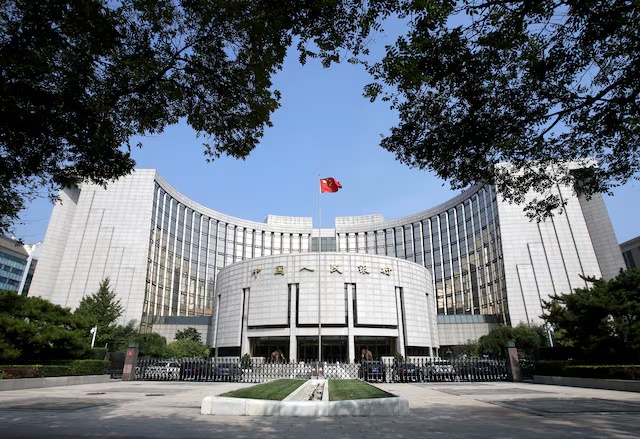
Of course, many investors are still willing to hold bitcoins and other digital assets as a hedge against the depreciation of mainstream currencies, given the fact that central banks around the world are still printing money and that none of them are considering stopping this, except the People's Bank of China.
However, if you analyze bitcoin's trend over the past month, you will find that though it rose past US$60,000 over the weekend, the currency had lost its momentum since mid-March when it first broke through the US$60,000 mark.
Meanwhile, a lot of commodities continue to be popular with the CRB Industrial Metals Equity Index hitting a new high in February with a monthly cumulative increase of more than 2 percent.
And the CRB Index, which comprises a basket of 19 commodities, is now challenging a high point of 210 hit in May 2018.
If the index breaches this mark, it will officially herald the arrival of a bull market in commodities.
If Bitcoin and other cryptocurrencies - which don't have much functional use - are used as a hedge against fiat currencies, they can accumulate gains of more than 100 percent this year, while the CRB Index is up only around 11 percent this year, and is more than 50 percent below its all-time high in July 2008.
Nevertheless, commodities have their real uses and with the massive spending on infrastructure being pushed by governments to stimulate their economies, why can't the CRB break past 210 for a gain of more than 50 percent?
Now, of course, we have to consider whether the global economy will see a real recovery, because if the economic outlook is still unclear, then the surge in commodity prices may only be a "dead cat bounce."
But if everyone believes there is little space for the CRB Index to rise due to the current economic uncertainty, then they must believe one more hypothesis: that central banks will not intensify quantitative easing again before the economy loses its power.
If that hypothesis is true, then the market's fear of central banks printing money will fade and the important rationale behind the rise of cryptocurrencies will disappear.
So if you don't believe that commodity prices will continue to rise, then nor should you be addicted to cryptocurrencies.
However, the possibility of central banks turning a blind eye towards the economic downturn is not great, so it is very likely that the CRB Index will break through the 210 mark in the short term.
As for cryptocurrencies such as bitcoins, their uptrend may be temporarily halted.
But since central banks will not stop printing money in the short term, cryptocurrencies may not face heavy selling pressure in the short run.
However, if the CRB Index does rise sharply, inflation will inevitably worsen and that will affect the policies of central banks, which will in turn affect the flow of money into financial markets.
We shall discuss this next week.
Andrew Wong is chairman and CEO of Anli Securities