Are favorable winds blowing in the direction of Hong Kong's embattled real estate investment trusts at long last and have they bottomed out?
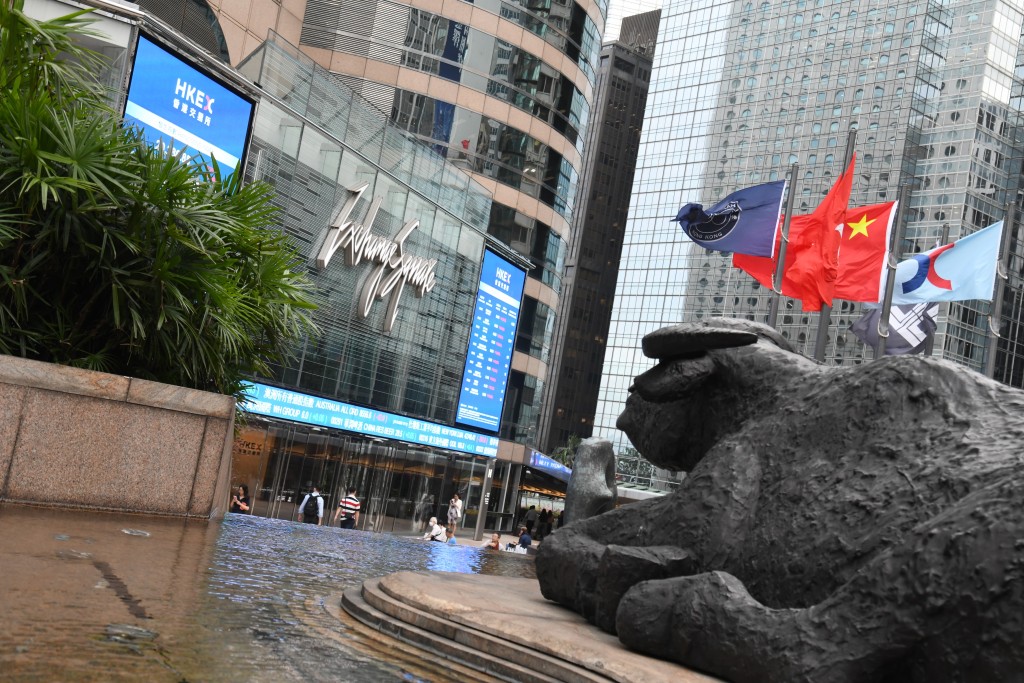
Securities of Hong Kong-listed or H-REITs have headed higher over the last couple of weeks amid a broader market rally, with investors cheering the news that both Hong Kong and Chinese-listed REITs are to be included in the Stock Connect trading link between the city and the mainland.
Analysts say the worst might be over for H-REITs as their inclusion in the Connect is expected to boost their liquidity and investor base while the prospect of lower interest rates later this year also bodes well for these high-yield securities which are listed as units.
The initiative could also encourage more international REITs to list in the city, they add.
Meanwhile, the Hong Kong Investment Funds Association says eligible Chinese or C-REITs will give investors a greater choice for real estate investments.
Chief executive Sally Wong Chi-ming points out H-REITs and mainland or C-REITs have different compositions with the former structured as trusts and the latter employing a combination of publicly offered funds and asset-backed securities.
C-REITs which focus on the infrastructure management tend to have a stable income stream, while the payout of others including logistics warehouses and industrial parks are less predictable, the HKIFA adds.
However, while H-REITs may have bottomed out, they still face headwinds from oversupply and weak demand in retail and office rental markets in the city.
ON A ROLL
Since their inclusion in the Connect was announced three weeks ago by the China Securities Regulatory Commission as part of a plan to promote Hong Kong as a global financial hub, Fortune REIT (0778) has led the sector with a 15.25 percent rise to HK$4.08, while Link REIT (0823) is up 11.85 percent to HK$35.4, and Champion REIT (2778) is 7.27 percent higher at HK$1.77.
But their prices are still at 10-year lows.
"In the short run, new funds from the Connect may soothe investor sentiment but challenges in operations and a high interest rate environment remain," warns Kenny Ng Lai-yin, a securities strategist at Everbright Securities International.
REITs are obliged to distribute at least 90 percent as dividends and as they tend to use debt to finance their acquisitions, they are highly sensitive to changes in interest rates, which have been stuck at 23-year highs.
On top of that, a weak office and retail rental market and lower consumer spending in Hong Kong have further squeezed their profits.
However, their current low prices and stable dividends together offer the prospect of a relatively higher yield compared to other assets.
The average dividend yield of H-REITs was 9.18 percent.
China International Capital Corporation (3908) believes H-REITs could attract investors seeking stable returns because they have higher dividend yield rates than those listed in the mainland.
FAVOURITE LINK
HSBC Global Research expects REITs to be included in the Connect as soon as next month, bringing opportunities for new ratings for these trusts.
It recommends buying Link REIT with a target of HK$47 per unit, saying it will be the major beneficiary from the inclusion.
As the largest REIT in Asia and with half of its portfolio in shopping malls, Link is favored by most investment banks due to its robust rental performance and cash pile, and its distributable income could return to growth in the 2025 fiscal year, it adds.
Citi recommends buying Link with a target of HK$50, as does UOB Kayhian with a target of HK$48.15.
Link's retail properties in Hong Kong had an occupancy rate of 97.6 percent at the end of last year, with the reversion rate standing at "middle to the high single digit."
Link also revealed that it has a net gearing ratio of 20.4 percent, its average borrowing cost remain low at 3.74 percent, and it does not need to raise funds before the 2025 fiscal year,
However, it admitted that northbound Hong Kong spenders had dragged overall tenant sales growth down to 1.3 percent, compared to 3.1 percent in the same period last year, and it "remains to be seen whether this is a mid-term structural risk."
Goldman Sachs has downgraded Link's target price from HK$48.9 to HK$47.6 but maintains a buy rating, citing the cross-border consumption's influence on its retail property performance and its advantage as a provider of daily necessities.
Morgan Stanley says Link has a high dividend yield compared to common stocks but lacks a catalyst for its unit price.
Anli Securities chairman and chief executive Andrew Wong Wai-hong says interest rate cuts could pump up Link's price in the future but there's still a lot of uncertainty over the US Federal Reserve's expected rate cuts.
On the other hand, higher prices will pressure its yield rate, if the recovery in rents - its major income earner - remains weak, he points out.
While Wong expects a slow recovery in Hong Kong, he says Link's mainland business may prove the growth driver.
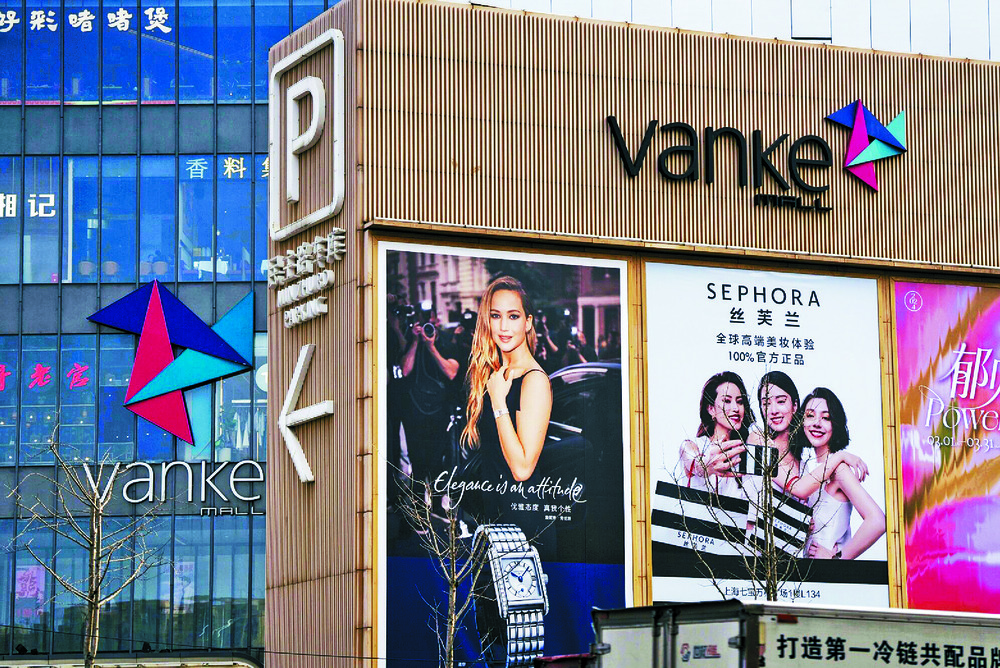
Link grew the proportion of mainland properties in its portfolio to 14.4 percent, 1.2 percentage points higher, after buying out the Qibao Vanke Plaza in Shanghai earlier this year. The plaza's tenant sales grew over 50 percent in the last quarter of 2023.
CHANGE OF FORTUNE
Fortune REIT is a trust under CK Asset (1113), and as one of the mid cap index constituents, it is expected to be included in the Connect, following Link.
Citi recommends buying the security with a target price of HK$5.72 following its inclusion but most investment banks have downgraded their target prices after the trust's distributable income plunged 7.6 percent to HK$810.6 million in 2023 amid surging finance costs.
Its distribution per unit fell by 8.5 percent to 40.38 HK cents.
HSBC maintains a hold rating and has reduced its target price by 20 percent from HK$6 to HK$4.8, saying the REIT's prediction of a business recovery in its malls was too positive.
Fortune REIT's net property income inched up by 0.7 percent to HK$1.3 billion, and revenue advanced by 1.2 percent. The average occupancy rate was 94.4 percent in 2023, with a portfolio of 16 private housing estate retail properties in Hong Kong and one mall in Singapore.
HSBC warns there is still a downside risk to rents in 2024 and estimates its distribution per unit will fall by 13.1 percent this year.
OFFICE CHALLENGES
Champion REIT faces pressure from sluggish office rentals. Citi projects a sell rating with a target price of HK$1.59 while HSBC suggests holding the units with HK$1.75 as the target.
Morgan Stanley gives it a reduce rating with a target price cut from HK$2.4 to HK$1.8, predicting that its distributable income will shrink by 13 and 19 percent in 2024 and 2025 respectively after falling 13.6 percent to HK$1.1 million in 2023.
It also expects the distribution per unit will fall 7 percent this year, a fifth consecutive year of declines, mainly due to the weak outlook for office space and rising interest expenses.
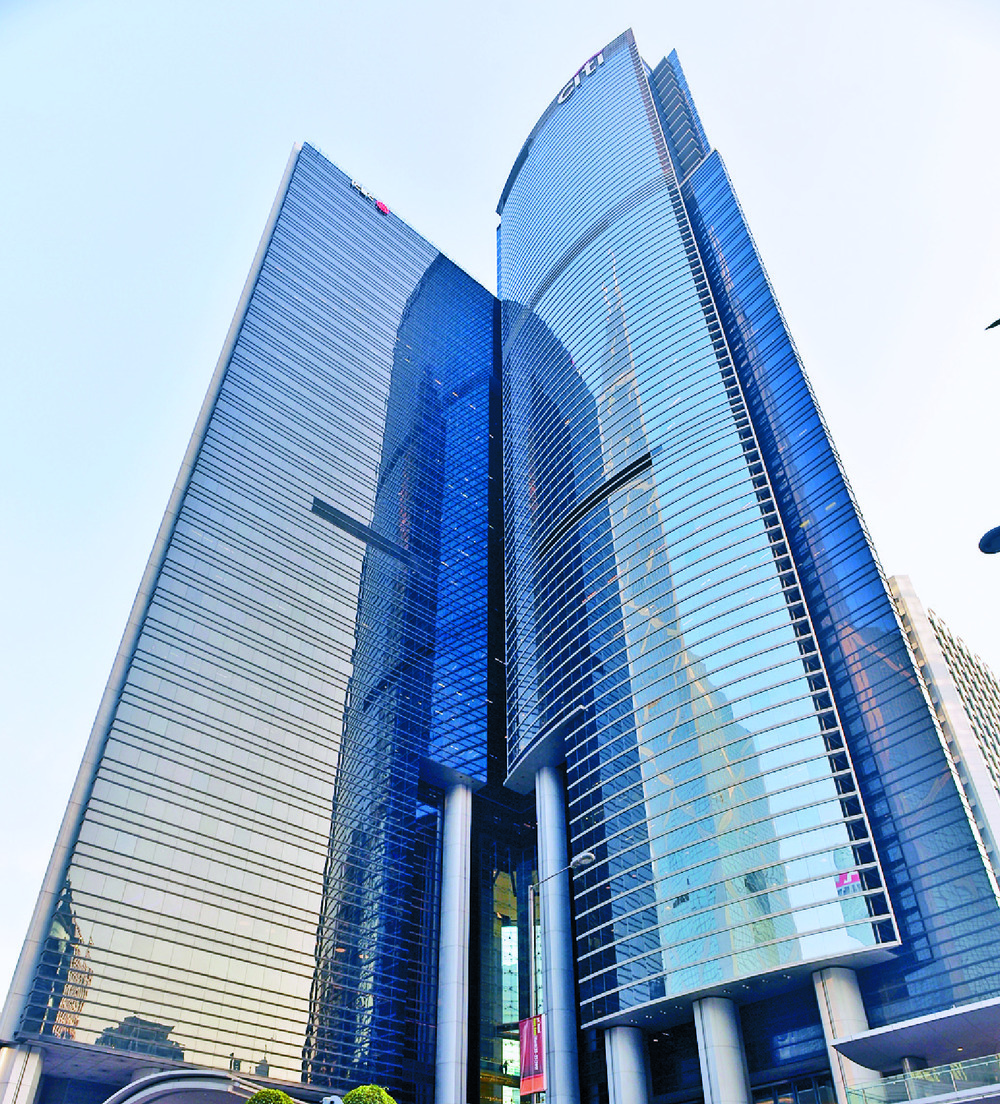
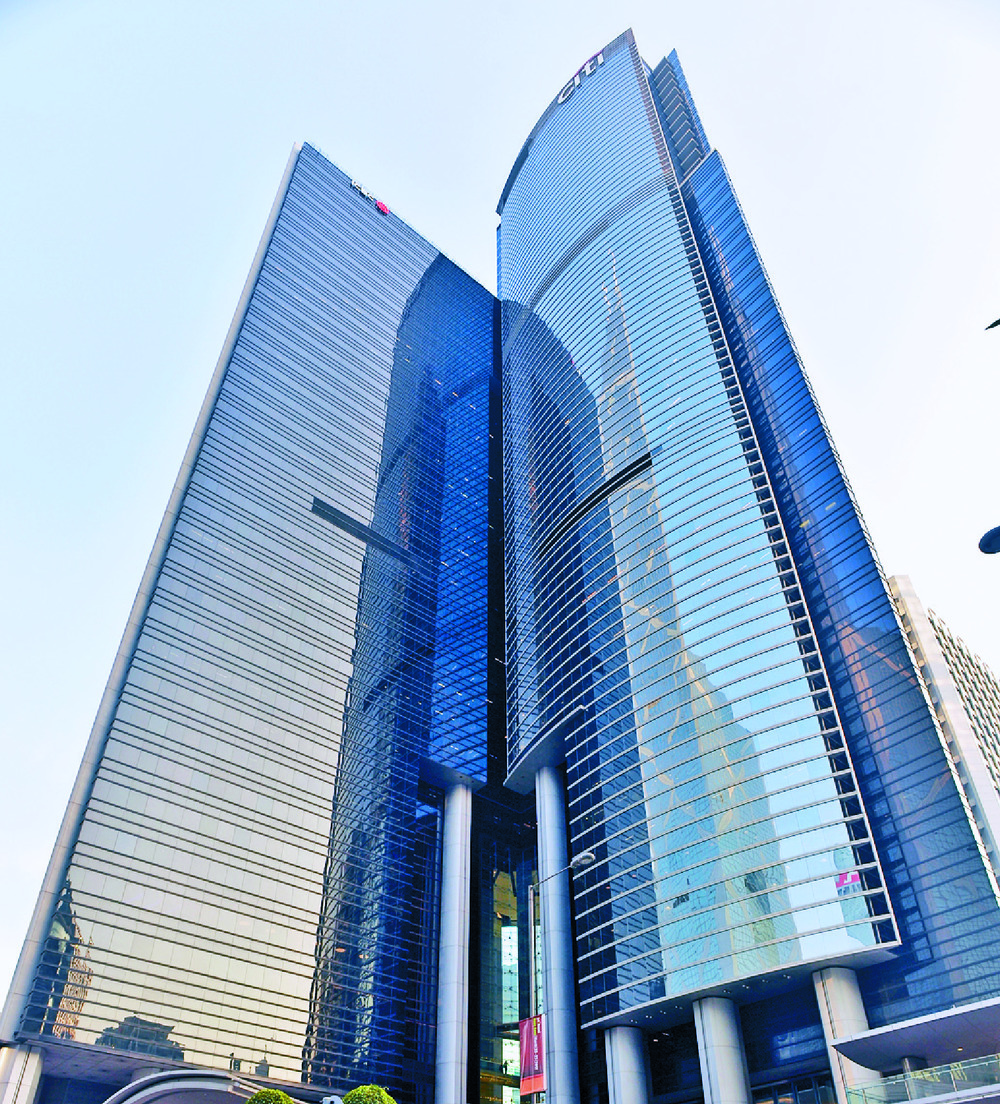
Its Three Garden Road-Champion Tower in Central had a vacancy rate of 17 percent amid weak office leasing last year.
While interest rate cuts will ease the pressure on REITs, analysts say the weak rental market remains a major problem and Ng says investors should wait for the market to recover further and make mid or long-term investments which are more defensive.
Baker McKenzie says it remains to be seen what eligibility criteria will be used for inclusion of REITs into the Stock Connect.
If the current inclusion criteria for stocks is applied, only two H-REITs would be eligible for admission, but if the new assets-under-management criteria for the inclusion of exchange traded funds or ETFs is followed - which is HK$550 million for Southbound trading - all 11 Hong Kong REITs would be eligible, it says.
THREE GARDEN ROAD: The property was hit by weak office leasing last year.
LINK ASSETS: The Qibao Vanke Plaza in Shanghai is a prime shopping center.
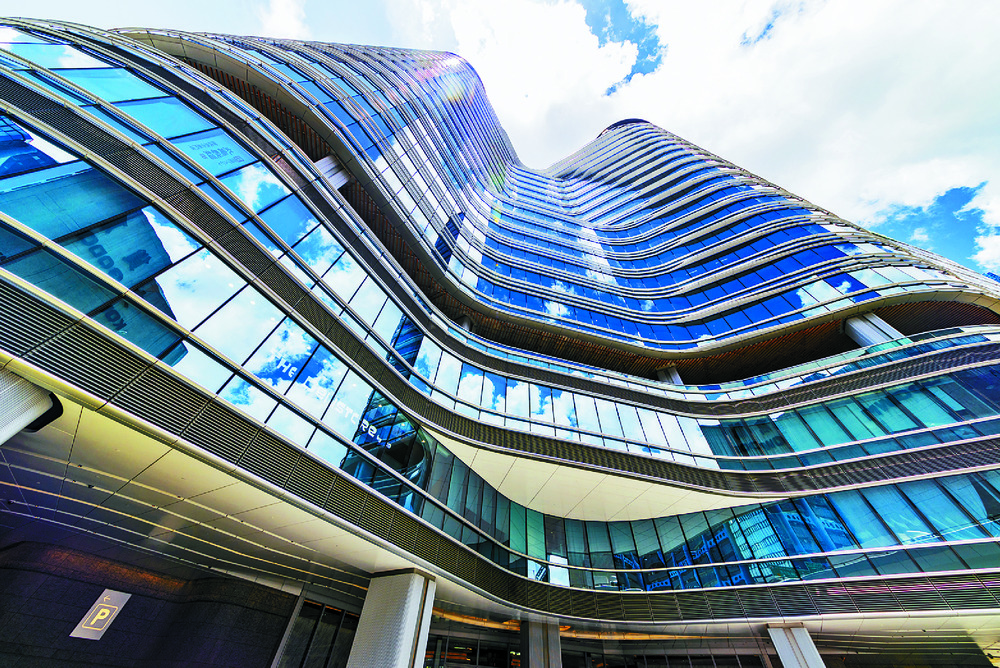
LINK ASSETS: The Quayside is a top commercial building in Hong Kong.