While millions of diabetics around the world need daily insulin injections that can be painful and pose a risk of infection, a groundbreaking minimally invasive solution from Greater Bay Biotechnology could offer them a safer and painless alternative in less than five years from now.
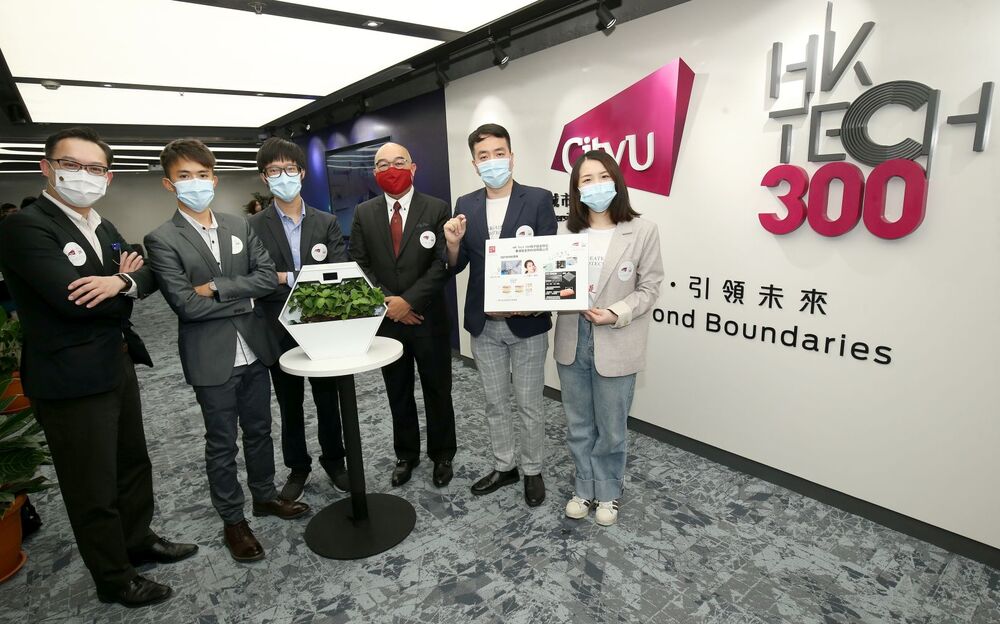
The biotech start-up is one of 80 teams that was granted a third round of HK$100,000 seed funding from the City University of Hong Kong under its HK$500 million HK Tech 300 innovation and entrepreneurship program.
Launched in March last year, the initiative aims to create 300 start-ups in three years among CityU students, alumni and research staff.
Founded by three CityU students who majored in biomedical sciences and biomedical engineering, Greater Bay Biotechnology uses a new generation of microneedle patches made of ice that melt after the pain-free delivery of drugs, providing pain-free treatment for insulin-dependent diabetics.
The device was developed by a research team led by Xu Chenjie, an associate professor at the department of biomedical engineering.
The icy microneedles are less than a millimeter long and made from a cryogenic solution that can deliver living mammalian cells as well as drugs into the skin. The microneedles detach from the patch base, melt and then penetrate the skin.
Tests on animals will begin in the next six months and tests on humans are projected to start out in two years if the experiments prove successful.
Greater Bay Biotechnology hopes to register the technology with China's National Medical Products Administration to treat diabetics in the mainland within four to five years, and the team is in discussions with a leading Chinese insulin pharmaceutical company to manufacture and market the minimally invasive patches to the country's 130 million diabetics.
The CityU-based team initially wanted to promote the technology locally but because of the city's laws and regulations, they found it easier to work towards a launch in the mainland.
Greater Bay Biotechnology has not disclosed the product's cost but it will be positioned as a high-end medicine at an affordable price.
Meanwhile, Yocto Works, a start-up led by a CityU graduate of the department of electrical engineering, has developed a hi-tech internet-of-things vertical gardening system.
Each smart flowerpot is equipped with a micro controller which can precisely control the spectral value of grow lights, the amount of water for irrigation and the degree of soil moisture. Unlike the other products on the market, the system collects data via sensors to analyze the condition of plants regularly, which makes the gardening work more effective, its team says.
Hong Kong's Electrical and Mechanical Services Department has tried out the system in their buildings and Yocto Works is holding talks with government departments for collaboration.
Alan Lam Hiu-fung, the chief executive of AI and IoT firm Sengital and an adjunct professor of the department of electronic engineering at CityU, is the mentor for Yocto Works.
He says the system will help extend the life expectancy of houseplants on indoor green walls by half a year, making them more environmentally friendly.
MEETING OF MINDS: At the HK Tech 300 seed fund presentation cum mentor appreciation ceremony, are, from left, Dr Alan Lam, Yocto Works head Chan Cheuk-yin and team member Chan Wai-hang, Greater Bay Biotechnology’s mentor Wayne Tan, head Colin Ng and