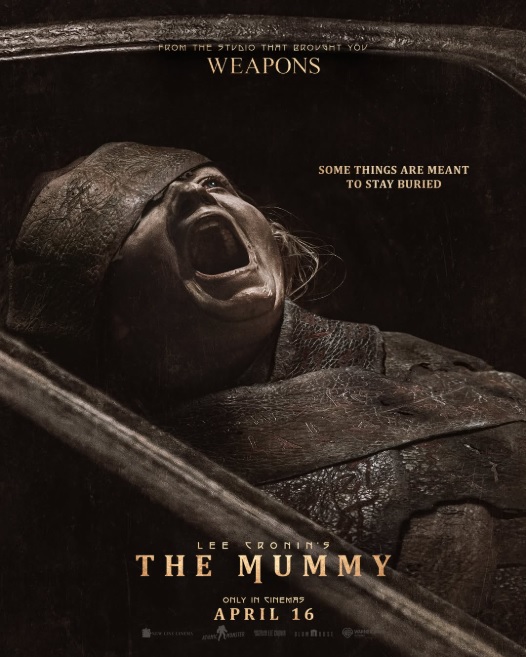
The desert has always been a place of mystery. In Lee Cronin’s The Mummy, it becomes the starting point of something far more unsettling — a story that begins with loss, and returns with something unrecognizable.
ADVERTISEMENT
SCROLL TO CONTINUE WITH CONTENT
Opening in Hong Kong on April 16, the film marks director Lee Cronin’s latest foray into horror following the success of Evil Dead Rise. This time, he takes on one of cinema’s most enduring icons — but strips it back to something more intimate, more psychological, and perhaps more disturbing.
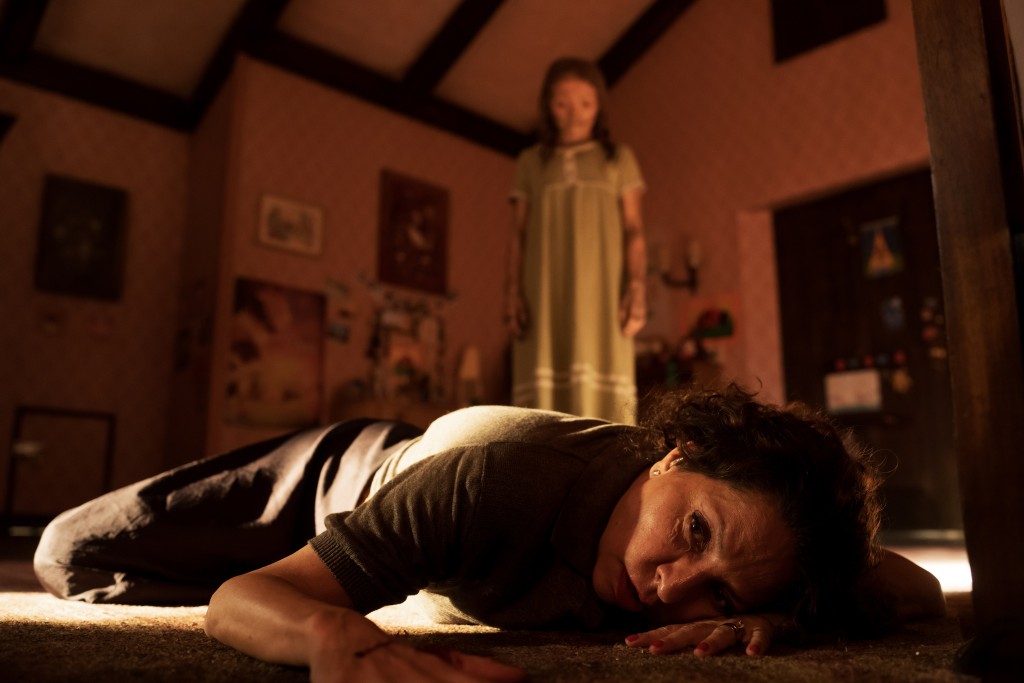
At the heart of the story is a family fractured by disappearance. A young girl vanishes into the desert without a trace, leaving behind unanswered questions and a grief that lingers for years. Then, eight years later, she returns.
What should be a miracle quickly unravels into dread.
A monster story, grounded in family
Rather than leaning on the grand adventure tone of earlier versions, Cronin’s take on The Mummy focuses on the emotional core of horror — the fear of something familiar becoming strange.
The girl’s return brings relief, but also unease. There are signs that something is not quite right, and as the family tries to reconnect, the tension builds. The narrative shifts from reunion to suspicion, then to terror, as the line between human and something else begins to blur.
In this version, the “mummy” is not just a creature from ancient legend, but a presence tied to identity, memory, and the unknown forces that may have followed her back.
A new chapter for a classic myth
For decades, The Mummy has been reinvented across eras — from the gothic horror of the 1930s to the action-adventure spectacle of the late 1990s. Cronin’s interpretation moves away from spectacle and into a more grounded, unsettling space, where horror is built not just on what is seen, but on what is felt.
The creative team behind the film reflects this shift. Produced by James Wan and Jason Blum — both known for shaping modern horror — the film blends atmospheric tension with contemporary storytelling, supported by a visual style that emphasizes isolation and unease.
The film stars Jack Reynor and Laia Costa as the parents struggling to reconcile hope with fear, alongside May Calamawy and young actor Natalie Grace in a role that sits at the center of the mystery.
As the story unfolds, the performances are expected to carry much of the emotional weight — not just reacting to horror, but living through its slow, unsettling arrival.
With Lee Cronin’s The Mummy, the terror is less about spectacle and more about transformation — of a person, a family, and a reality that no longer feels safe.
It is a film that asks a simple but haunting question: if someone you lost returns, would you still recognize them? And more importantly — would you want to?