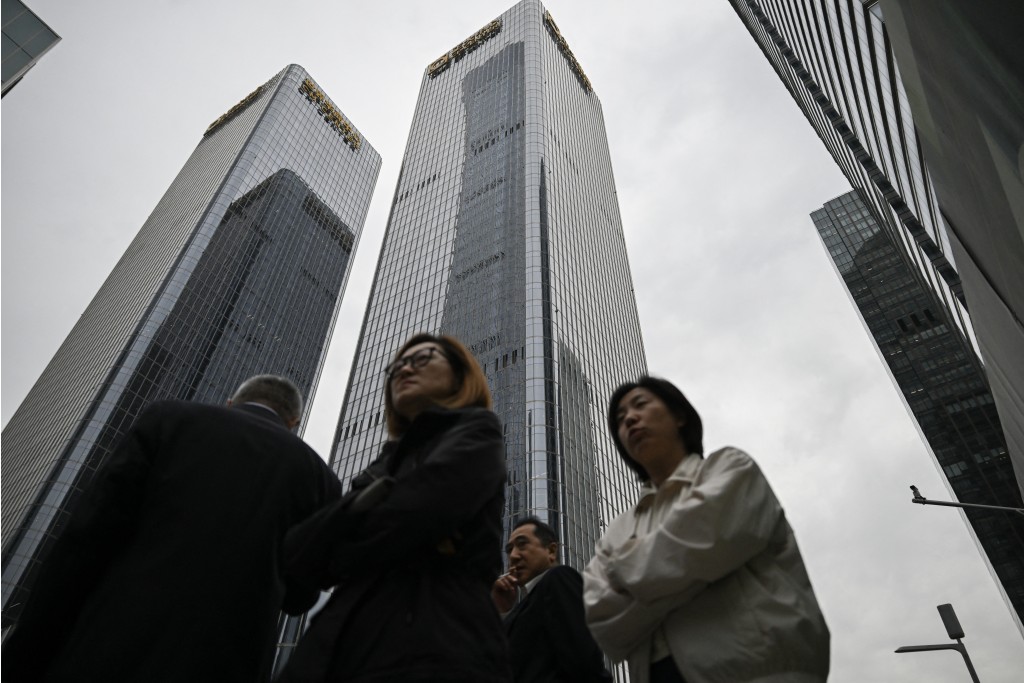
Chinese property developers' shares came under pressure on Monday after the government announced regulatory changes to help shore up confidence in the crisis-hit sector, but the move sparked expectations of more consolidation across the industry.
Mainland agencies on Friday issued measures to reduce developers' reliance on funds collected from buyers before housing projects are completed, as Beijing seeks to stabilise the real estate sector.
The CSI300 Real Estate Index was down 2 percent in early morning trading and an index tracking Hong Kong-listed Chinese developers was off more than 4 percent. The Hang Seng's Hong Kong developers index also lost more than 3 percent.
The new measures "have raised the bar for developers in terms of their financing ability and management skills," Everbright Securities said in a note to clients.
The measures will speed up industry consolidation, as "most small players will not be able to make a profit and have to exit the market," it added.
Large developers China Jinmao and Greentown China were down at least 10 percent in Hong Kong trade. China Resources Land was off more than 7 percent and China Overseas Land & Investment declined over 6 percent.
All four developers are state-backed.
Property developers have long relied on a pre-sale model to fund their operations, by starting to sell homes before the units were ready to deliver.
Under new rules released by the central bank and the financial regulator, mortgages would be issued only after the project had been completed. Another set of guidelines requires local governments to promote sales of completed units to "fundamentally prevent delivery risks".
The rules also seek to reduce homebuyers' debt by extending the maximum term for personal mortgage loans to 40 years from 30 years. That change would free up borrowers' cash, which could help boost domestic consumption in China, analysts said, but is unlikely to meaningfully lift housing demand.
The impact of the new rules would be felt most by larger developers with high asset turnover, analysts said.
Nomura analysts said the changes to pre-sale arrangements would alter the business models of many developers that relied on high debt, leverage and turnover.
The result, Nomura said, could be reduced supply of new apartments that would push buyers towards existing housing. It said property agency KE Holdings, also known as Beike, could benefit from the new regime. Its stock was down 2.5 percent on Monday.
Reuters