I was somewhat surprised by how many of my Chinese friends here followed the news of the death of Queen Elizabeth's husband, Philip Duke of Edinburgh.
Memories of his love affair and long life clearly struck a chord in their memories and a local girl I know even placed flowers at the British consulate. Their interest in Philip has prompted me to write these thoughts and impressions.
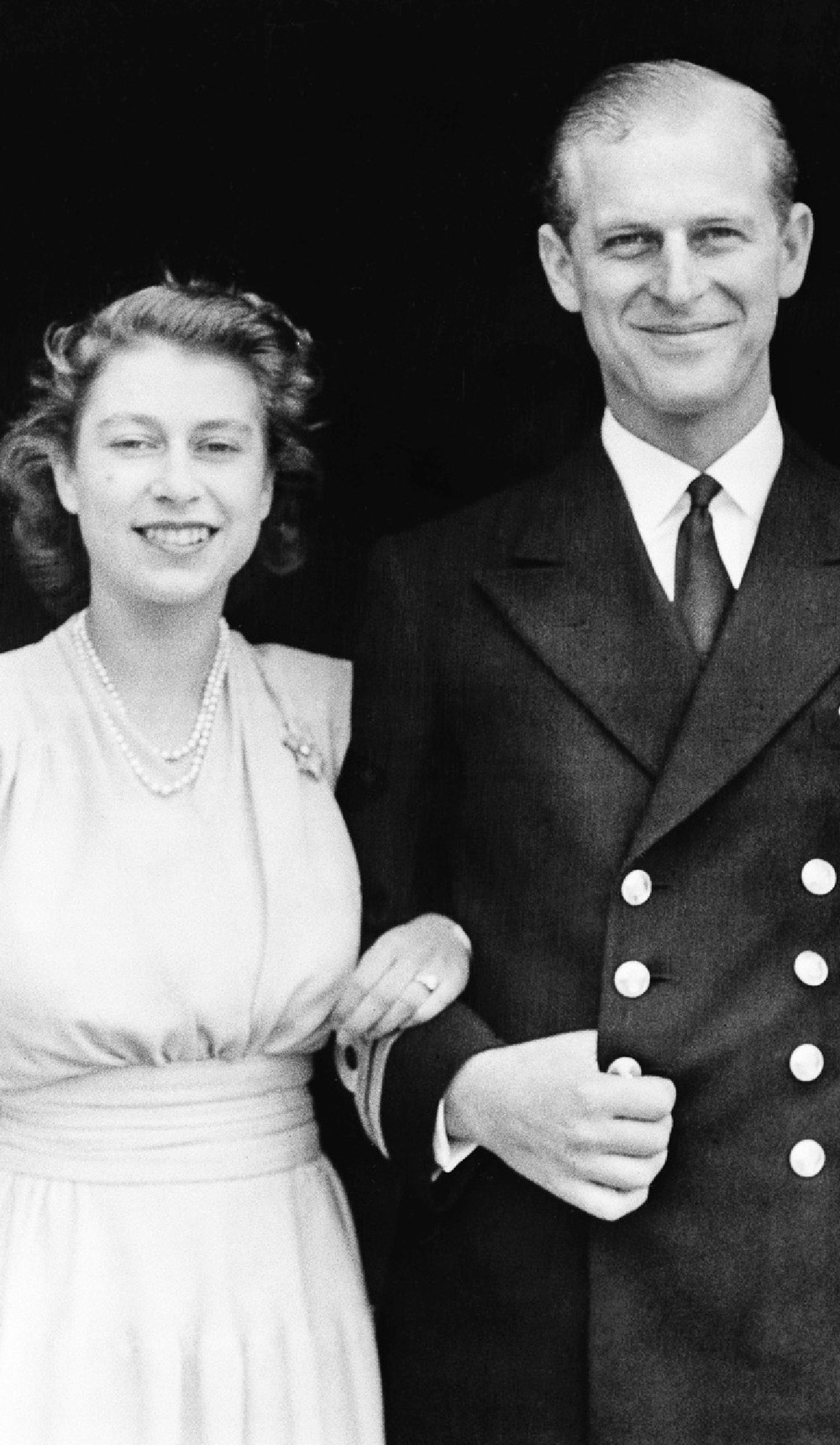
Princess Elizabeth was only 13 when she first set eyes on Philip and it is said she fell for him from that moment.
Now after seven decades of marriage, Philip has died only weeks away from his 100th birthday, leaving Queen Elizabeth alone in her castle at Windsor.
The story of their lives and 73 years of marriage is a remarkable one.
Both Philip's parents were of royal descent but that did not mean they had money. On the contrary, they were almost paupers and Philip's mother Alice gave birth to him on a kitchen table in an ordinary house on the Greek island of Corfu.
After that he was as good as abandoned by his parents and his care was passed from one relative to another. He did not have anywhere he could call home.
His mother was subsequently committed to a lunatic asylum and then became a Catholic nun before being rescued from Greece and flown to safety in London.
She spent her last years living a simple life in spartan rooms at Buckingham Palace.
As for Philip, he also landed up in the UK to attend a newly opened, tough school for boys called Gordonstoun.
The result of his tumultuous upbringing was that he grew up to be both a very normal person and a royal one too.
As a young man he had no money and joked that he possessed only one pair of shoes.
Always thrifty by nature, he asked a tailor to alter 40-year-old trousers rather than buy new ones.
Some ignorant people booed him because they thought he was either a German Nazi who supported Hitler or a Greek. In fact his blood ancestry was wholly Danish.
As luck had it - and Philip was always audaciously lucky - he and Elizabeth fell intensely in love.
They were both young and it did not seem to matter that Elizabeth would one day become queen.
Her father the king was still young.
But the tragedy of his lung cancer, the seriousness of which was kept secret from her, and his early death meant that Elizabeth abruptly became queen at the youthful age of 25 and Philip had to adjust to life as her consort, which has been described as a title without a job description.
Philip liked to make jokes and have fun but he was clever and certainly no fool.
He realized that the British monarchy was in danger of becoming an anachronism in a fast-changing world. He hated old-fashioned stuffiness and pomposity.
He was famously blunt and quick-witted, wellread and always ready to learn.
Always frank and to the point, in recent years he made clear his hatred of the trivial reproachfulness of social media and was appalled at the new fad of "cancel culture."
Everybody, he said, should have the right to say whatever they want within the law without the risk of "being canceled."
People ask what now for Elizabeth at the age of 94?
It is saddening to imagine her loneliness and the grief she must endure like so many old widows the world over.
The fact that her marriage was so successful and so long must make her loneliness a terrible thing to endure.
But she is famous for being both jolly and determined and is in sprightly good health.
As a team working together, Philip and Elizabeth disproved the many skeptics who once warned that democracy and monarchy could not coexist in the modern world.
Cheng Huan is an author and a senior counsel who practices in Hong Kong
Queen Elizabeth and Prince Philip with their great grand children in a photo released five days after he passed on. Left: the couple beam in a picture taken in 1947 before they married.