Read More









Non-government counsels taking prosecution assignments must observe the national security law and refrain from engagements that may be seen as contradictory to national security interests, the Department of Justice has said.
With limited manpower amid a large number of trials, it has been hiring hundreds of barristers in private practice to act as prosecutors on a case-to-case basis every year.
Since the 2019 unrest hundreds of protest-related trials involving thousands of defendants have added to the DoJ's workload, and briefed-out counsels have been hired to represent the prosecution in cases.
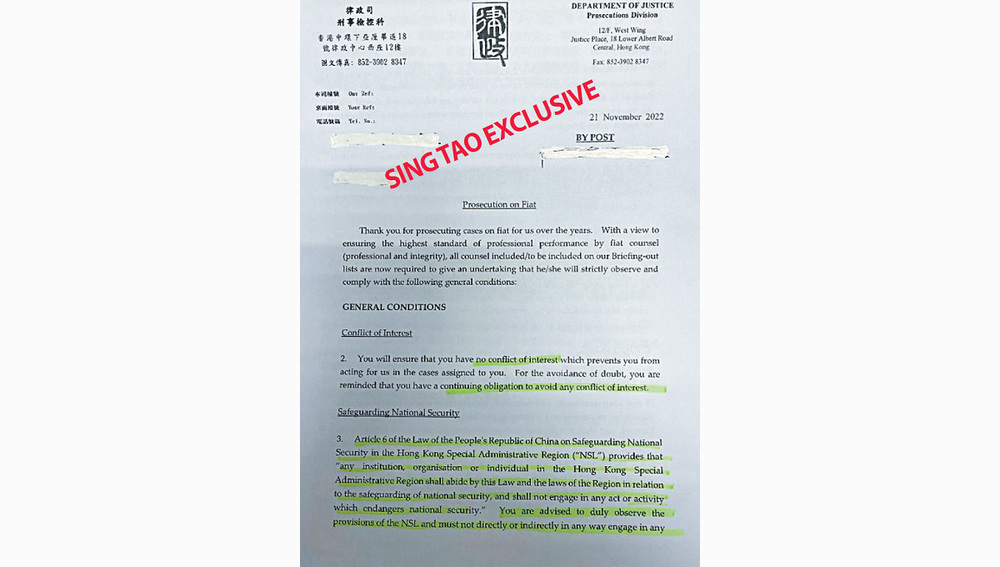
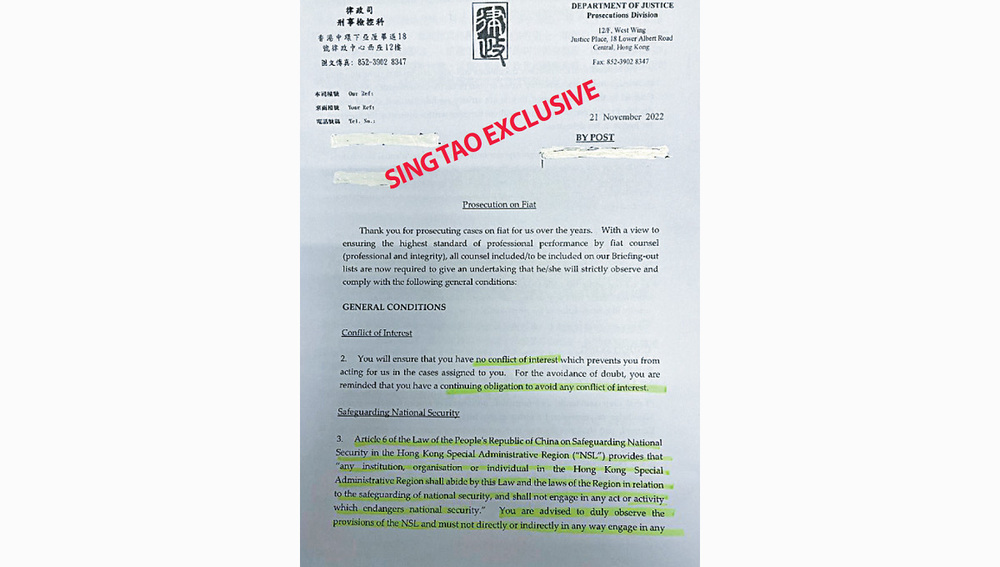
The DoJ yesterday said it has sent such letters to all briefed-out counsels, requiring them to safeguard national security and observe confidentiality agreements when handling cases.
"Briefed-out counsels, like prosecutors, must carry out their duty impartially without being affected by their political stance," the DoJ said, adding there is a supervision mechanism in place to assess them.
Citing the law, it said barristers must not directly or indirectly engage in any activity endangering national security. It also said counsels must ensure they do not have any conflict of interest with assigned cases.
As briefed-out counsels, they must not disclose instructions, information and documents relating to a case without the authorization of the secretary for justice.
Sources said the DoJ has required barristers to sign the letter and submit either the original or a photocopy of the letter to it by December 5. Those who refused to sign the letter might be removed from the briefed-out counsels list.
It is understood that most cases are being heard in the district court and magistrate courts, while the national security cases were handled by DoJ prosecutors.
Executive Council member Ronny Tong Ka-wah said such a requirement is natural as briefed-out counsels should obey the security law no matter whether they sign a commitment.
"I don't understand why a person working as a barrister would have the intention of breaking the law," Tong said.
Also, barristers should not disclose the contents of their client's case to anyone else as the contents are confidential, he added.
Also yesterday, the court of appeal rejected a DoJ application to take an issue to the court of final appeal against media tycoon Jimmy Lai Chee-ying hiring King's Counsel Timothy Owen from the United Kingdom.
Lai, 74, is charged with colluding with foreign forces and conspiracy to publish seditious materials. He will stand trial on December 1.
The DoJ had objected to his appointment of Owen to represent him, but the high court allowed Owen's admission, saying it is in the public interest to bring in experienced and eminent overseas experts. The DoJ then applied for leave to take the issue to the top court, but that was rejected yesterday.
In a written judgment the court of appeal said there was no evidence Owen might violate the law, despite the DoJ saying foreign barristers might leak confidential information once they leave.
"There is no proper basis to suggest that Mr Owen might breach the requirement of confidentiality of any information within the ambit of [the national security law]," the court said.
It added that the security law also applies to offenses committed outside Hong Kong by non-residents and the court does not believe allowing Owen to represent Lai will have a negative impact on national security law. The DoJ was ordered to pay the legal costs.