Read More
Lawmaker Vincent Cheng Wing-shun is spearheading a push to diversify Hong Kong’s Halal product market following a high-level fact-finding mission to mainland China’s production hubs.
ADVERTISEMENT
SCROLL TO CONTINUE WITH CONTENT
As the city pivots to attract a larger share of travelers from the Middle East and ASEAN regions, Cheng emphasized that integrating a robust Halal supply chain is essential for transforming Hong Kong into a premier Muslim-friendly destination.
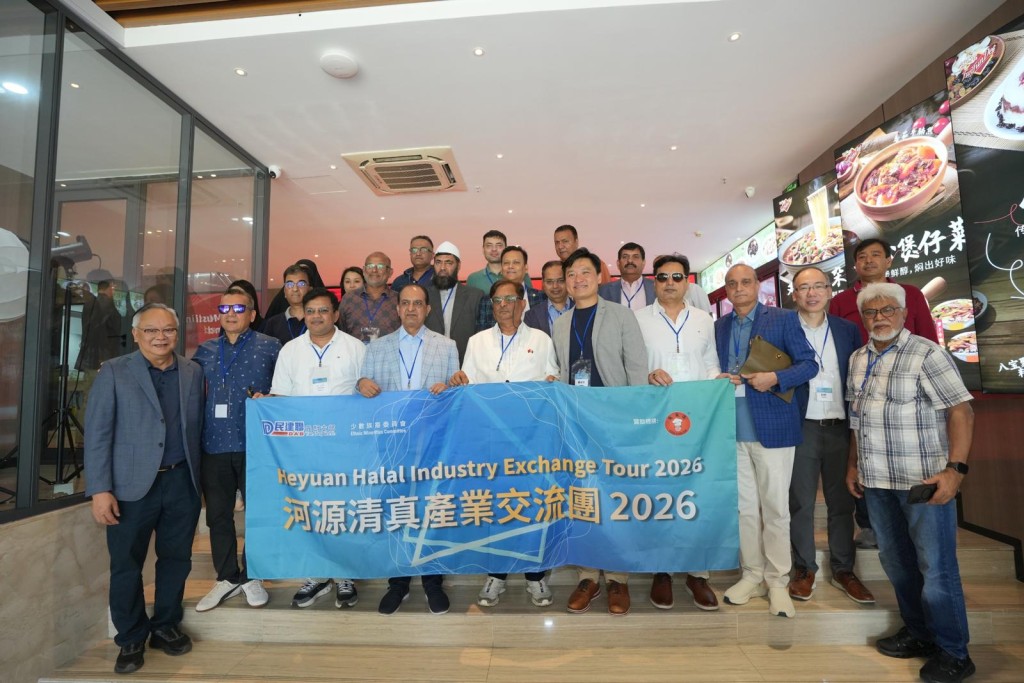
During a recent delegation to Shenzhen and Heyuan, Cheng joined national committee members and local Muslim leaders to examine sophisticated Halal industrial chains.
The group toured smart R&D centers and large-scale production bases to witness the standardized processing of Halal goods.
The visit highlighted how mainland enterprises maintain rigorous compliance with Islamic dietary laws throughout the entire lifecycle of a product, from raw material sourcing and automated processing to packaging and wholesale distribution.
While Hong Kong currently hosts over 300 Halal-certified restaurants, Cheng noted that the local sector remains largely focused on basic dining.
He observed that the growing influx of Muslim tourists necessitates a more comprehensive ecosystem that mirrors the industrialization and standardization seen across the border.
By fostering cross-border partnerships, he believes Hong Kong can significantly increase the variety of certified products available in the local market, catering more effectively to both residents and international visitors.
The vision for a more inclusive environment extends beyond the food industry. Cheng advocated for a broader strategic shift that encompasses Halal-focused tourism, specialized financial services, and expanded trade opportunities.
By moving past a narrow focus on catering and embracing a multi-dimensional approach, he argued that Hong Kong can better seize emerging economic opportunities in Southeast Asian and Middle Eastern markets.
This initiative aims to strengthen the city’s international reputation as a diverse and welcoming hub while addressing the practical daily needs of its multicultural community.
The delegation, organized by the DAB Minority Affairs Committee, included prominent figures such as National Committee of the CPPCC member Lui Kin, Chief Imam of the Kowloon Mosque Muhammad Arshad, and various ethnic minority community leaders.
Their collective findings are expected to serve as a blueprint for future collaborations between the government and private sectors to modernize Hong Kong’s Halal infrastructure.
𝗗𝗼𝘄𝗻𝗹𝗼𝗮𝗱 𝗧𝗵𝗲 𝗦𝘁𝗮𝗻𝗱𝗮𝗿𝗱 𝗔𝗽𝗽 ↓