Read More
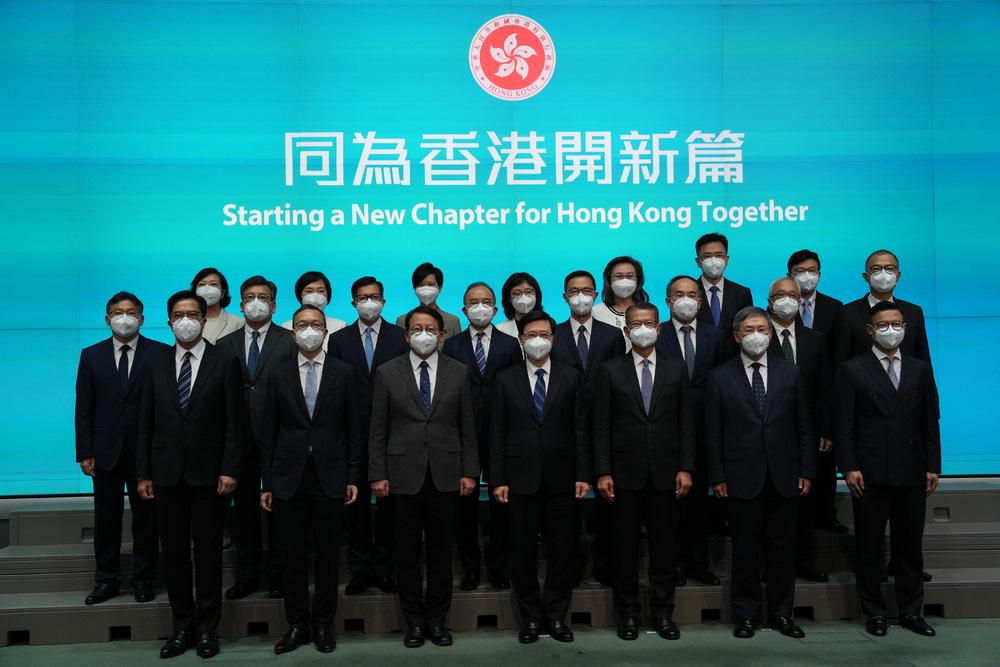
Incoming Chief Executive John Lee Ka-chiu and his 27 cabinet members from a diversified background have vowed to reach out to the public with sincerity to win citizens' trust and make policies that meet public demand.
ADVERTISEMENT
SCROLL TO CONTINUE WITH CONTENT
Beijing yesterday approved Lee's nominations of his officials, including three top secretaries, three of their deputies, 15 bureau heads, as well as five leaders for disciplinary teams and the Audit Commission.
In a media briefing introducing his cabinet, Lee said his team comes from a diverse background.
"They include incumbent officials with administrative experience, veteran civil servants from public policy background, external professionals and people with networks in relevant sectors and regions," he said.
"The new cabinet is diversified, united, loyal and strong in execution of policies. We share the same governing ideals and value team spirit, and we strive to solve problems by a 'result-oriented' approach.
"My team and I will reach out, listen to and communicate with the public with sincerity, and will be proactive in winning people's trust and making policies that meet demand," he said.
He also vowed to unite people from different sectors and rise to the challenges to turn a new page for Hong Kong under one country, two systems.
"We are committed to serving the aspirations and concerns of the people, enhancing efficiency and effectiveness of the administration.
"Together, we will build a better Hong Kong."
Lee thanked the central government for approving the 26 officials he nominated, and Beijing's trust and support for him and his team. Among the 26 officials, 21 were politically appointed secretaries and five non-politically appointed officials.
With the addition of the new director for the Chief Executive Office, Carol Yip Man-kuen, six of the 27, or 22 percent, are women, the highest proportion in the SAR's history.
Looking at the 21 politically appointed officials in terms of background, six or more than 28 percent are newcomers in the government, including three lawmakers - the deputy secretary for justice, Horace Cheung Kwok-kwan; the secretary for innovation, technology and industry, Sun Dong; and the secretary for home and youth affairs, Alice Mak Mei-kuen.
A fourth lawmaker, Nelson Lam Chi-yuen, will become the director of audit. Four come from the 40-member Election Committee constituency. They have resigned from the Legislative Council.
It is expected the Electoral Affairs Commission will arrange a by-election for the 1,448-strong Election Committee to choose four new lawmakers as replacements. Cheung has resigned from his position as the vice-chairman of the Democratic Alliance for the Betterment and Progress of Hong Kong but he will not withdraw from the party. Mak has also quit as the vice-chairwoman of the Federation of Trade Unions but remains a member of the group.
Lee said seven of the 21 officials are incumbent ministers, including six secretaries and the director of the Chief Executive Office, Eric Chan Kwok-ki.
He also expressed his gratitude to outgoing leader Carrie Lam Cheng Yuet-ngor and all officials for having served citizens with utmost sincerity and stamina.
"While it may not be possible to continue to walk the path ahead with each one of them, we remain partners and you are my mentors," he said.
Asked about the absence of Lam's favorites, including the Secretary for Commerce and Economic Development, Edward Yau Tang-wah, and the Secretary for the Civil Service, Patrick Nip Tak-kuen, Lee said it is normal to have people come and go as a new government takes office. He said Beijing had reminded him to scout talent but he hand-picked his cabinet members on his own.
"My rationale is that they must share the same ideology so we can work in an efficient manner," he said.
Lee and his No 1 official Chan are both under overseas sanctions, but Lee said the "bullying" will only make them feel more obliged to safeguard national security, adding he despises the sanctions against him. Around half of Lee's cabinet are civil servants from administrative branches or professional backgrounds such as architecture and engineering, while only four come from disciplinary forces, like Lee.
Asked if he had leaned toward civil servants when choosing his cabinet, Lee said he had not considered the specific background of his cabinet members, but focused on their experience, knowledge and capabilities.
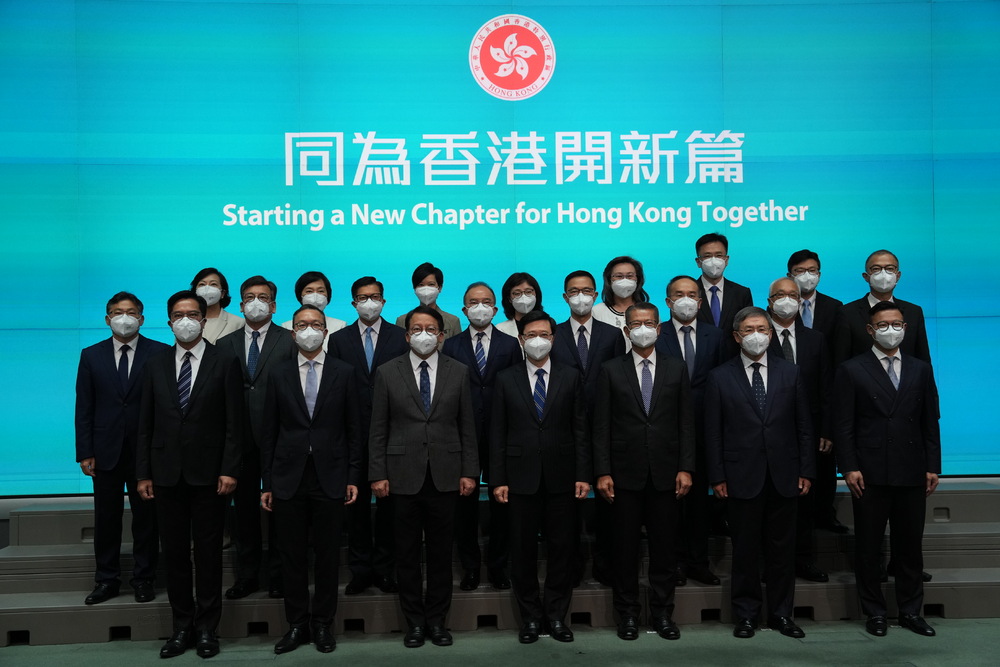
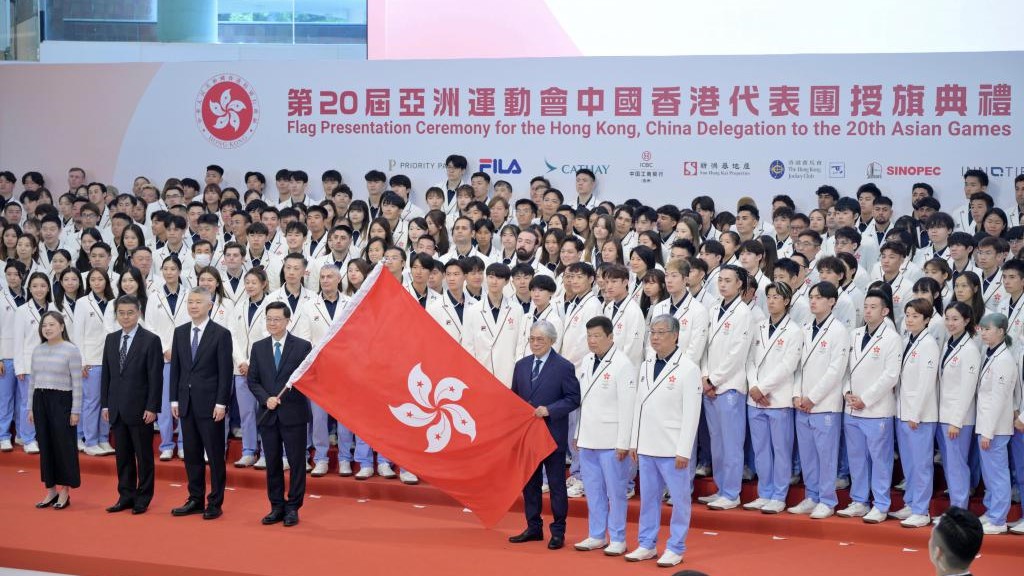
John Lee, front row center, lines up his team after approval from Beijing.