Read More




Late police constable Chu Chun-kwok to receive full honors funeral on Fri
22-10-2026 15:33 HKT
Domestic helper suspected after $420,000 worth of gold jewelry goes missing
22-10-2026 18:55 HKT


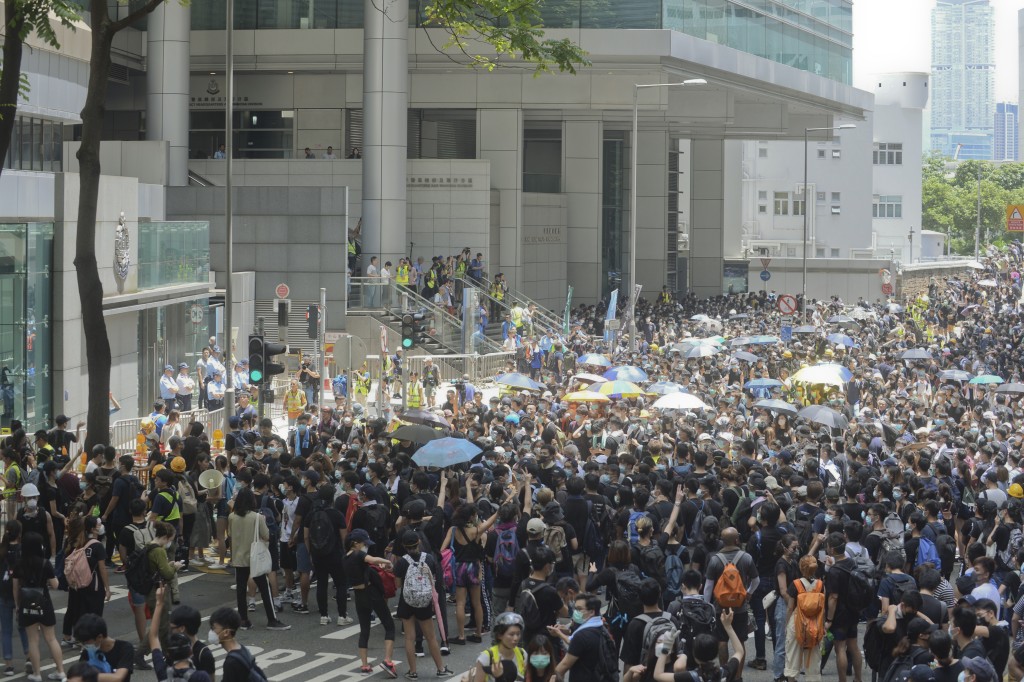
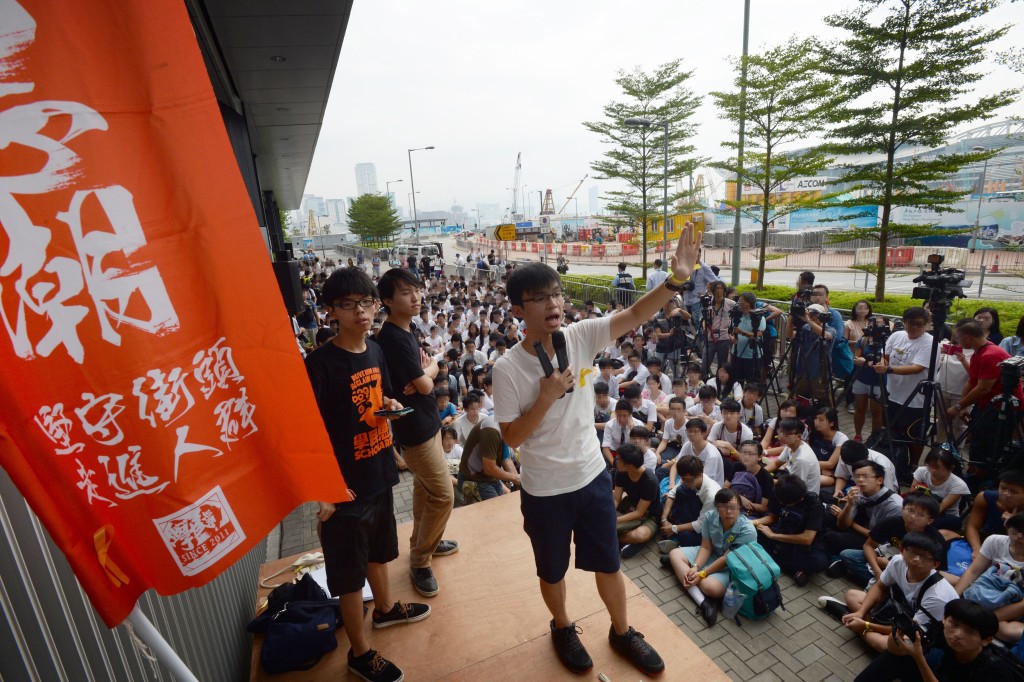
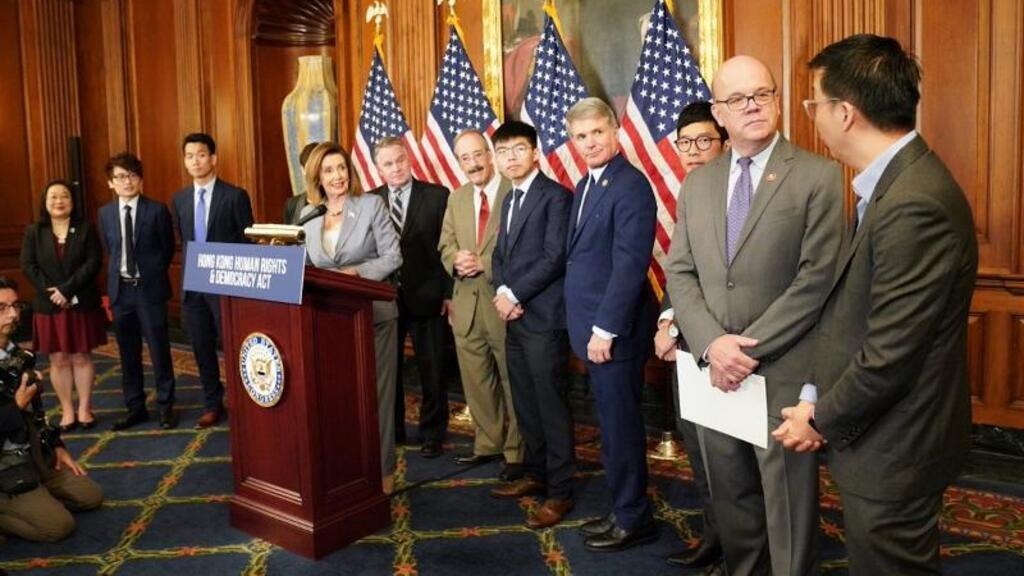
Joshua Wong, the former Secretary-General of "Demosistō" who is currently serving a prison sentence for the "35+ Case," has again pleaded guilty to a case involving endangerment of national security.
Wong was charged with one count of "conspiracy to collude with a foreign country or with external elements to endanger national security," alleging that between July 1, 2020, and November 23, 2020, he conspired with Nathan Law and other unidentified individuals to request foreign countries or overseas institutions, organizations, and personnel to implement sanctions, blockades, or take other hostile actions against the Hong Kong Special Administrative Region or the People's Republic of China.
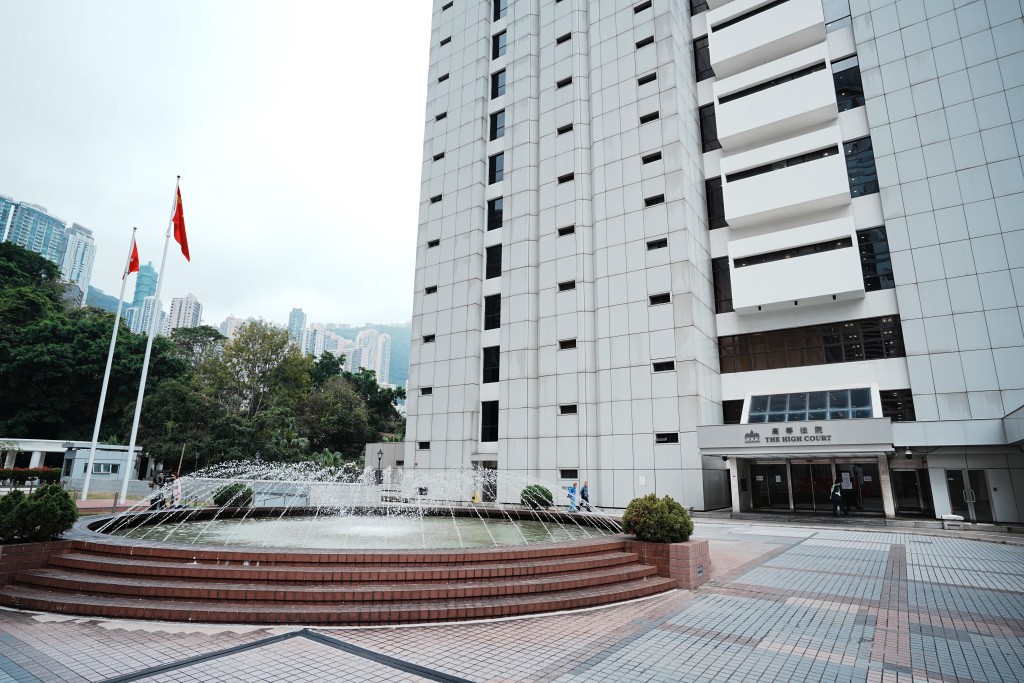
The case entered its plea hearing at the High Court on September 2, 2026. Wong immediately admitted to the charge upon the opening of the court session, and the case has now been adjourned for sentencing.
Political figures pointed out that even though Wong was once high-profile lauded and cultivated as a political puppet by foreign politicians, organizations, and media—who portrayed him as a so-called "youth leader"—when he landed behind bars due to his illegal acts, external forces merely dispatched personnel to attend the hearing at best.
This precisely confirms the cruel reality that external forces discard political puppets after using them.
According to the prosecution's case, "Demosistō," founded in 2016, promoted "Hong Kong independence" propositions under the guise of "democratic self-determination." Then Secretary-General Joshua Wong and the so-called founding chairman Nathan Law reached an agreement to achieve their political goals through international lobbying.
Before the implementation of the Hong Kong National Security Law, the two and other unidentified individuals participated in the so-called "international front," lobbying foreign politicians, organizations, and institutions to demand sanctions against China and the HKSAR.
Beginning in 2016, the two promoted the Hong Kong Human Rights and Democracy Act in the United States, demanding that the U.S. impose sanctions on Hong Kong officials.
During the black-clad violence in 2019, they initiated multiple joint petitions and visited places such as Germany and Italy, urging countries to stop selling weapons and crowd control equipment to the Hong Kong Police and calling for the establishment of a sanction mechanism targeting Hong Kong officials.
By June 30, 2020, even after the Hong Kong National Security Law had come into effect, the common intent did not cease. Law, who had already fled overseas by then, continued to meet with foreign government officials and politicians and launch joint petitions.
Wong, who stayed in Hong Kong, declared that he would not abandon his political stance and continuously utilized foreign media and social media platforms to share Law’s posts to support the advancement of the so-called "international front."
Among these actions, in July 2020, Wong reposted Law's post and online joint petition, asking governments of various countries to urge digital forensics companies such as Cellebrite to stop cooperating with the Hong Kong Police; in October of the same year, Cellebrite announced it would stop supplying relevant software to Hong Kong and China.
Political figures noted that Wong frequently contacted foreign politicians and diplomatic personnel in the past, accepted interviews with foreign media, and was even selected as TIME magazine’s Person of the Year; despite his extremely poor public exam results, he was also admitted to several prestigious U.S. universities, packaged by external forces into a so-called "youth leader."
However, when he truly sought asylum, the U.S. side prioritized its own interests and refused to lend a helping hand.
According to disclosures in a book co-authored by two former U.S. journalists stationed in Hong Kong, on the eve of the implementation of the Hong Kong National Security Law, Wong sought to enter the U.S. Consulate General in Hong Kong to receive asylum and asked high-level U.S. officials for help.
However, Washington hesitated out of concern over Chinese countermeasures and ultimately rejected his request. A scheme to secretly arrange for his departure from Hong Kong by sea was also scrapped due to excessively high risks.
Recently, after Wong pleaded guilty, a cluster of anti-China organizations and figures—including the "Hong Kong Democracy Council (HKDC)," "Human Rights Watch," as well as individuals wanted by the National Security Department such as Frances Hui, Chung Kim-wah, and Anna Kwok—immediately posted messages of support on social media platforms in an attempt to build public momentum and stir up anti-China sentiment. "This kind of shouting from across the shore remains at the level of slogans and political hype; it can neither influence court judgments nor bear criminal liability for Wong. Overseas comrades talk grandly, but in reality, they are merely exploiting the incident from across the shore," said the political figure.
He further continued that this case serves as a prime example showing that when external forces needed Joshua Wong to act as a political pawn in Hong Kong and cooperate with their public opinion offensives, they did not hesitate to provide him with a political stage and various halos.
But when Wong lost his value, the external forces that had once high-profile stood by him merely sent consular personnel to the High Court to observe the hearing at best, or issued a few political statements, while never offering any substantive assistance.
This fully exposes the cruel reality of external forces discarding political puppets once their utility value is exhausted.
According to the penalty provisions for the "crime of colluding with a foreign country or with external elements to endanger national security" in the Hong Kong National Security Law, those involved in major offenses may be sentenced to life imprisonment or fixed-term imprisonment of not less than ten years.
Fu Jianci, Director of the Chinese Association of Hong Kong and Macao Studies and Adjunct Professor at the Law School of Beijing Jiaotong University, stated that Wong's guilty plea this time signifies that the defense has completely and unconditionally admitted, at the legal level, all the criminal facts listed in the indictment. As the core organizer and lobbyist in this case, Wong's actions caused immense substantive harm to national security, and the court must never depart from the original intent of the National Security Law to punish serious crimes simply due to his "formal guilty plea."
Fu Jianci emphasized that the judicial organs' verdict on this case holds significance far beyond the case itself. The judgment of this case will establish clearer legal boundaries and sentencing benchmarks under the National Security Law for acts involving overseas lobbying and requesting foreign sanctions, which will thoroughly shatter the political fantasy of anti-China elements who attempt to evade legal accountability under the guise of "international advocacy."
"Joshua Wong’s experience is undoubtedly a wake-up call for Hong Kong’s youth. The aura and political promises granted by external forces have always been nothing more than a sugar-coated trap, pushing young people onto a dead-end road of breaking the law and committing crimes, turning them into sacrificial lambs for gaining political leverage. Anyone willing to act as a puppet of foreign forces will ultimately have to bear heavy legal consequences. The broad youth must take this as a warning, distinguish right from wrong, build a strong awareness of national security, and say no to any illegal acts," said the political figure.
The romantic entanglements between Joshua Wong, his former comrade-in-arms Nathan Law, and several female comrades have long been widely rumored within their circle.
After the implementation of the Hong Kong National Security Law, Law quickly fled Hong Kong to operate separately from Wong.
However, rumors soon circulated in their circle that a female comrade who was closely associated with Joshua Wong was actually "taken over" by Nathan Law after she fled overseas.
This exposed their extremely chaotic romantic relationships and led the "Hong Kong Democracy Council," formed by anti-Hong Kong figures residing in the United States, to announce that it was cutting ties with Law.
| List of Court Conviction Cases Involving Joshua Wong |
| February 2018: Convicted of participating in an unlawful assembly due to storming and unlawfully occupying the Civic Square outside the Central Government Offices in September 2014; after appealing to the Court of Final Appeal, he was ultimately sentenced to 80 hours of community service. |
| May 2019: Sentenced to three months in prison for obstructing bailiffs executing a court clearance order during the illegal "Occupy Mong Kok"; following an appeal, the final prison sentence was two months. |
| December 2020: Sentenced to 13.5 months in prison for inciting and organizing demonstrators to besiege the Police Headquarters on June 12, 2019. |
| April 2021: Sentenced to four months in prison for participating in an unauthorized assembly while masked on Hong Kong Island on October 5, 2019. |
| January 2022: Sentenced to ten months in prison for participating in an unauthorized assembly at Victoria Park on June 4, 2020; following an appeal, the final prison sentence was eight months. |
| April 2023: Sentenced to three months in prison for breaching a court injunction by reposting on social media platforms the personal data of the police officer involved in the Sai Wan Ho shooting incident and his family members in August 2020. |
| November 2024: Identified as an "active participant" in the "35+ Subversion Case" and sentenced to four years and eight months in prison. |