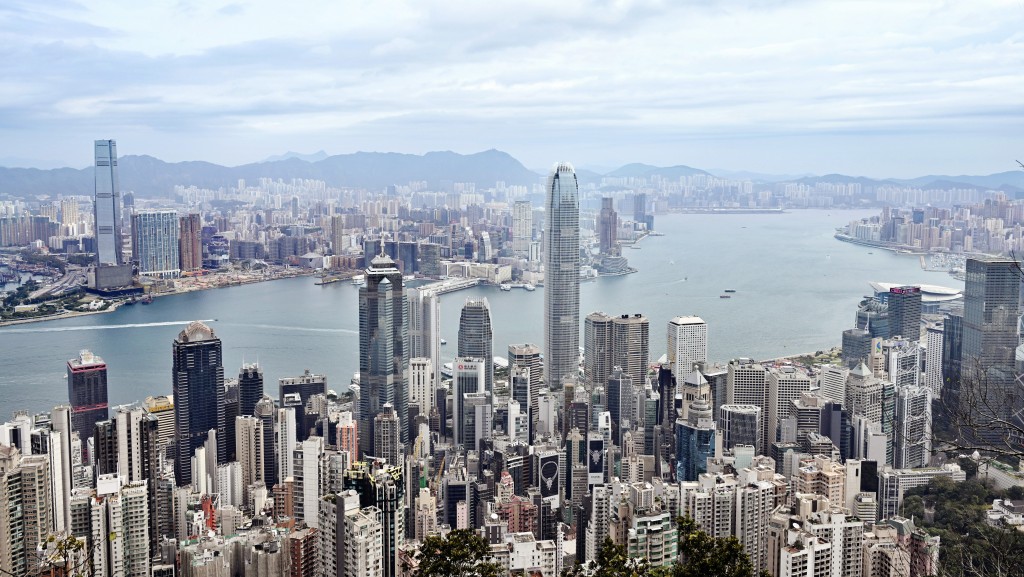
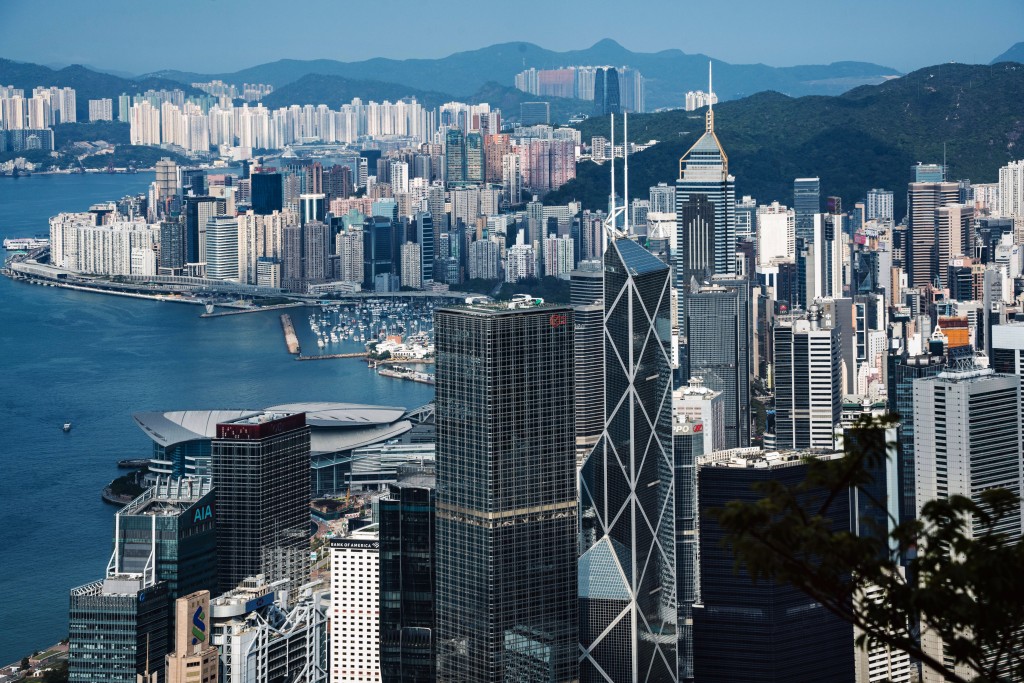
The Shenzhen–Hong Kong–Guangzhou innovation cluster has claimed the top spot in the Global Innovation Index (GII) 2026, following the release of the World Intellectual Property Organization’s (WIPO) top 100 science and technology cluster rankings on Tuesday.
The GII cluster ranking measures local concentrations of world-class innovation activity based on three core metrics: international patent filings through WIPO’s Patent Cooperation Treaty (PCT), scientific publications, and the total number of venture capital (VC) deals.
“We warmly welcome the innovation cluster ranking published by WIPO, which reaffirms the outstanding innovative capacity of the Guangdong–Hong Kong–Macao Greater Bay Area (GBA) and the innovation and technology (I&T)-supporting financing ecosystem,” a government spokesman said.
Accelerating I&T growth has remained a core policy priority for the current administration.
The government has focused on expanding the local I&T ecosystem, including the development of the original grant patent system and the implementation of the “patent box” regime, which provides tax concessions on intellectual property income to stimulate innovation, the spokesperson added.
Authorities noted that Hong Kong is actively deepening cooperation with neighboring GBA cities while refining its local development model to foster deeper integration between technological breakthroughs and industrial applications.
The efforts are already bearing fruit, the government said.
The number of start-ups increased from more than 1,500 in 2015 to more than 5,200 in 2025, and around 20 unicorns have been born in two local I&T flagships, Hong Kong Science Park and Cyberport, to date.
In addition, the Hong Kong Park in the Hetao Shenzhen–Hong Kong Science and Technology Innovation Co-operation Zone was officially opened in December 2025, and more than 100 technology enterprises and institutions have signed leases and begun moving in.
The San Tin Technopole Company Limited was also officially established in June 2026 to press ahead with the development of 210 hectares of I&T land in the San Tin Technopole, which will form a crucial node for the integrated development of upstream, midstream and downstream industries together with Loop Hong Kong Park.
Hong Kong also maintains a thriving private equity market with nearly US$250 billion in assets under management, ranking second in Asia behind mainland China.
To strengthen the startup financing pipeline—from basic university research and seed funding to scaling, commercialization, and global market expansion—the government established the HK$10 billion I&T Industry-Oriented Fund, the HK$10 billion Research, Academic and Industry Sectors One-plus Scheme, and the Pilot I&T Acceleration Scheme.
Meanwhile, the Hong Kong Investment Corporation Limited functions as patient capital, investing in early-stage ventures with a long-term horizon to guide private institutional funding toward strategic and emerging industries.
“Going forward, we will proactively align with the National 15th Five-Year Plan to strengthen our strategic positioning as an international I&T center,” the government spokesperson said.
For this year’s ranking, the Shenzhen–Hong Kong–Guangzhou cluster filed 2,259 PCT applications, published 4,060 scientific articles, and recorded 138 venture capital deals—each per one million inhabitants over the last five years.