The Hong Kong Section of the Hong Kong-Shenzhen West Rail Link, or HSWRL, is set to go to tender in the first half of next year, with authorities projecting its passenger volume to surpass Lo Wu Station upon completion.
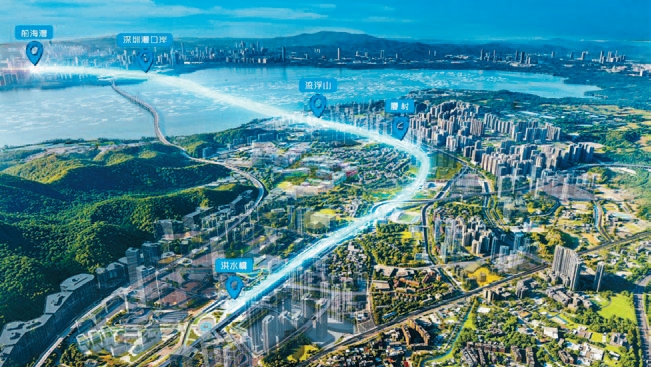
Aligning with the nation’s 15th Five-Year Plan, the 18-kilometer cross-border railway is planned to connect Hung Shui Kiu Station on the Tuen Ma Line with Qianhai in Shenzhen, passing through Ha Tsuen and Lau Fau Shan.
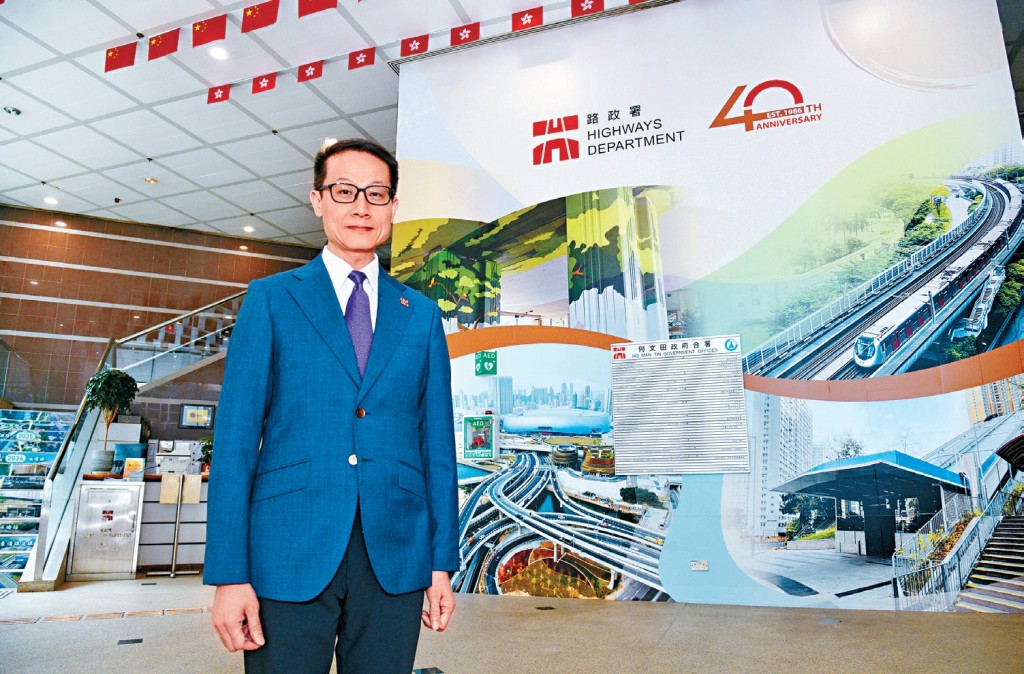
In an exclusive interview with Sing Tao, the sister publication of The Standard, director of highways Tony Yau Kwok-ting stated that the government is pushing ahead at full speed with the investigation and design work for the construction of the HSWRL. He described the railway as a strategic transport infrastructure to boost connectivity across the Greater Bay Area and deepen high-end economic collaboration between Hung Shui Kiu and the Qianhai Co-operation Zone.
To achieve completion of construction works in 2034, and commissioning of the Hong Kong Section in 2035, Yau noted that the target is to hold a tender for the project by the first half of 2027.
While Hong Kong’s existing cross-border rail services are mostly concentrated in the eastern and central New Territories with the East Rail Line, he stressed the new link will provide convenient border crossings for passengers in the western New Territories and the Greater Bay Area.
“The operation of the HSWRL will completely change the landscape of cross-border railway,” Yau said, predicting that the passenger volume will surpass that of Lo Wu Station, attributed to its convenience.
The project will connect Hung Shui Kiu Station with Qianhai in Shenzhen.
He added that a trip from Hung Shui Kiu to Qianhai will take approximately 15 minutes, offering residents faster, direct access to Shenzhen Bay Port while enhancing connectivity for the city's integration into national development.
Addressing suggestions to expand the railway to connect to Hong Kong International Airport and the existing rail network, including Sunny Bay Station, Yau said different options are under assessment. Citing potential factors ranging from passenger volume, construction costs and engineering challenges, Yau assured that the department is working towards final alignment and the timeline.
To preserve flexibility for future constructions, Yau said the Hung Shui Kiu Station has been designed with an “overrun tunnel,” similar to Tung Chung Station, allowing seamless extension without disrupting operations.
Unlike the past heavy rail projects, which were largely handed directly to the MTR Corporation, he stated that the HSWRL will be procured through open tender.
He revealed that the department had received about 80 expressions of interest from construction firms, operators, suppliers, and design institutes last year, expressing confidence in finding tenders with strong design and operation capabilities.
City's largest road project progressing ahead of schedule
Stretching 24 kilometers, the Northern Metropolis Highway, Hong Kong’s largest single road project, is set to open its San Tin Section in 2034, two years ahead of schedule.
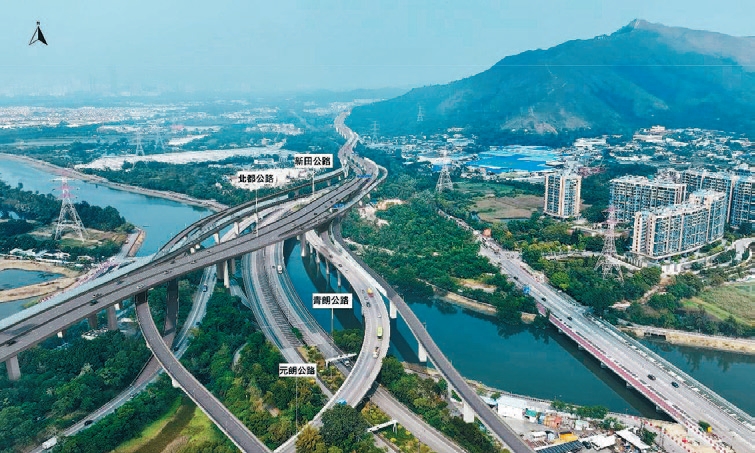
Part of the government's “Eight Vertical and Eight Horizontal” transport blueprint, the NMH will serve as a major east-west corridor
linking development nodes across the Northern Metropolis through four sections: Tin Shui Wai, San Tin, Kwu Tung, and the New Territories North New Town sections.
The Northern Metropolis Highway consists of Tin Shui Wai, San Tin, Kwu Tung and the New Territories North New Town sections.
The approximately 9-kilometer-long San Tin Section has been prioritized to support the development of the San Tin Technopark and Ngau Tam Mei area, according to Highways Department chief engineer Derek Chung Chi-yan. Following the completion of design work, environmental assessments, and gazettal procedures, the project is on track for tendering in 2027, with progress exceeding expectations.
With east-west traffic in the New Territories relying mainly on Fanling Highway and San Tin Highway, Chung said the new route will connect key development areas and improve cross-border travel along five land checkpoints.
Early industry insight reduced tunnel length from over 5km to around 2.5km and replaced large interchanges with an intelligent traffic signal system, lowering costs and shortening construction time.
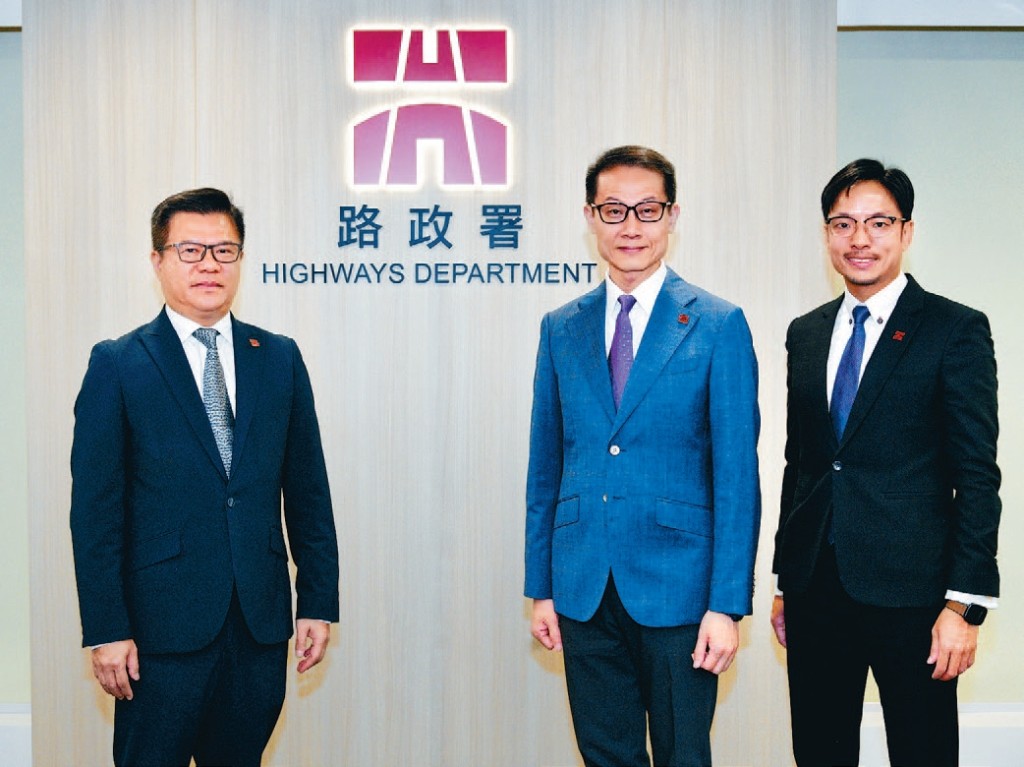
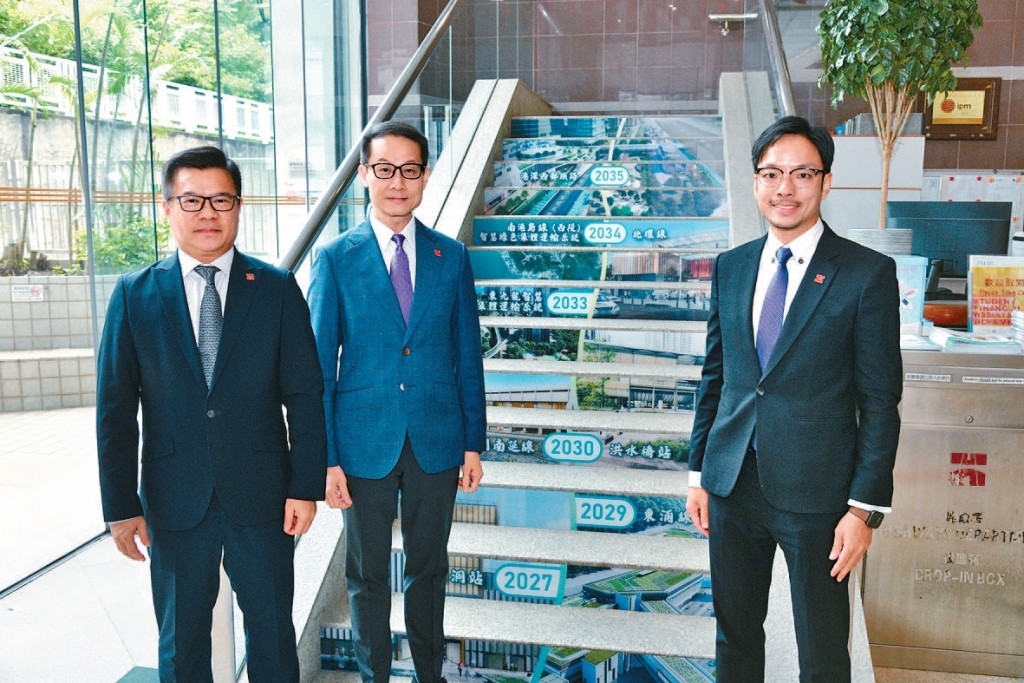
(From left) Principal Government Engineer (Railway Development) Eddie Leung Siu-kong; Director of Highways Tony Yau Kwok-ting; Highways Department chief engineer Derek Chung Chi-yan
New urban links showcase potential for ‘bridge tourism’
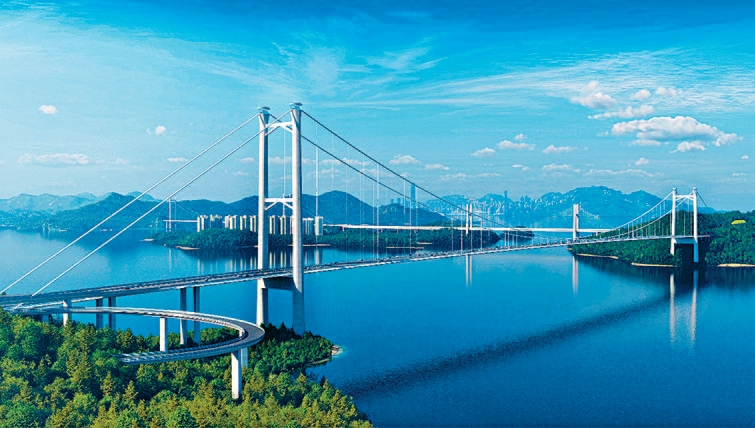
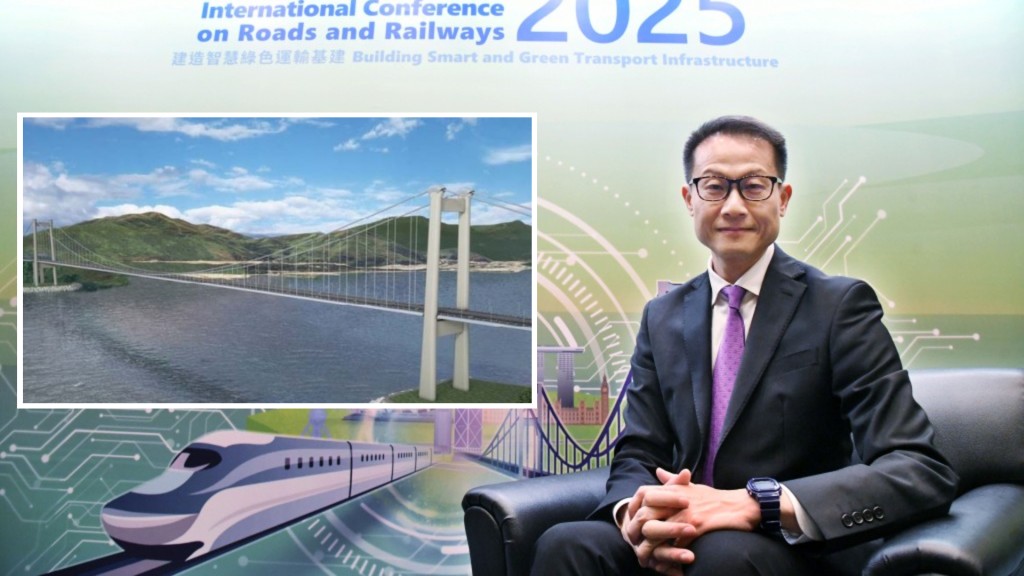
As a new symbol of greater connectivity, the Tsing Lung Bridge is moving forward with potential paid access for visitors to its unique “H” and “K” shaped towers.
The suspension bridge, a key section of the Route 11 project, is being prioritized by the Highways Department to enhance transport connectivity between the Northern Metropolis and the Harbour Metropolis.
Upon completion, it is expected to divert traffic from existing major roads, including Tuen Mun Road (Sham Tseng Section) and the Ting Kau Bridge, easing traffic congestion.
With the Tsing Lung Bridge design work in progress, Highways Department chief engineer Derek Chung Chi-yan said the authorities are actively exploring the concept of “bridge tourism” to transform the infrastructure into a tourism landmark. Citing successful examples such as BridgeClimb at Sydney Harbour Bridge and the tourist-oriented design of the Huajiang Canyon Bridge in Guizhou, Chung revealed that the department is studying the feasibility
of adopting paid access to the bridge.
Derek Chung believes the asymmetrical design of Tsing Lung Bridge will make it a new tourist hot spot.
The initial plan is to open the bridge’s deck or underside, along with viewing platforms and elevators to offer tourists panoramic sea views and photo opportunities up top.
As the city’s first dual four-lane carriageway bridge, its asymmetrical design – an “H” tower and a “K” crossbar together forming a visual “Hong Kong” – Chung is confident the bridge will become a new hot spot among tourists. In a bid to meet the traffic demand of the North West New Territories, Route 11 is set to serve as a strategic trunk road with four major interchanges, three tunnels, two open sections, and the Tsing Lung Bridge. Notably, it is expected to shorten the journey from the Lam Tei Quarry to North Lantau, routing through So Kwun Wat and Tai Lam Chung, to approximately 12 kilometers.