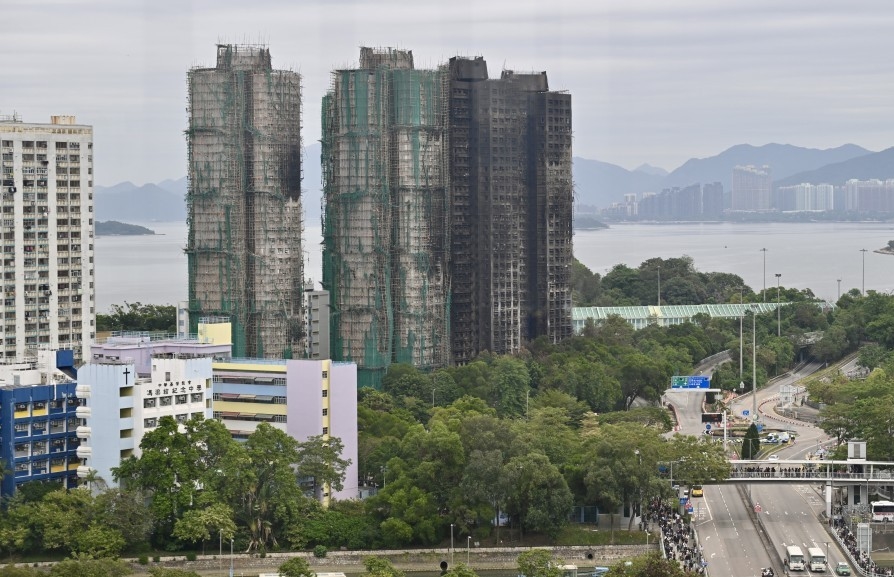
Hong Kong’s building maintenance sector has long been plagued by “widespread” and “systemic” anti-competitive practices that go beyond bid-rigging to include price-fixing, market sharing, and ghost bidding, the Competition Commission said on Tuesday during the public hearing held by the independent committee investigating the Tai Po inferno.
Lester Lee Hui-leung, the watchdog’s executive director (legal services), said these practices often include price fixing, in which contractors agree not to bid below a set price to secure excessive profits.
He noted that multiple contractors also divide up markets, such as “I will take Kowloon, you take the New Territories," which eliminates the need for further collusion because an overarching market‑sharing agreement is already in place.
Lee added that some contractors supply their document templates and email drafts to other bidders to create a false appearance of competition.
He also described “phantom bids,” where bids seem independent but are controlled by the same commercial entity.
He explained that bid-rigging takes several forms, including bid suppression, where one bidder agrees with another not to submit a bid or to withdraw it, as well as cover bidding, in which certain bidders agree to submit higher or less competitive bids to ensure a designated winner prevails.
On consultants falsifying reports, Lee noted that some consultants also tip off favored contractors and advise them to deter other bidders. In large tenders, multiple collusive groups may act in coordination. These rings are extensive, systematic, and operate across Hong Kong.
He noted that the commission has launched multiple investigations since 2024 and has contacted owners’ corporations to keep them informed.
Lee urged authorities to impose fines that recover all profits from rigging and to bar offending firms from the market to prevent repeat abuses.
The commission also called for the Competition Ordinance to clarify whether the commission should meet civil or criminal standards of proof in court and to adopt proven overseas legal presumptions to reduce the chances of bid‑riggers evading punishment.