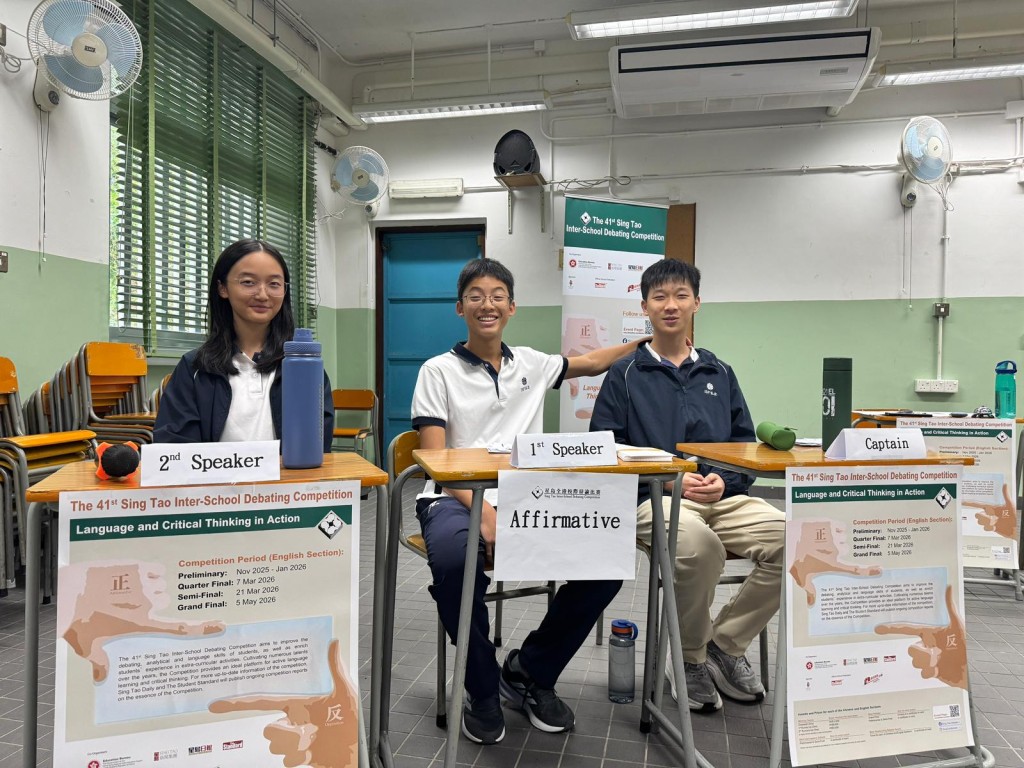
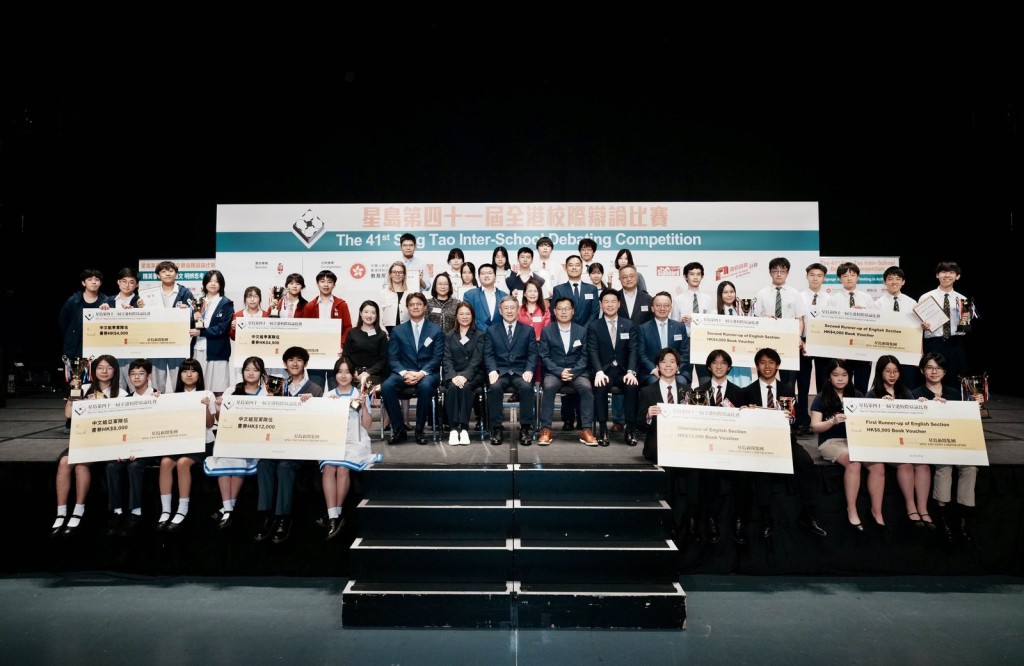
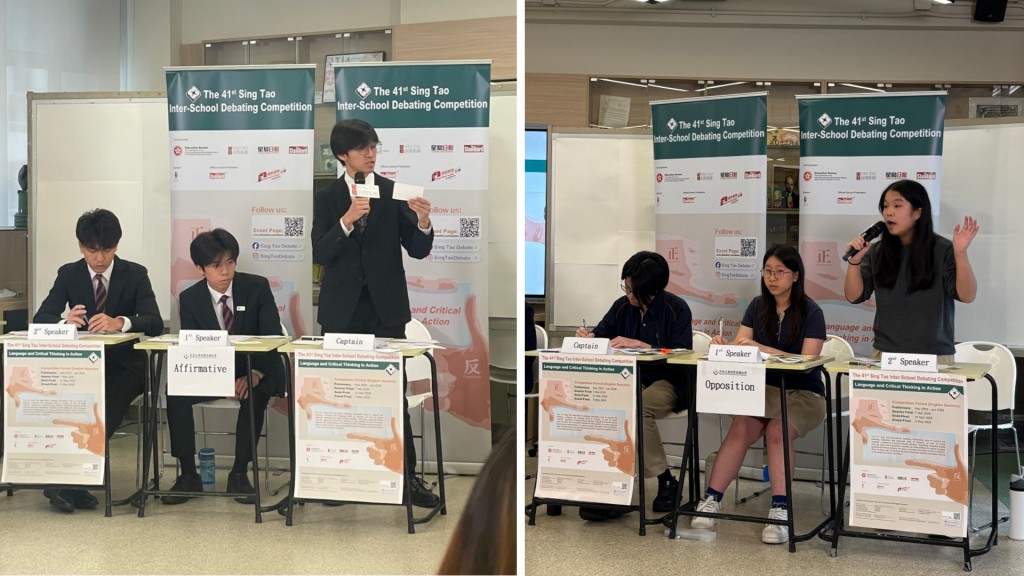
With the quarter-finals of the 41st Sing Tao Inter-School Debating Competition (English Section) approaching, eight schools will put countless hours of preparation to the test this Saturday.
Co-organized by Sing Tao Daily, The Standard, and the Education Bureau, and sponsored by the Standing Committee on Language Education and Research (SCOLAR), this year's line-up features a mix of seasoned champions and hungry newcomers.
Beyond sheer hard work, these eight teams have sharpened unique strategies to gain an edge to shine.
Passion into motivation: St. Joseph's College
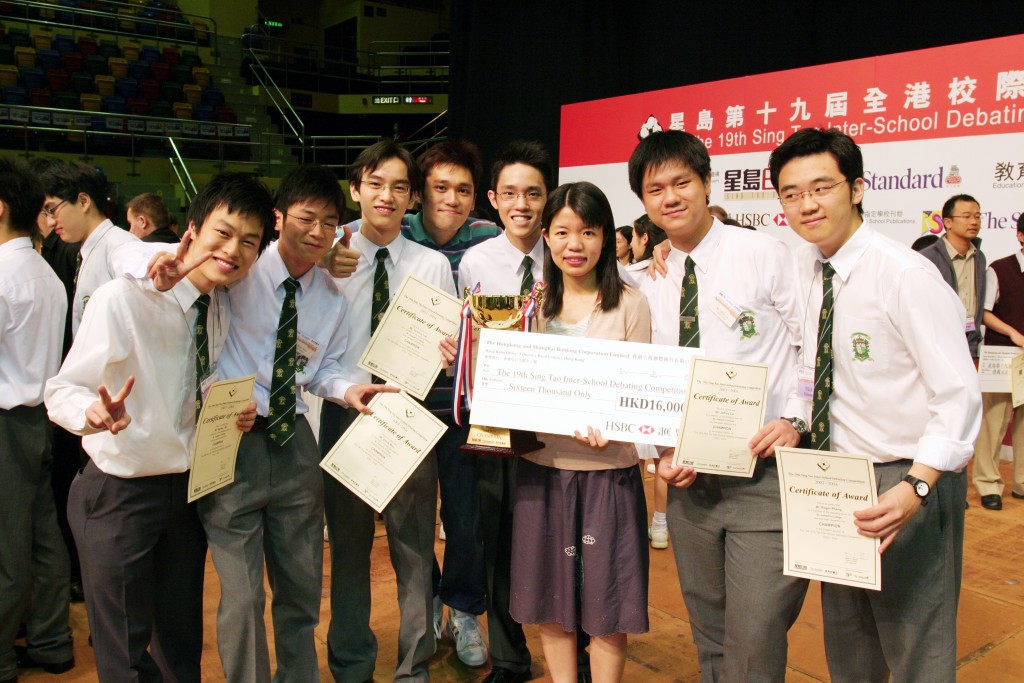
Among the contenders is St. Joseph's College (SJC), a two-time champion in the 19th and 20th editions, which attributes its success to transforming passion into a winning formula.
"When you debate for fun, you naturally give it your all," said teacher surnamed Kam, crediting passion as the driving force behind the team's motivation—despite the lack of a fixed training schedule.
In preparing for the debate competition, Kam emphasized the importance of crafting arguments with a deep understanding of the motion and its context, rather than rushing into rebuttals.
Nurturing young debaters from Form One: St. Paul's College
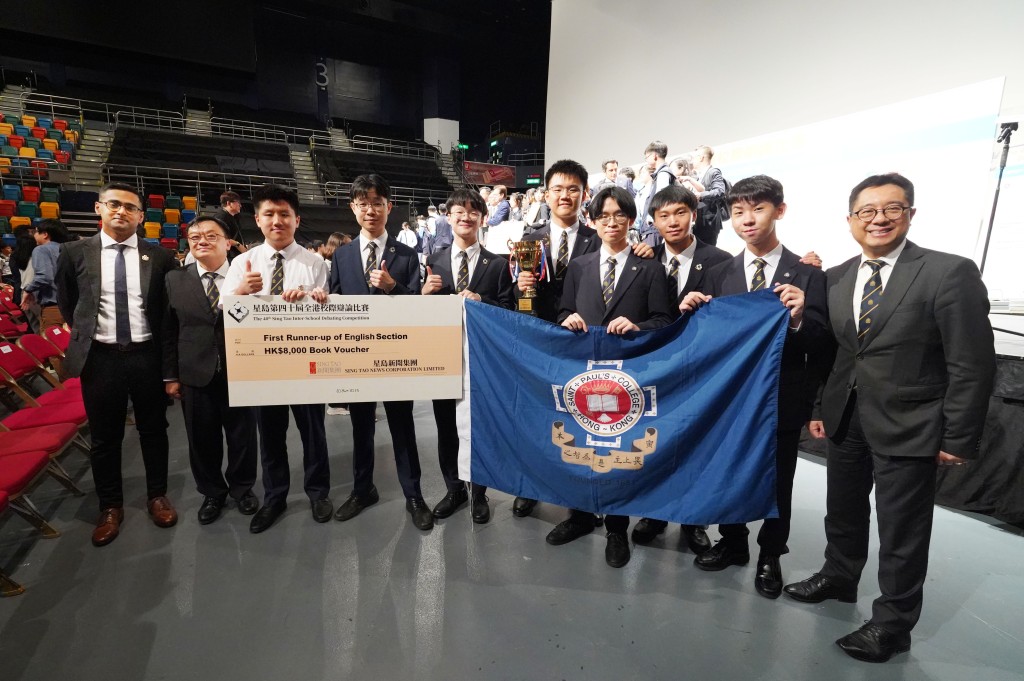
Last year's runner-up, St. Paul's College, credits its consistent performance to a long-term approach: nurturing debaters from Form One with specialized training.
Through inter-class, mock, and external debates, students gain confidence and sharpen their English reasoning skills.
In preparation for the Sing Tao competition, the debate team holds mock debates in the days leading up to the event, helping members sharpen quick thinking, rebuttal skills, and the ability to adapt on the spot.
Knowledge-sharing: HKBU Affiliated School Wong Kam Fai Secondary and Primary School
For three-time champion Hong Kong Baptist University Affiliated School Wong Kam Fai Secondary and Primary School, success is built on robust knowledge-sharing and autonomous preparation systems.
Teacher Kwok highlighted the team's strong collaboration between teachers and alumni with varying backgrounds, providing ample resources to enhance members' debating and analytical skills.
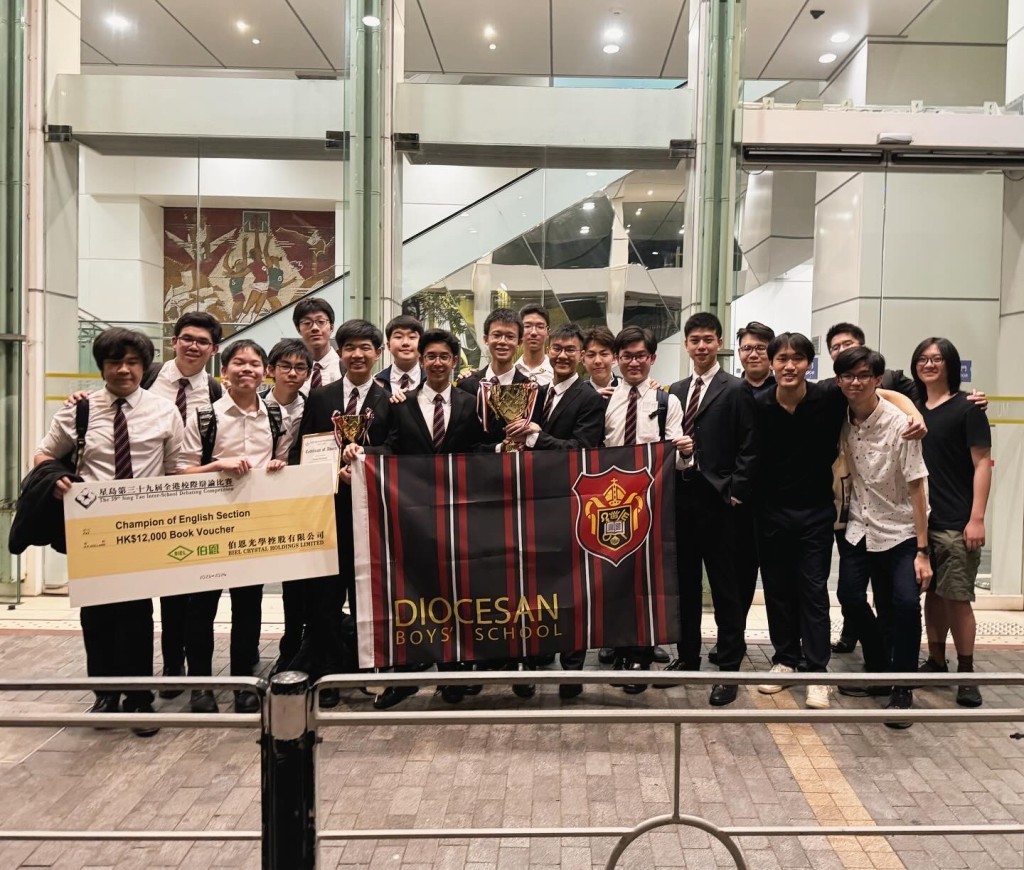
A 144-hour sprint: Diocesan Boys' School
For the Diocesan Boys' School, a veteran participant since the tournament's inception, the tip is to utilize the 144 hours after the motion drops.
With a deep debating culture at the school, teacher Tso mentioned that students have gradually established a systematic approach to preparation, deconstructing topics and engaging in comprehensive readiness—laying a solid foundation for their success.
Preparation is key: International Christian School
Entering the top eight for the first time in its four-year participation, International Christian School credits its success to rigorous preparation.
Team coach Rut Edwards stressed that research is key to debating prowess, adding that practices in instant rebuttals sharpen students' quick thinking and improvisation—allowing debaters to build arguments and counterpoints on the fly during competitions.
Making preparation a habit: ISF Academy
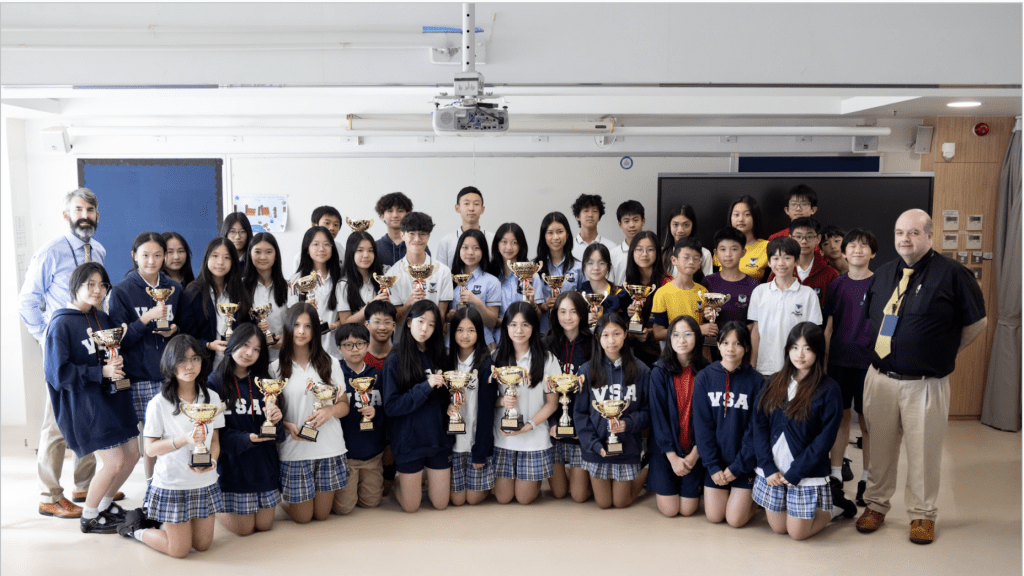
Also a first-time quarter-finalist, ISF Academy credits its success to team organization, a deep understanding of competition rules, and attention to strategic detail.
Coach Terkpertey Andrews Terku revealed that students are trained with a "3-4 steps ahead" mindset to anticipate opponents' moves and adapt under pressure.
"We want them to be competitive thinkers, not just polished speakers," he said.
Alumni legacy drives success: Raimondi College
Reaching the quarter-finals for the first time in over a decade, Raimondi College shared its strategy: building a comprehensive argument framework through research before launching attacks.
Teacher Chin also attributed the team's success to invaluable alumni support, with former debaters returning to mentor current students.
"It's about passing the torch—debate is a lifelong skill, not just a competition," she noted.
Weekly training to debate with precision: Victoria Shanghai Academy
Having consistently improved over its four years of participation, Victoria Shanghai Academy's coach Michael Silber credits the team's success to sharp Points of Information (POI) skills.
"After weekly training and extra coaching sessions, our debaters ask tougher questions that throw opponents off balance," he explained—a skill that weakens the other side's arguments while bolstering their own.
During training for the upcoming contest, the team emphasizes careful listening and effective note-taking, which helps debaters challenge opponents' arguments and evidence with precision.