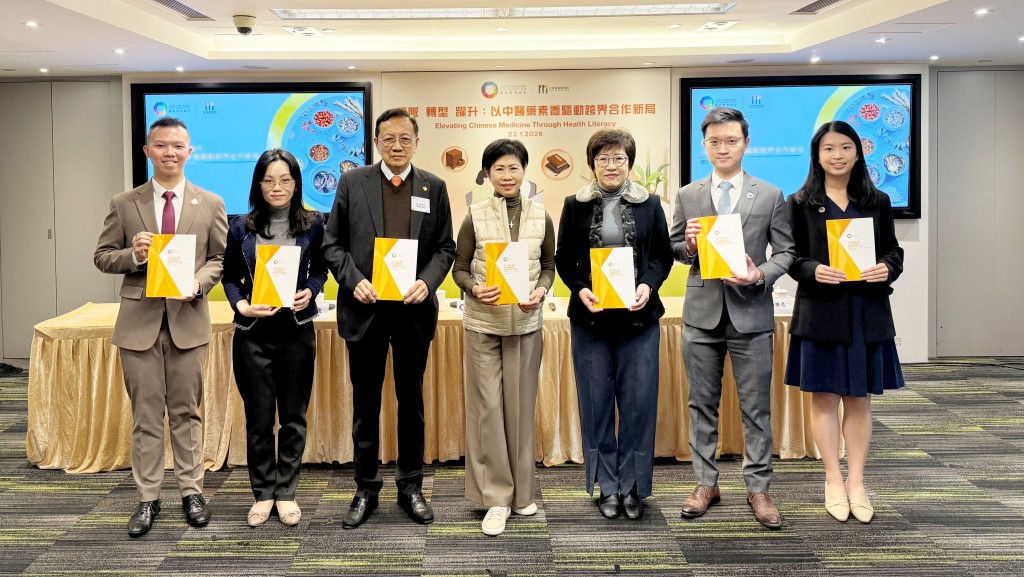
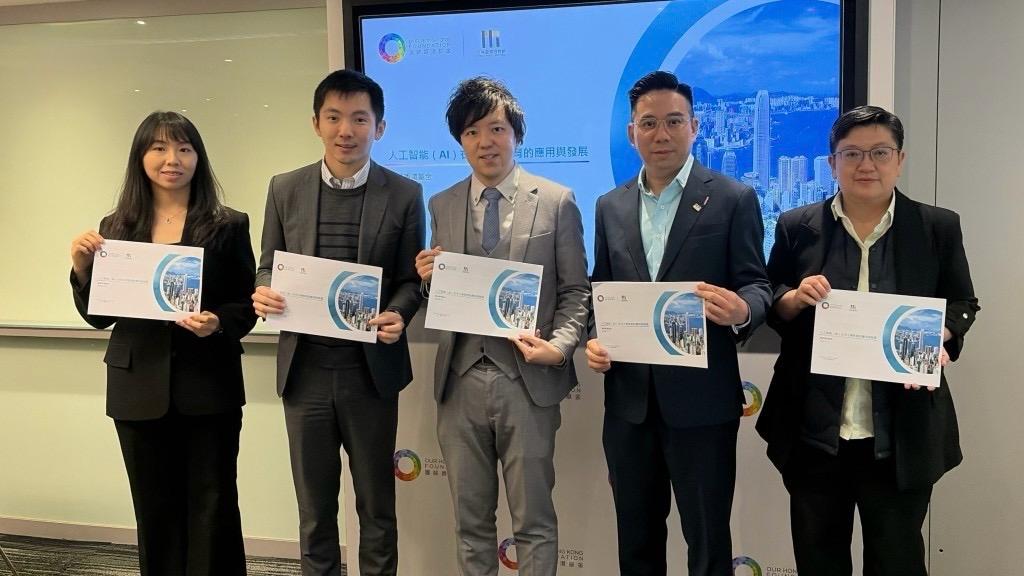
More than 40 percent of respondents struggle to differentiate between proprietary Chinese medicine and health supplements, according to a survey conducted by the Our Hong Kong Foundation (OHKF).
The research is part of the collaboration between the think tank and the Hong Kong Polytechnic University to develop Hong Kong’s first Chinese Medicine Health Literacy Scale (CMHL Scale), which assesses the public’s knowledge and competence regarding related health information.
Titled Taking the Pulse of Transformation: Elevating Chinese Medicine Through Health Literacy, the report surveyed 800 citizens and found a moderate CMHL level of 69.8 out of 100.
The results showed that 85.3 percent of respondents could apply Chinese medicine advice, such as environmental or dietary adjustments, to improve their physical health.
However, 40.2 percent found it difficult to tell the difference between proprietary Chinese medicine and health supplements.
Meanwhile, 32.9 percent were unclear about how to obtain legally valid sick leave certificates issued by Chinese medicine practitioners. 26.4 percent were unaware of how to provide feedback or file complaints about Chinese Medicine services to the relevant authorities.
Most respondents obtained Chinese medicine information through social media in the past six months, accounting for 48.5 percent. 40.6 percent and 39.5 percent received information from relatives and friends and television, respectively, while a mere 19.1 percent sought it from healthcare professionals.
The think tank recommended that local higher education institutions incorporate practical Chinese medicine content into existing curricula and arrange short-term clinical attachment programs for medical students to enhance their understanding of clinical processes.
The report also suggested strengthening public awareness by using mental health as a focal point. The Chinese Medicine Development Blueprint has identified depression as a condition that can benefit from Chinese medicine.
It allows the government to promote Chinese medicine involvement in mental health services and strengthen interprofessional collaboration.
In addition, OHKF proposed making the Hong Kong Chinese Medicine Culture Festival an annual event with ongoing evaluation of its effectiveness.
It also called for collaboration between the Chinese medicine and education sectors to help children and adolescents develop a correct understanding from an early age.
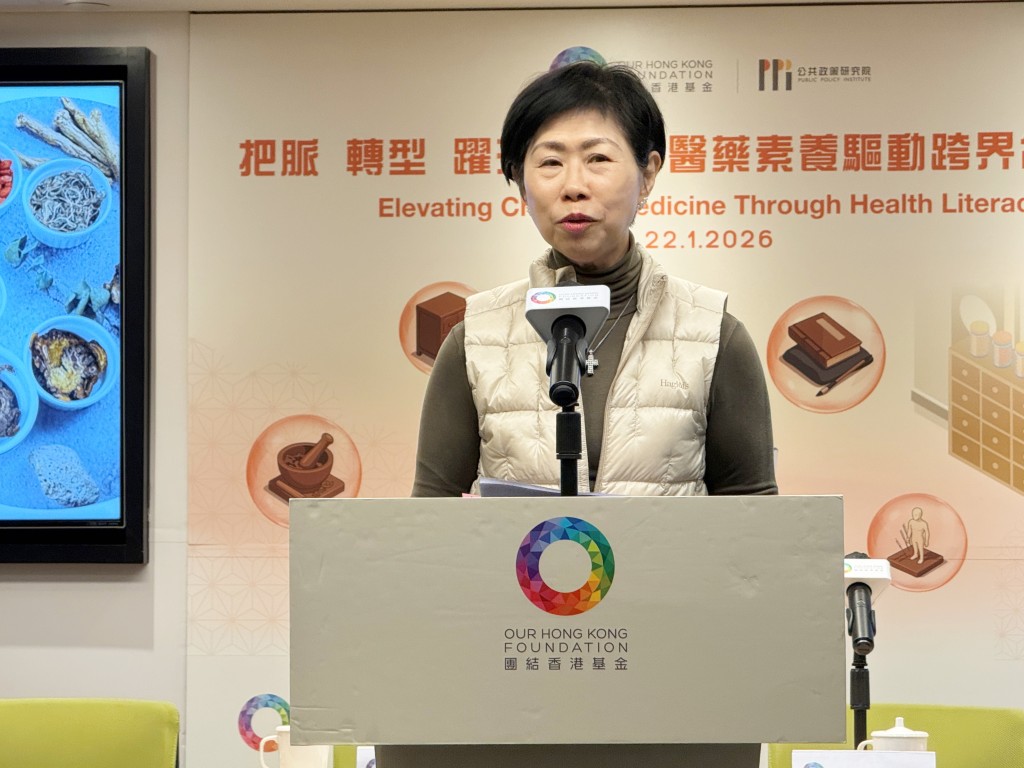
President of OHKF Jane Lee Ching-yee noted that the report successfully established the city’s first scientific tool for assessing Chinese Medicine health literacy.
She encouraged enhancing Chinese medicine understanding among citizens and healthcare professionals through policy evaluation, service provision, talent training, and education.