Read More





Hong Kong Red Cross volunteers describe life inside Rafah’s overstretched field hospital as war, hunger, and displacement push its patients to the brink
Hong Kong Red Cross medical personnel have described rationing blood, operating under fire, and renewed air strikes.
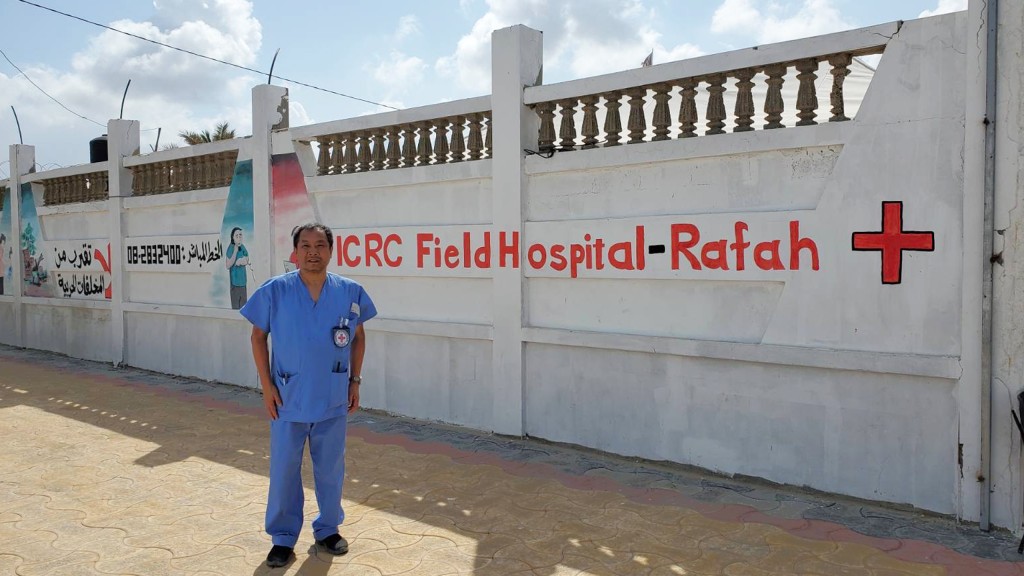
Six senior doctors and nurses from Hong Kong have rotated through the Red Cross field hospital in Rafah, now one of the last fully operational hospitals in the area and routinely packed beyond its 60-bed capacity.
They are working in an enclave where the conflict has passed its second anniversary, tens of thousands have been killed, and almost the entire population has been displaced.
For anaesthetist Dr Ben Ng Siu-pan, Gaza is the culmination of a decision taken years earlier in another conflict.
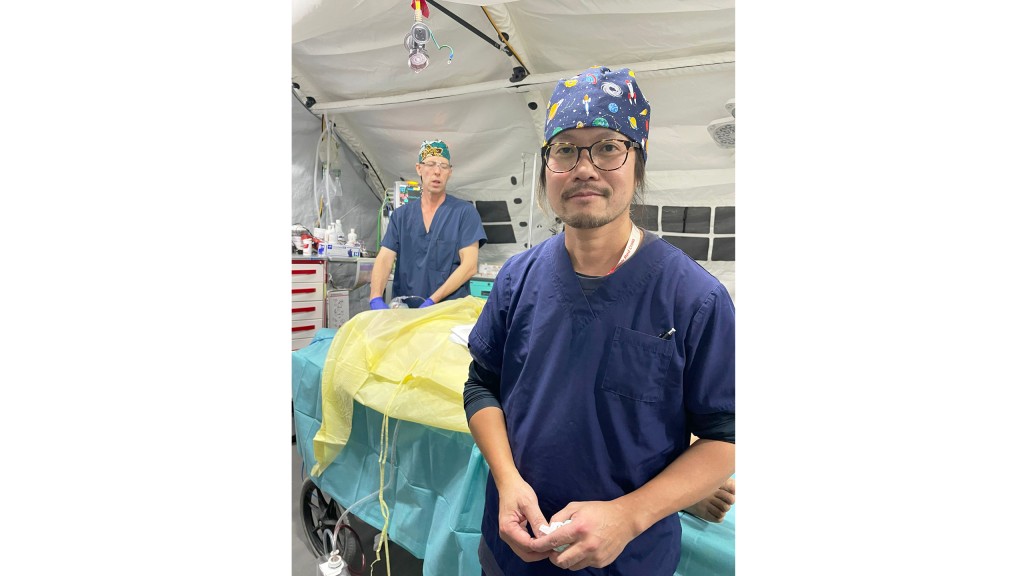
Originally an emergency physician, he served in Sri Lanka’s Tamil region, where he watched patients with traumatic amputations die because no one could anaesthetise them for surgery.
Back in Hong Kong, he “started from zero”, spending six years retraining in anaesthesia and another six in public hospitals before returning to humanitarian work.
On the ground, medical teams are repeatedly confronted with acute triage dilemmas as they attempt to manage life-threatening bleeding with constrained supplies.
“If one patient is bleeding massively, the medics must decide how far they can go in treating that case, fully aware that others may be left without blood,” he told The Standard.
With drugs and monitoring equipment in short supply, he relies on spinal and nerve blocks so operations can continue even when standard general anaesthetic agents are scarce.
Emergency nurse Chan Chi-Keung helped establish an outpatient department that sees an average of 200 to 300 patients a day, in addition to dozens of emergency cases.
“TV shows the blast injuries,” he said, “but people also need treatment for high blood pressure, diabetes, infections, and children’s illnesses – all the ordinary problems that used to be handled by community clinics.”
With only one or two types of medicine for chronic disease, doctors often have to prescribe “the most basic regimen” and hope patients can return for follow-up.
Palliative care nurse Carmen Kwok, who has responded to the Indian Ocean tsunami, Kenya floods, the Wenchuan earthquake, and Ebola outbreaks, says Gaza is “far more shocking”.
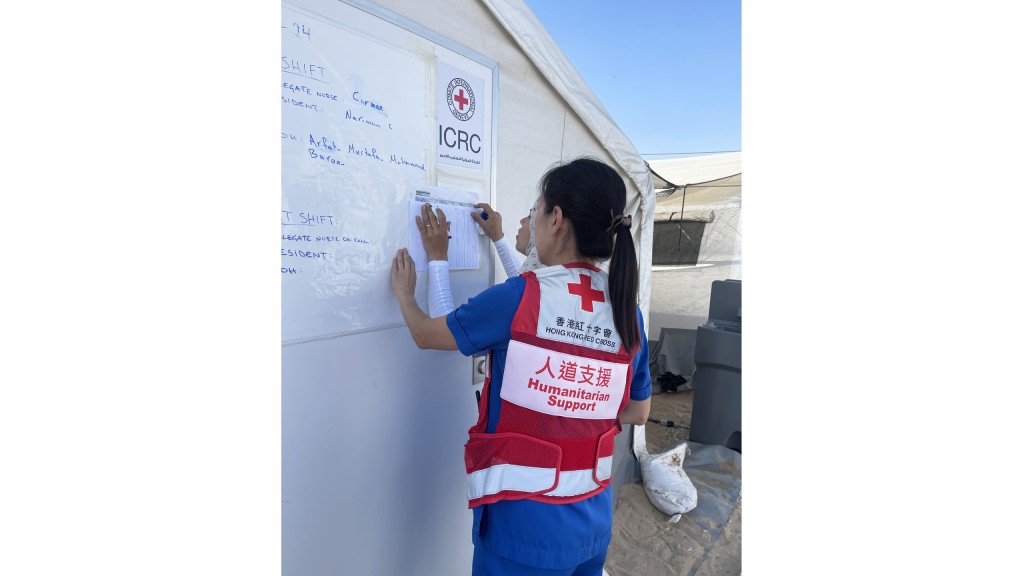
On her third day at the Rafah hospital, a massive explosion sent a surge of casualties into the “red zone” trauma room; she recalls freezing at the doorway as she surveyed the blood-slicked floor and screaming patients before forcing herself to go in.
Her Hong Kong employer, a Christian palliative-care centre, gave her unpaid leave and promised to pray for her. “My boss said, ‘If you feel called to go, then go – we will support you,’” she said.
Nurse Walter Leung Wai-yin, a Florence Nightingale medallist, has already completed three rotations and is preparing for a fourth.
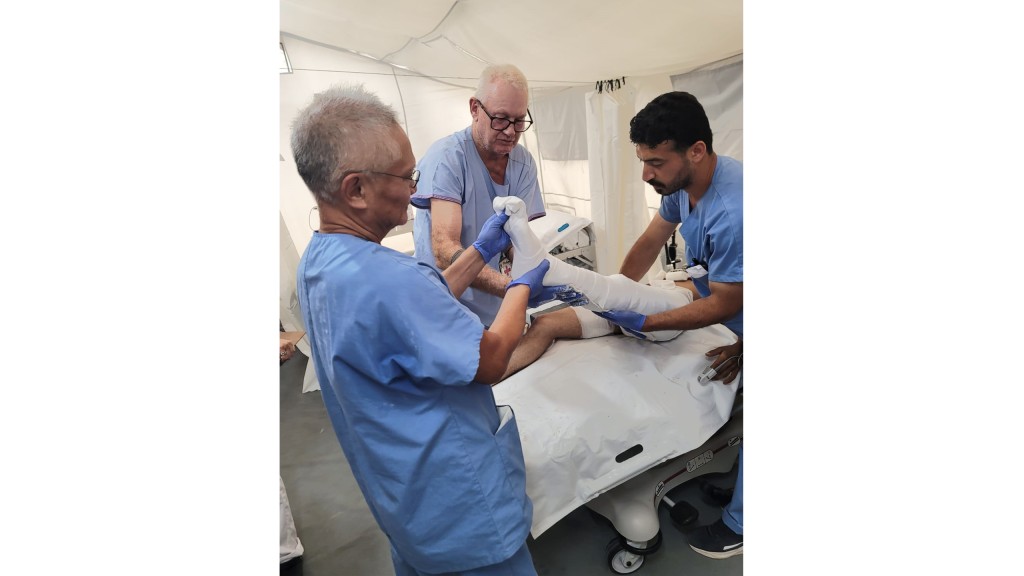
“I must come back,” he told himself after treating badly injured children from a market blast. He reserves his highest praise for Palestinian colleagues who commute for hours from refugee camps despite having their own homes destroyed.
Two others, Dr Au Yiu-ka, a former senior surgical consultant at a public hospital who has carried out 29 overseas missions, and Dr Chau Yau-ming, an emergency room doctor, also participated in relief efforts in Gaza. Dr Au departed for Gaza on 22nd November for his fourth trip to continue humanitarian work, and he hopes everyone will continue to pay attention to the humanitarian crisis there. A&E doctor Dr Chau Yau-ming also hopes that medical personnel will continue to uphold their mission and find ways to save lives.
The Hong Kong Red Cross says it will continue deploying medical personnel if security permits, urging the public not to forget people in Gaza who are still in desperate need.