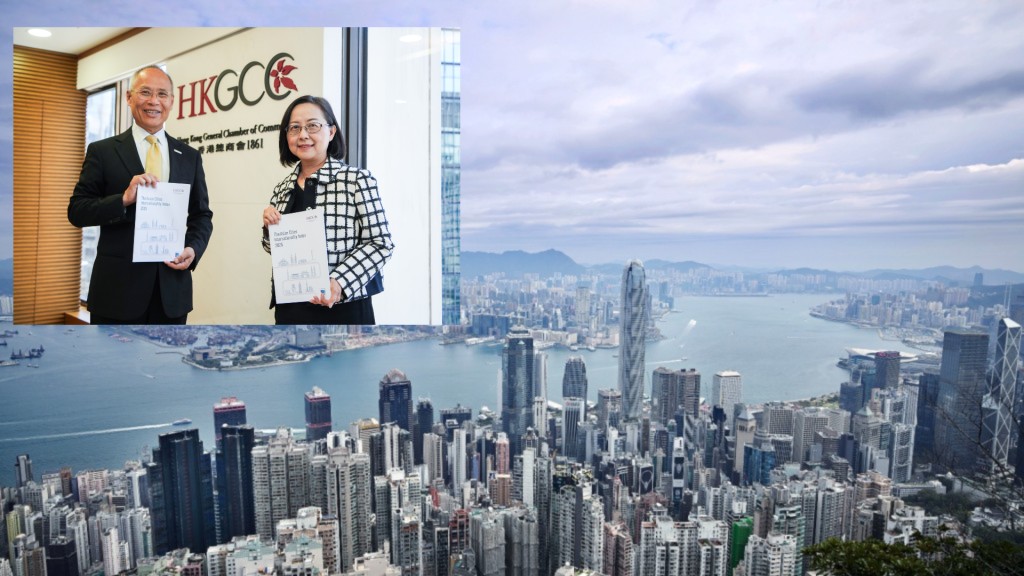
Hong Kong has claimed the top spot in the inaugural Asian Cities Internationality Index 2025, narrowly edging out Singapore, for excelling in the "Business and Economy", "Quality of Life" and "Infrastructure and Connetivity" categories.
Hong Kong General Chamber of Commerce Chairman Agnes Chan Sui-kuen expressed confidence that the city will improve next year and widen its lead over Singapore.
The index, billed as an independent framework, is a new initiative by the HKGCC, assessing 11 major Asian cities across seven different areas as global business hubs.
In the overall results, out of 100 marks, Hong Kong ranked first with a score of 73.7, marginally outshining Singapore which scored 73.5, followed by Tokyo at 70.0.
Other cities are: Seoul (69.4), Shanghai (65.1), Bangkok (61.3), Kuala Lumpur (60.7), Taipei (57.9), Jakarta (55.5), Ho Chi Minh City (53.9) and Mumbai (53.1).
Among the seven areas, Hong Kong topped in “Business and Economy” because of its free and diversified financial markets, trading activities and an open environment.
The city also excelled in “Quality of Life” because it can offer a free, safe and stable living environment, and came off strong in “Infrastructure and Connectivity.”
However, the SAR stood at the fourth place for “Innovation and Ideas” and “Cultural Interaction,” and third at “Government and Legal System for Business.”
Shanghai was deemed the most innovative, as it is home to “unicorn” enterprises such as social media firm Xiaohongshu and self-driving technology supplier ZongMu.
Singapore led and outperformed Hong Kong in “Human Capital Diversity,” boasting a diverse talent pool from North Asia, Southeast Asia and other global economies.
Even though Singapore closely follows, Chan believed Hong Kong will show continued improvement in next year’s study, as various government initiatives begin to yield results, saying: “[Hong Kong] is moving in the right direction.”
For example, the Northern Metropolis, the cross-border tech park in Hetao, may boost the innovation indicator, while the newly opened Kai Tak Sports Park and upcoming major events could enhance the cultural indicator, she added.
The index also surveyed 1,107 business executives, both locals and expats, including those from the Middle East, Australia the Americas, Europe, and Africa.
Expats indicated that the most important factors encouraging them to stay in a city are the cost of living, quality of life, vibrancy, and career development opportunities.
HKGCC chief executive officer Patrick Yeung Wai-tim cited a European bank manager from Switzerland, who was assigned to Hong Kong and Asia for the first time.
“[The individual] was initially disappointed at the assignment, as the destination was Hong Kong rather than Singapore, but later became happy about how easy it was to make friends and the quick access to the city’s ‘backyard,’ such as mountain tops.”
Chan highlighted Hong Kong’s common law system and status as a free port as key strengths.
To enhance international influence on par with sovereign nations like Japan and Singapore, she proposed that Hong Kong attracts more global organizations to establish a presence, citing the International Organization for Mediation as a prime example.
(Jamie Liu)