Reuters and staff reporter
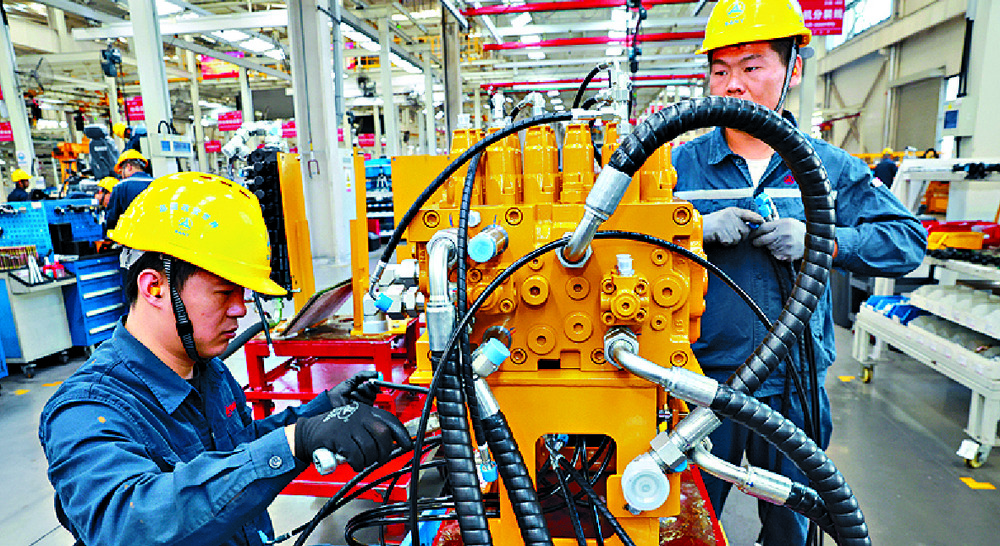
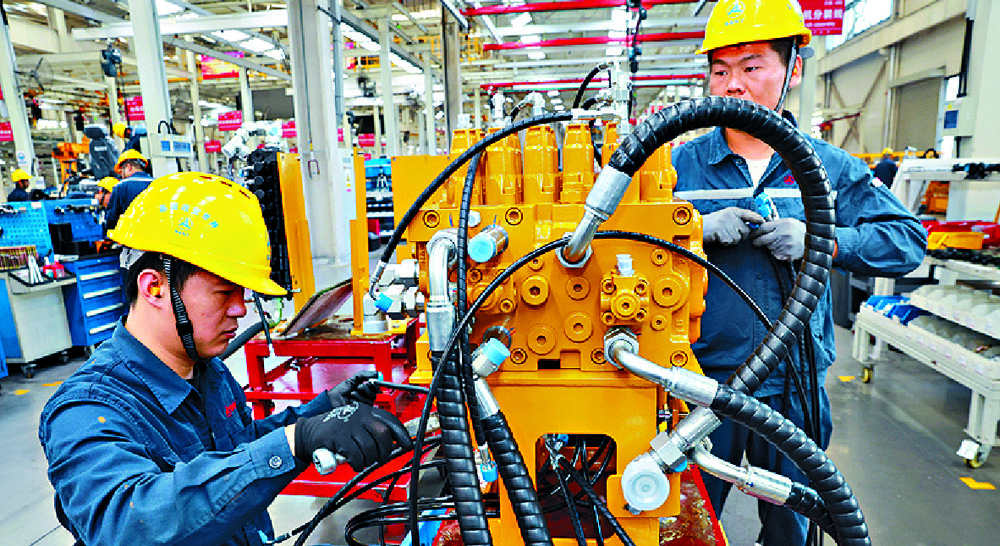
China's exports grew at their fastest pace in nearly one-and-a-half years in August, suggesting manufacturers are rushing out orders ahead of tariffs expected from a growing number of trade partners, while imports disappointed amid weak domestic demand.
The mixed trade data highlights the challenge facing Beijing as policymakers try to bolster overall growth without becoming too reliant on exports especially given the tightening of consumers' purse strings.
A survey last week showed factory gate prices at their worst in 14 months, pointing to producers slashing prices to find buyers.
Outbound shipments grew 8.7 percent year-on-year in value last month, the quickest since March 2023, customs data showed yesterday, beating a forecast 6.5 percent increase in a Reuters poll of economists and a 7 percent rise in July. But imports rose by just 0.5 percent, missing expectations for a 2 percent boost and down from the 7.2 percent growth a month prior.
"The strong export performance and trade surplus is favorable to economic growth in the third quarter and whole year," said Zhou Maohua, a macroeconomic researcher at China Everbright Bank. "However, the global economic and geopolitical environment is complicated and China's exports face a lot of headwinds," he added.
Economists have warned that Beijing risks undershooting its growth target if it becomes too reliant on exports, following a series of recent lacklustre data, raising pressure for more stimulus to revive China's economy.
Moreover, mounting trade barriers threaten China's price-driven export momentum.
China's trade surplus with the United States widened to US$33.81 billion (HK$263 billion) in August from US$30.84 billion in July. Washington has repeatedly highlighted the surplus as evidence of the one-sided trade favoring China.
Brussels has turned more protective too, while Beijing's is negotiating with the European Union to ease tariffs on Chinese electric vehicles. And Canada has announced a 100 percent tariff on Chinese EVs, along with a 25 percent tariff on Chinese steel and aluminium.
China is also facing push back in Southeast Asia and South Asia. India is planning to raise tariffs on Chinese steel, Indonesia is eyeing heavy duties on textile imports, and Malaysia opened anti-dumping investigations into plastic imports from China and Indonesia.
Still, some analysts expect outbound shipments to ride out the storm, given the relative inexpensiveness of China's yuan and the relative ease with which exporters can re-route their wares to avoid the tariffs.
"Outbound shipments are likely to remain strong in the coming months. Admittedly, more barriers are being erected," said Zichun Huang, China Economist at Capital Economics. "We doubt the tariffs announced so far will prevent real effective exchange rate declines from fuelling further gains in China's global export market share," she added.
The lower-than-expected imports might not bode well for exports in the coming months, as just under a third of China's purchases are parts for re-export, particularly in the electronics sector.
Furthermore, while China bought in a record 12.14 million tonnes of soybeans in August, there were ominous signs for future export performance.
Analysts say the buying spree was motivated by traders taking advantage of lower prices to stock up amid concerns trade tensions with the US could intensify if Donald Trump returns to the White House next year.
Exports rose 8.7 percent. AP