What is the low-altitude economy and its difference between China and the world?
The low-altitude economy is driven by various manned and unmanned low-altitude flight activities, promoting the integrated development of related fields.
Under current aviation standards, airspace below 6,000 meters is generally referred to as low altitude, according to Shanghe Technology chairman Jacqueline Kang Junjun.
When classifying aircraft by altitude, consumer-facing drones typically operate below 120 meters, such as DJI drones used for urban aerial photography.
Industry-grade drones, operating between 120m and 300m, handle tasks like real-time logistics and urban management. For instance, SF Express's unit offers services that aim for delivery within two hours.
Drones operating between 300m and 1,000m are also industry-grade, designed for express logistics, emergency material transport, and emergency rescue.
An example is the V2000CG unmanned aerial vehicle from Fengfei Aviation Technology, known as Autoflight, which is widely used in low-altitude logistics and emergency operations.
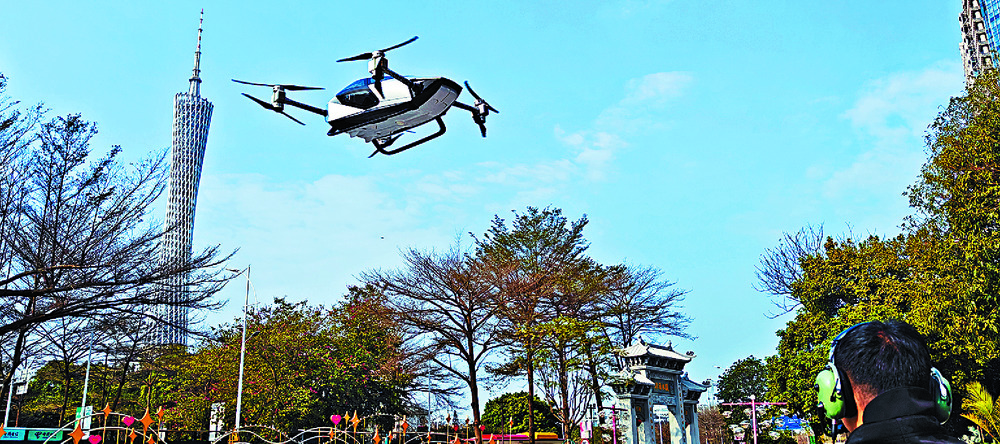
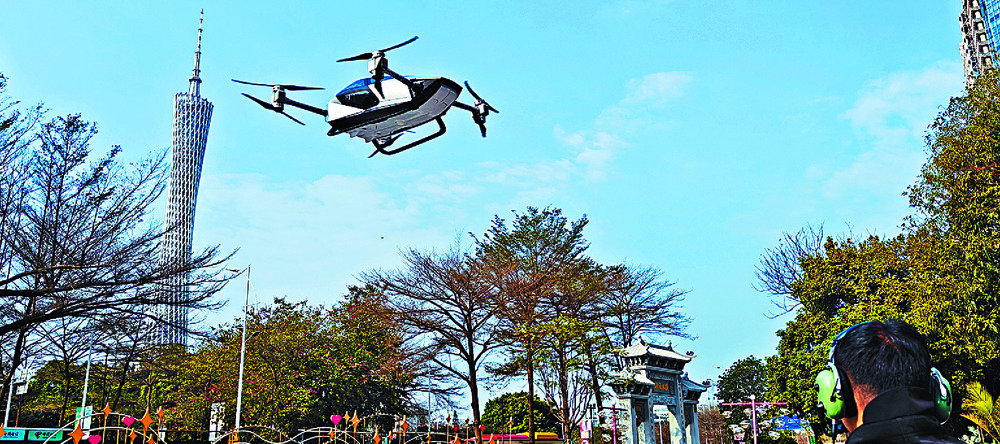
Manned aircraft, such as electric vertical take-off and landing or eVTOL aircraft, operate between 1,000 and 6,000 meters. For example, an eVTOL model called Shengshi Long developed by Autoflight made its maiden flight in February this year, flying from Shekou Cruise Center in Shenzhen to Jiuzhou Port in Zhuhai in about 20 minutes. Countries like Germany, the United States and Japan have also been focusing on low-altitude flights. The US Federal Aviation Administration issued airworthiness guidelines for eVTOLs last year and the European Union introduced new policies for eVTOLs last month.
Kang also noted some differences in low-altitude development between domestic and international contexts. In China, where cities are densely populated, smaller drones have been developed at an advanced stage.
Meanwhile, foreign countries will focus more on long-distance transportation scenarios and will require larger aircraft.
STAFF REPORTER