Read More




Peace talks with an unpredictable president | High-flier | Jeffrey Lam
14-04-2026 04:51 HKT



Chinese auto giant BYD's female CFO earns more than its founder last year
15-04-2026 19:12 HKT
It was especially nostalgic for me.
As the only Chinese in the group managing the company responsible for supplying the train system and equipment, I was asked to translate the press release and had about an hour to come up with the Chinese names for the winning companies to meet the press deadline.
I still remember the commercial negotiations with our client, MTR Corp, and the technical discussions that likely led to the first series of air-conditioned metro rolling stock in the world.
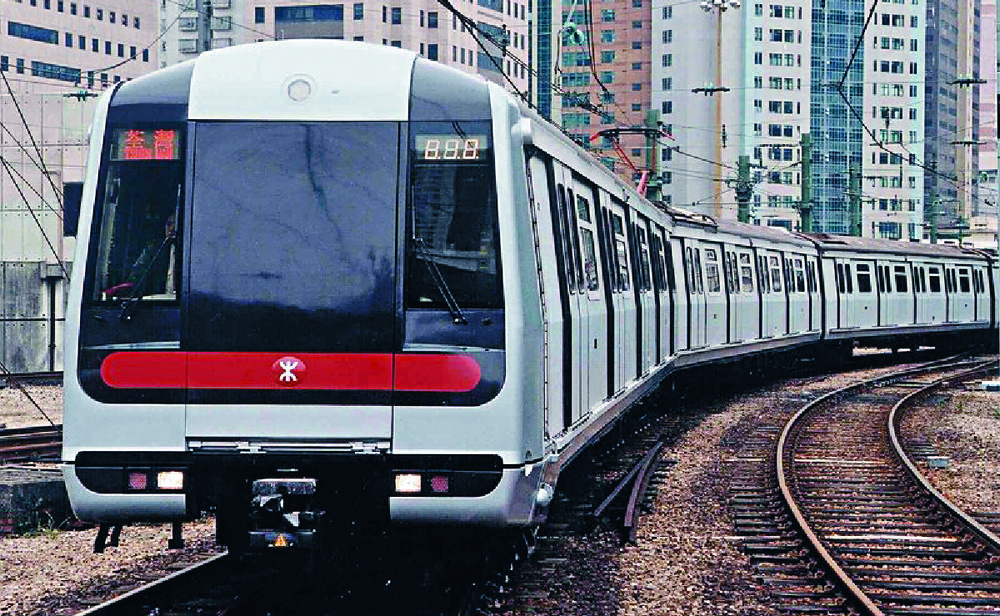
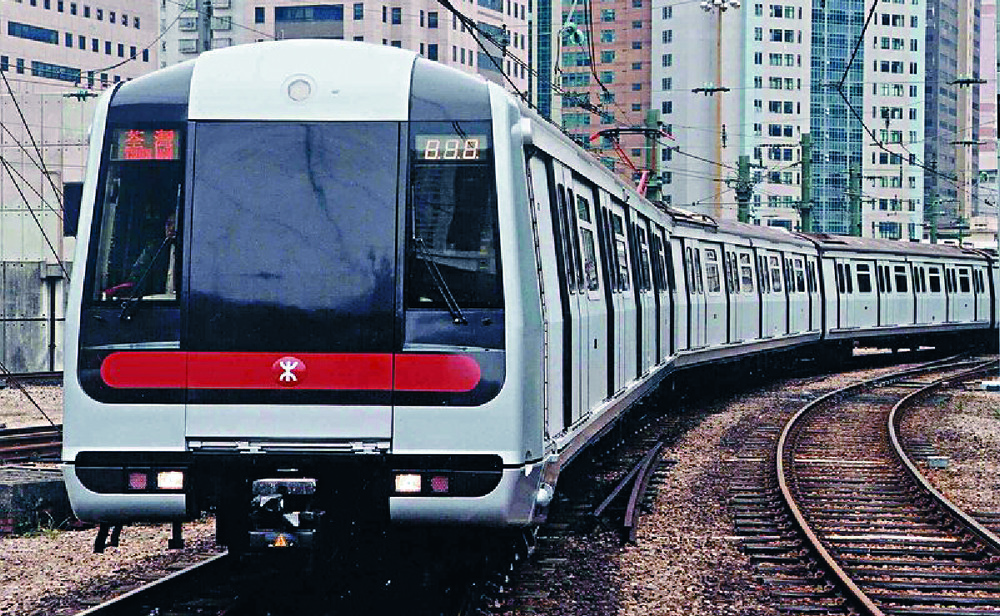
Although its basic design closely followed the then new London Victoria line stock, the new series of wide-body coaches, with a width of 3.2 meters instead of the usual 2.9, provide a much larger carrying capacity.It was designed to carry more than 350 passengers per coach at crush load.
To satisfy Fire Services Department staff, who rightly felt the need to impose stringent safety requirements to prevent fires, the coach's interior has no inflammable materials.The usual carpet on wooden floor and cloth upholstery were all done away with, leaving the coaches looking stark and cold.
They were equipped with only a few benches as a total of eight doors were fitted to enable quick boarding and disembarking at rush hour, not leaving a lot of room for seats.Seats were shaped into flat stainless steel benches with no contours, leaving passengers to slide along them when the train moved.
There was only a central handrail for those standing to brace themselves with the help of a few knob-shaped handgrips, which some first-time passengers mistook for microphones to communicate with the train captain.Lighting was dim and yellowy when compared to the bright LED lighting system we see today.
But it served its purpose, transporting passengers efficiently along the initial Kwun Tong line and all the way to Shek Kip Mei when the MTR started operating in October 1979.In the first quarter of 1980, the line was extended to stations along Nathan Road and then to Admiralty and Central, earning Hong Kong's transport system its reputation as one of the most efficient in the world.
The train's exterior, again following a utilitarian form, was finished in brushed stainless steel, with only the front and rear ends painted in white with red accents.This was to minimize the need to refresh the exterior during the lifetime of the rolling stock and made washing and cleaning easier.
The coaches might have all looked the same to the uninitiated, but those with sharp eyes would have spotted that they were identified as A, B, C and D among key differences.A coaches have a driver's cab and are used for both ends of an eight-car consist.
They have pantographs on top to collect electrical power for traction, control and to feed the other systems, including air-conditioning and lighting.B coaches have neither pantographs nor driver's cabs.
C coaches have pantographs but no driver's cabs.As the system grew, the MTRC found that it could add some trailer coaches to the train consist without traction motors to further improve power consumption.
So it ordered new coaches without cabs, pantographs or traction motors.These became D coaches.
A typical train consist these days is a combination of these four types of coach for optimal operation and cost efficiency.These rolling stocks are designed for 40 years of service, but the MTRC soon found that it could refurbish them to extend their service term to over 50 years.
They were modernized around 2000 with completely new interiors.Obviously, moving parts were serviced and replaced more frequently to ensure total service reliability and optimal efficiency.
The only items not replaced were the main structural frame and some body panels that were not subject to stress.Over the past 45 years, this first series of rolling stock, called M trains, offered up sterling service.
They are now approaching retirement and being replaced by many new series, such as the K stock of Korean origin and recently the Q stock from China, following the trend of heavy industry manufacturing migrating from Europe to Asia.With each new series they have become more efficient and quiet.
The K stock has plug doors that close flush with the door body for better sound proofing and less air resistance at speed.However, a much newer door seal design allows the Q stock to run with simple sliding doors that are even quieter without the complication of the two-stage movements of the plug door gear.
Lighting has significantly improved with LED fittings, passenger information system and entertainment system.The new oval layout of double row railings bolted to the ceiling provide many more handgrip points in a crowded train.
These securing rails are specially designed so that passengers can stand in two rows between the seats to encourage people to move away from the doors and further into the coaches, enabling easy ingress and egress and further increasing carrying capacity.The MTRC continues to improve its system for more efficient and reliable service to the public.
The replica M train serves to remind us how the evolution of the train system has enhanced comfort and convenience for passengers over the past 45 years.Veteran engineer Edmund Leung Kwong-ho casts an expert eye over
features of modern life