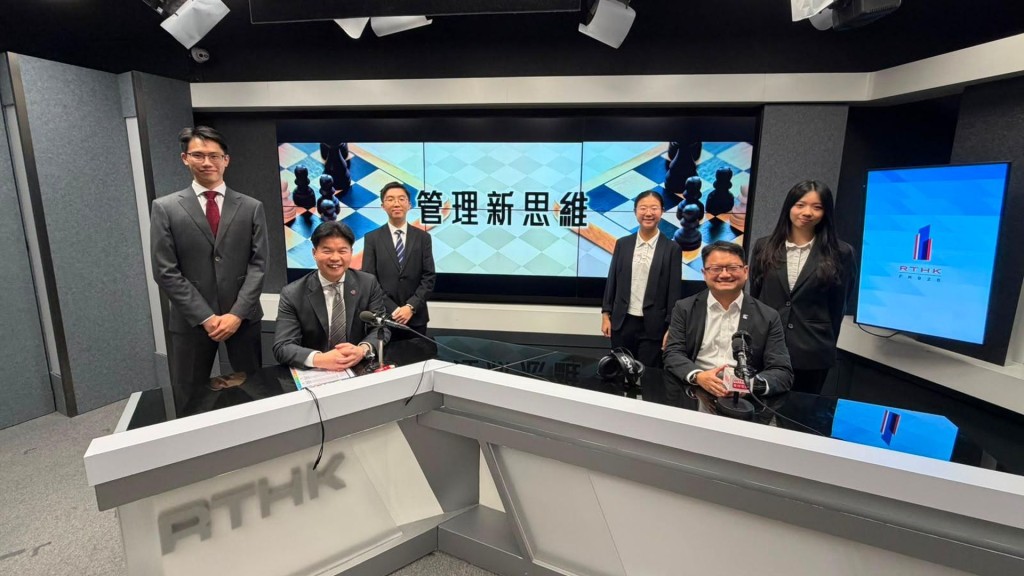
Burkina Faso, a landlocked nation in west Africa well known for its agriculture, mining, arts and crafts, was recently welcomed as the 48th member country of AALCO, and this development is expected to speed up its economic growth and participation in more trade, helping it further modernize.
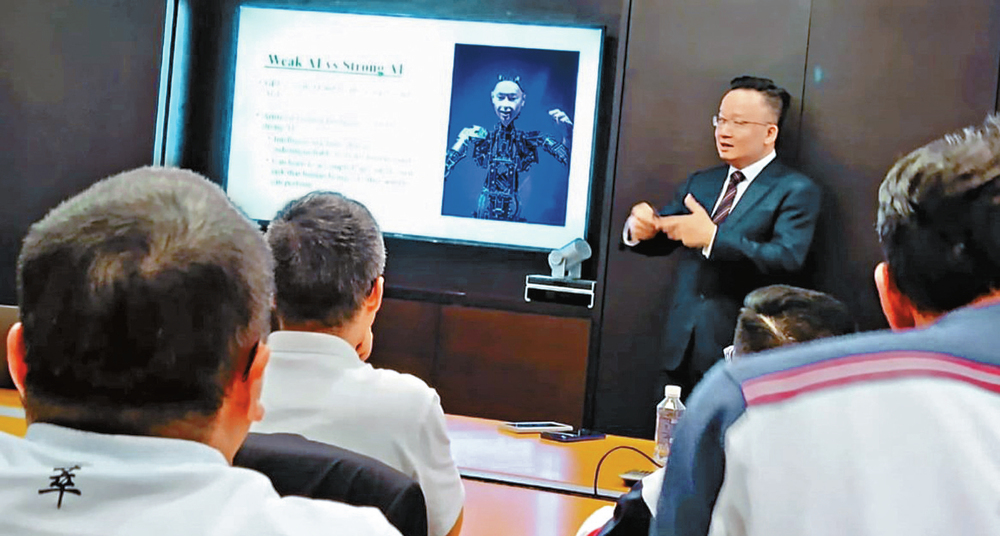
The world trend is to access and take full advantage of technology, in particular artificial intelligence, to tech up and embrace Industry 4.0 to increase the quality and quantity of economic production, thereby speeding up modernization and delivering abetter quality of life.
Industry 4.0, in particular generative AI, comes with exceptional opportunities and challenges. A 2023 Goldman Sachs report found AI deployment will potentially result in a 7 percent boost to global annual GDP, and replace 300 million full-time jobs.
Does that mean only "boring" jobs are gone but more interesting and rewarding jobs/lifestyles are created?
AI and big data can help businesses unlock growth opportunities, improve customer satisfaction with personalized service, achieve greater operational effectiveness, assist in biotech research into healthy aging, and support growth of new economies, development and deployment of "new quality productive forces" and generate new economies, business paradigms and platforms.
AI can improve supply chain management, optimizing operations, enhancing efficiency, minimizing disruptions and making use of super computational powers to make more accurate predictions, solve problems and help us be more productive.
However, it is crucial for users and lawmakers to appreciate the current limitations and ability of generative AI as its output depends heavily on training data that could be limited, skewed, biased and unsuitable.
Models may be flawed, giving rise to potential bias, hallucination, misinformation, discrimination and infringing/immoral/illegal outputs.
Last year, a US lawyer cited a non-existent case to support a legal argument in court, certainly not doing the client any favors.
Generative AI has made alarming in-roads, taking away jobs of digital artists, causing some to ponder on career paths.
There are other unanswered questions.
Who or "what" can own the copyright?
If the deep learning involved "learning" from copyrighted works, is there infringement, do those infringed get to know about it, do readers get told it is AI-generated content, what is the logic and whose/what contents were used in the creation/infringement process, have licenses been obtained and how to share profits fairly?
How much human involvement is needed to establish the element of originality needed for copyright protection?
How do we protect personal data privacy and commercial-in-conference materials, or even inadvertent disclosure of client's confidential information and case strategy due to inputting data in portals used in accessing generative AI?
What laws apply if there are case scenarios affecting or relating to more than one country/jurisdiction?
How do we "harmonize" the differences in approach in regulating the development, training, deployment and use of generative AI in the US, UK, EU, China, Japan, Korea and the rest of the world?
What are the ethical, moral and legal issues? Are laws again falling behind new technology? Do we have enough interdisciplinary law and AI experts to help support economies in fully harnessing the power of AI in an ethical and responsible way without violence, discrimination, curtailment of human rights or hurting the environment?
Governments, businesses, think-tanks can work together to play a crucial role in fostering the AI industry.
Hong Kong, with its rule of law, great freedom, unique advantages under "one country, two systems," access to data and understanding of culture from the mainland and the rest of the world, reliable power supply, simple and low tax system, abundance of best-in-class data centers, five of the world's top 100 universities, amazing talents and now a stable political system is well placed to live up to expectations under the national 14th Five Year Plan to be a leading international innovation and technology hub, international financial center and regional legal services and disputes resolution hub, and be the go-to place for invention, development and deployment of the best generative AI and one date general AI.
AALCO Hong Kong Regional Arbitration Centre offers a AI-powered state-of-the-art Online Dispute Resolution platform.
It incorporates machine-learning tech to facilitate translation services in 15 languages commonly used along the Belt and Road, enhancing deal-making, security, accessibility and efficiency in resolving disputes.
We are looking at more proactively supporting the resolution of disputes concerning smart contracts and addressing new opportunities and challenges in smart cities, metaverse and Web3.
The only constant is change!
The future of work favors those who understand AI. Working together, 48 countries and their citizenries and friends will be able to go further and achieve more together with Industry 4.0 and generative AI.