Read More






Hong Kong is not dead | High-flier | Jeffrey Lam
30-07-2026 17:51 HKT


Chateaux up for grabs | La Vie en Rose | Joanne Chan
30-07-2026 05:47 HKT


Electricity changed how the world operated 100 years ago - our lives are no longer governed by daylight - it upended transportation, manufacturing and communications.
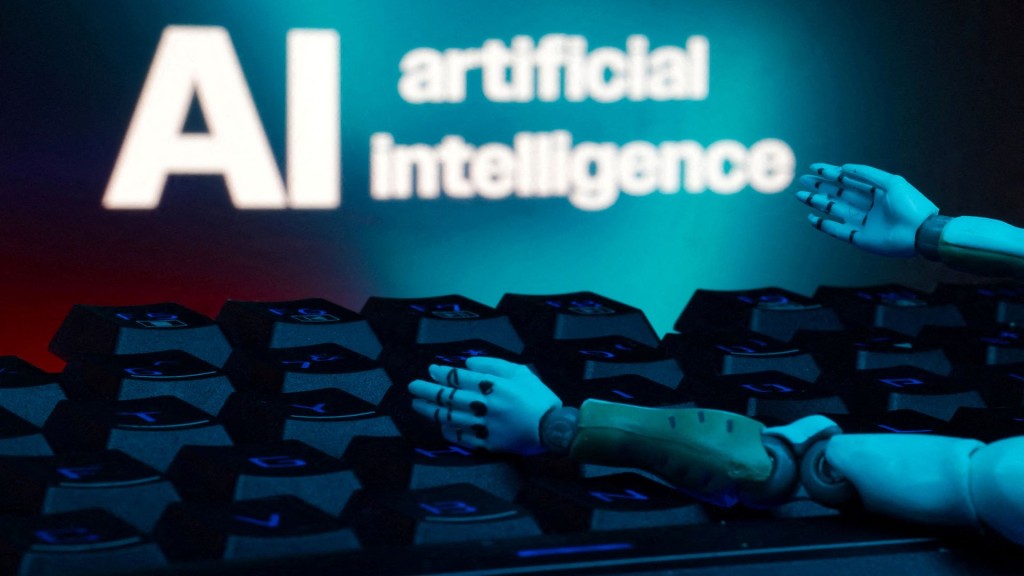
Computer scientists and Coursera cofounder Andrew Ng say artificial intelligence can have the same transformative effect. The human workforce will be liberated from tedious or dangerous tasks and do jobs that require creativity and empathy.
AI can even perform tasks like approvals for bank loans and navigate connected and autonomous vehicles.
AI was a term coined and defined as "the science and engineering of making intelligent machines" by computer scientist and Stanford professor John McCarthy in 1955.
However, as machines are not limited by the constraints of human biology, AI systems can run at much higher speeds and digest larger volumes and more types of information than are possible with human capabilities.
With 2024 starting, I want to review whether AI's impact on society will be similar to that of electricity.
First, they are both technologies that can enable a wide range of industries.
Electricity is central to many aspects of life in modern societies, such as its role in transport, buildings and heating or cooling, through widening use of electric trains, lifts and escalators and heat pumps or chillers.
AI is a general purpose technology that has significantly boosted productivity across many sectors. For example, large language models like ChatGPT have already demonstrated how they can be used in diverse fields such as customer services, computer programming and journalism.
Second, they need huge infrastructure and heavy investment to be useful and effective.
Electricity requires a grid and distribution networks for delivery to end-users.
The worldwide utilities market was valued at US$6.037 trillion (HK$47 trillion) in 2022, or 6 percent of global GDP, and is poised to grow at a compound annual rate of 6.6 percent from 2022 to 2032, according to a Global Market Model analysis.
Similarly, AI adoption requires advanced computing infrastructure of high-performance computing clusters, cloud computing platforms, and specialized hardware such as graphics processing units and tensile processing units.
A Grand View Research analysis found the AI market was worth US$137 billion in 2022, with north America receiving 36.8 percent of total revenues, and is projected to expand at a compound annual growth rate of 37.3 percent from 2023 to 2030.
A Stanford University study found total private investment in AI exceeded US$93 billion in 2021, a twofold increase from 2020. Generative AI is expected to raise global GDP by US$7 trillion and lift productivity growth by 1.5 percent over a 10-year period.
Third, they have disrupted existing industries and transformed our lives.
The rise of electricity disrupted many conventional industries, such as transportation, manufacturing and communications. It transformed the way we live and work.
The AI revolution is disrupting industries such as banking, pharmaceuticals and logistics and enabling new forms of automation and decision-making.
Fourth, both have generated a mix of fear and excitement.
Electricity and AI have ethical and social implications that need to be considered and addressed.
The widespread adoption of electricity raised concerns about safety, while the rise of AI raises fears about privacy, bias, fairness, and impact on jobs and the workforce.
Technology is neither good nor bad. It is simply a tool that humans have used throughout history to help us better deal with life's demands.
The AI revolution has the potential to shape the world in profound ways. If we manage it well, we can create a world of sustainable abundance for the next 100 years. If we don't, we could create a dystopian society.
Dr Jolly Wong is a policy fellow at the Centre for Science and Policy, University of Cambridge