After three years of strict pandemic policies, Hong Kong is trying to claw back its reputation on the global stage with a slew of events this month: Asian Investment Summit, Art Basel and Rugby Sevens.
However, keeping people safe is top priority in hosting crowd-puller events.
Behavioral research, new developments in computer simulation technology and data are increasingly used to help predict outcomes during emergencies. Together they identify the changes in behavior and operations needed and improve safety.
This week I want to explore three key factors that can help people survive during emergencies: safety building regulations; emergency behavior and crowd dynamics; and computer simulation technology.
First, let's reveal the surprising story behind our safety regulations.
Across the world, there is a target under normal operating conditions to evacuate people to a place of reasonable or total safety within 2 minutes of the alarm being raised.
In the UK, building regulations and fire engineering calculations of flow rates and egress time that shape building design use this prominent number of 2 minutes.
This number is based on the Empire Palace Theatre fire in 1911 when the famous illusionist known as The Great Lafayette was performing in Edinburgh.
In that incident, the audience believed the fire was part of the act and stayed seated due to the nature of the shows.
However, the conductor sniffed something was amiss and got the band to play the British anthem God Save the King for roughly 2 minutes, to signal the end of the performance and get people to leave.
Luckily, all 3,000 occupants (including the orchestra) left safely. And 2 minutes became the foundation of the building requirement and is in the building code, still.
Next, let's look at debunking myths about human behavior in disasters.
Indeed the ways that people behave in emergencies can help or hinder survivability, particularly in crowded places.
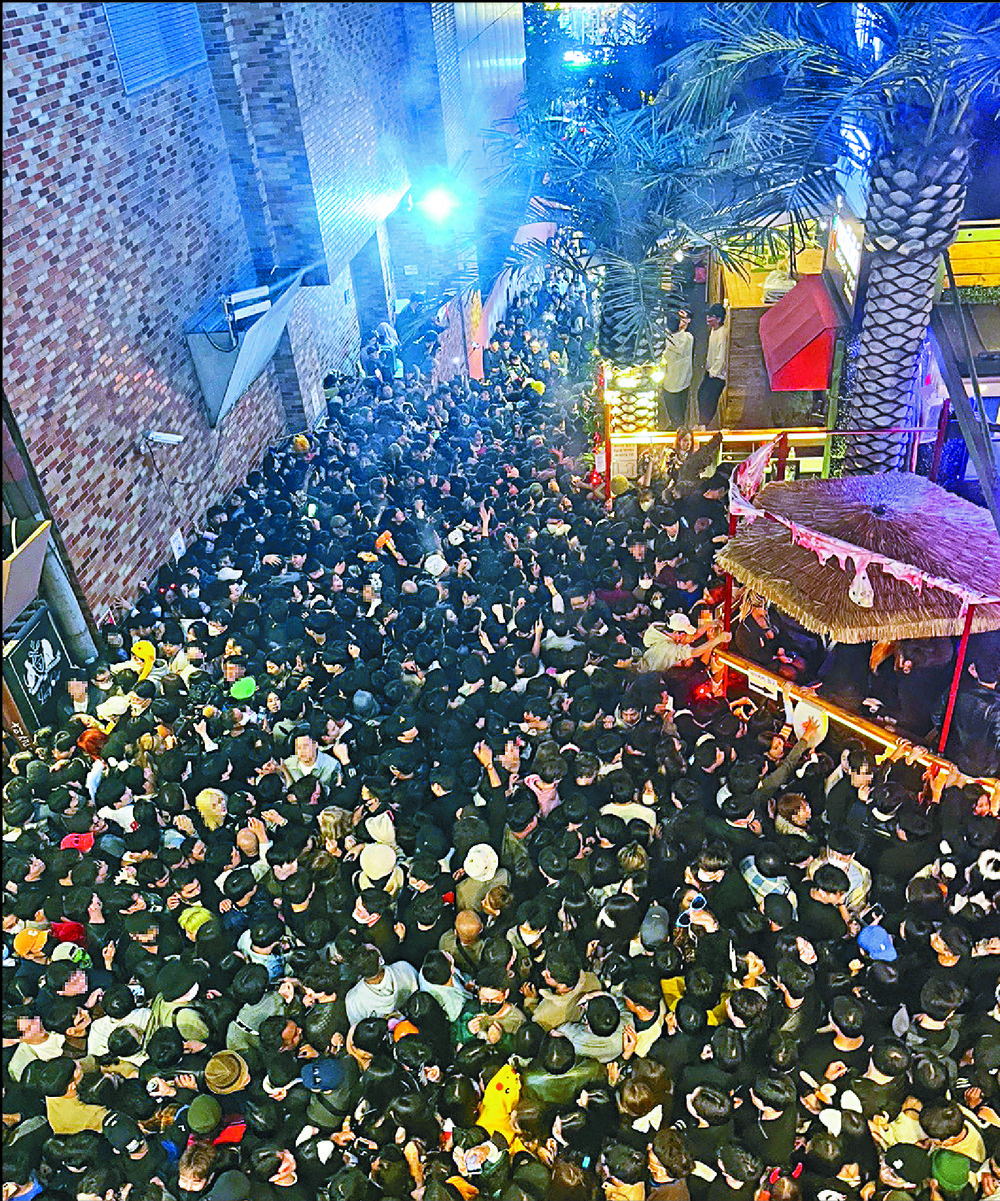
A recent example was on Halloween last year, when a crowd surged into a narrow alley in an incident that saw 159 people die in the Itaewon neighborhood of Seoul.
The tragedy is reminiscent of the Lan Kwai Fong stampede during the New Year's Eve countdown in 1993, when thousands crashed through the district.
In theory, people are expected to follow instructions, respond immediately, use the escape paths orderly and efficiently, and move directly to a place of relative safety.
In reality, people misinterpret or ignore cues and instructions, interpret information differently, are highly unlikely to move directly to a place of safety and engage in non-evacuation activities of all kinds.
Most importantly, they use routes according to familiarity rather than design.
Finally, let's evaluate cutting-edge technologies that can be used to model behavior and crowd dynamics in emergencies.
Evacuation AI modeling tools have been developed to predict crowd behavior and manage evacuations so as to prevent a crisis from turning into a tragedy.
For example, Canary Wharf Group enhanced its resilience plans with a simulation model and prepared an estate-wide evacuation plan for over 150,000 people.
It's a platform that combines sensors, geospatial and computer simulation technologies and crowd-behavior detection models and is backed up by data from previous incidents and virtual reality simulations to enhance preparedness.
Clear, concise instructions can be transmitted quickly to emergency services and crowds, cutting response times by over 15 percent and evacuation times by 20 percent or more by data from the EU-funded eVACUATE project .
The Safe Cities Index by The Economist Intelligence Unit puts Hong Kong as the ninth safest city in the world overall in 2023.
It's time for us to develop an intelligent platform to enhance situational awareness by providing crowds with real-time, location-based, personalized guidance, adapted to the latest evolution of an incident.
Dr Jolly Wong is a policy fellow at the Centre for Science and Policy, University of Cambridge
Halloween revellers pack a narrow alley in Itaewon, Seoul, before panic broke out and a stampede occurred last year.