While everyone accepts that, in pure statistical terms, air travel is much safer, whenever we hear of an aircraft incident we are more concerned as the survival rate is much less than for roads.
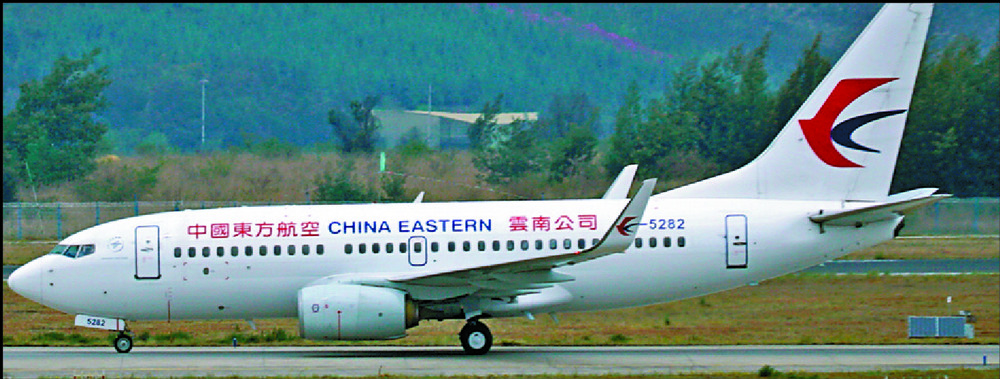
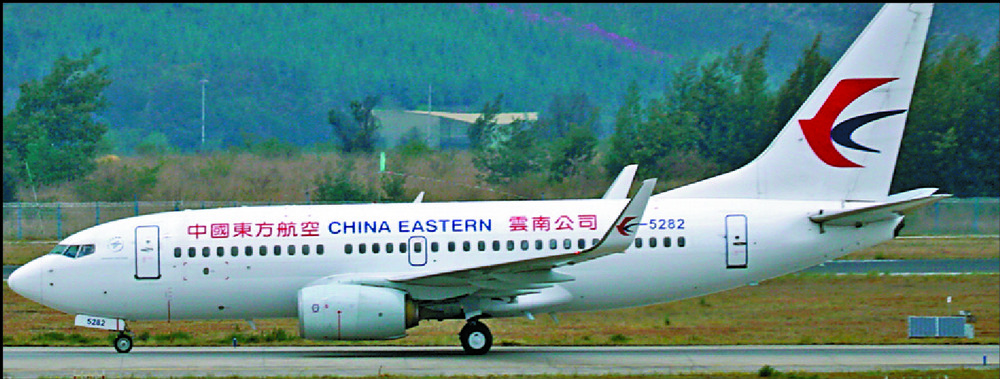
Therefore, it came as no surprise that the recent China Eastern Airlines flight MU5735 crash attracted worldwide attention, not only from those in the industry, but also among ordinary people.
Even more attention grabbing was the fact that the crash involved a B737.
However, we mustn't confuse this Boeing 737-800, which is of a mature design and regarded as a most commonplace and safe aircraft in service, with a 737-Max, which because of a need to accommodate a more powerful engine, has had a difficult history.
Also, whenever a serious aircraft incident occurs, professionals and outsiders speculate a lot, and until the final investigation results are revealed they will continue to circulate.
It is not for me to add to this maze of speculation, though I can say it is almost unheard of for a passenger plane to do a high-speed nose-dive.
Perhaps I should try and explain how aircraft incidents are dealt with in general.
Whenever one occurs, the first and foremost priority is to find survivors.
Fortunately, for some crashes, as long as a larger piece of a fuselage remains intact upon impact on the ground, there is a chance of finding people alive.
For the first 48 hours, the focus of a rescue must be to find survivors.
Infrared devices are normally used, supplemented by specially trained dogs.
In parallel, though it must be of a second priority, expert teams will gather all pieces of the aircraft, focusing on those at extremities of the airplane.
They usually give good factual evidence of the cause, such as a collision with another aircraft, self-explosion, missile attack or other causes.
Most people's attention will be on the recovery of the "black boxes."
This is vital as they provide accurate technical information for investigators.
There are two sets of such black boxes, though they are normally painted fluorescent flame-orange for easy retrieval.
The flight data recorder records all salient technical information of the airplane, with air speed, altitude, any change of direction, and many other details.
This record the state of health of the plane and is invaluable in revealing any engine or component failure.
The cockpit voice recorder records sounds in the last two hours, including the engine, emergency alarm, and conversations in the cabin and cockpit.
In case of any arguments, fights or other undue human activities occurring, this will provide a very clear record of operational details for analysis.
Unfortunately, though these recorders are triply protected against impact by their robust enclosure, it is not always possible to retrieve the recorded data as a strong impact could impart irreparable damage.
Most data recording devices are now of the more robust solid-state type, but it may still take a long time for date to be analyzed to complete the investigation.
In the end, though rare, a plane crash could result in the loss of a large number of lives, and apart from preventing it from happening, timely rescue and obtaining key information for a full and accurate investigation are vital.
Veteran engineer Edmund Leung Kwong-ho casts an expert eye over what happens in the immediate aftermath of a plane crash
Emergency personnel prepare to search for survivors and the 'black boxes' in the Guangxi crash site of China Eastern Airlines flight MU5735.