Read More






Peace talks with an unpredictable president | High-flier | Jeffrey Lam
14-04-2026 04:51 HKT

HK retail landscape may shift as PARKnSHOP–Wellcome merger discussed
17-04-2026 13:18 HKT
Malnutrition refers to deficiencies as well as excesses or imbalances in a person's intake of energy and nutrients and is one of the biggest challenges facing global health experts.
The United Nations adopted a resolution proclaiming 2016 to 2025 the UN Decade of Action on Nutrition.
It aims to catalyze policy commitments that result in measurable action to address all forms of malnutrition. And its aim is to ensure access for all to healthier and sustainable diets to eradicate all malnutrition.
The World Health Organization said 1.9 billion adults were overweight and 462 million underweight last year.
In 2019, a professor, Heather Keller, estimated more than half of the residents of long-term care homes in Canada were either malnourished or at risk of malnutrition. Major risk factors include sensory loss, chewing and swallowing problems, depression and chronic diseases.
On the other hand, obese children and adolescents aged five to 19 years are expected to outnumber the underweight by 2022 for the first time in world history, according to a global study by Imperial College London and WHO in 2017.
This week I want to look at a new AI system that functions as a digital nutritionist that can help address malnutrition risks from deficiencies to overeating.
There are thousands of consumer apps on diet and nutrition, such as LoseIt, Nutrients and NuCal. But studies published in the Lancet have found adherence rates for these apps are less than 5 percent.
To make personalized dietary guidance possible, an ability to simply and accurately track intake is crucial. Advancements in computer vision have made photo-based dietary tracking possible through automated food image recognition with determination of calorie and nutritional content.
This year, a new system developed by researchers at the University of Waterloo uses AI-powered software to analyze photos of plates of food before and after eaten.
Researchers proposed a novel deep convolutional encoder-decoder food network with depth-refinement using a color and depth sensor camera. They used this to determine whether participants had eaten the entire plate of food, or only parts of it such as the protein portions.
They then collaborated with dietitians and care workers to develop the system, which saves time as well as improves accuracy and would ideally be added to tablet computers already used by front-line staff to keep electronic records.
The software examines color, depth and other photo features to gauge how much of each kind of food has been consumed and calculate its nutritional value.
It is being tested in care homes so staff can understand whether their charges are getting all the nutrients they need.
At present, food intake is primarily monitored by staff who manually record estimates by looking at plates once residents in care homes have finished eating. This approach is laborious and subjective, limiting clinical inference capabilities.
It is important to know what nutrients residents are getting because malnutrition can result in a vast range of effects such as being more prone to diseases and infection, reduced energy levels and moodiness.
Measuring this via cameras is superior as the manual method results in an error rate of around 50 percent, versus 5 percent for the smart system.
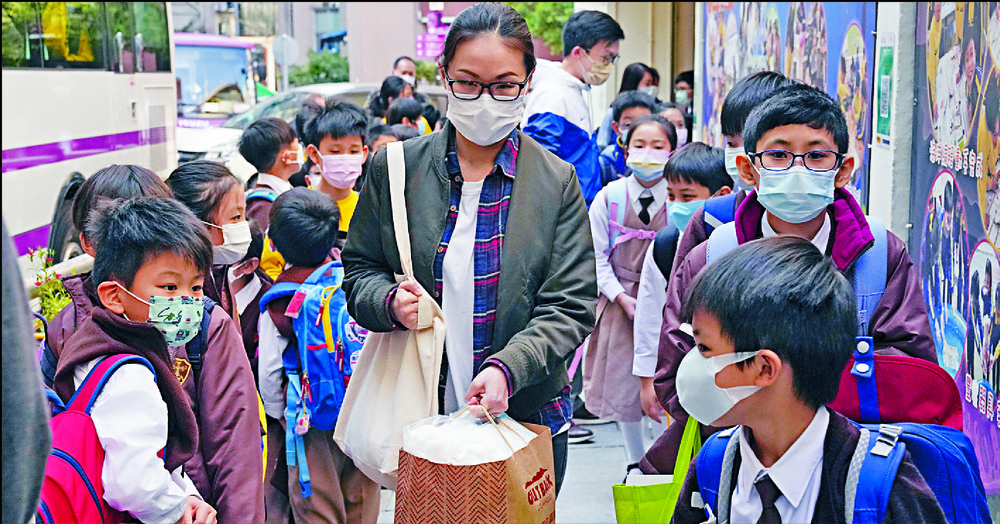
In schools, it is well documented that an unhealthy diet of junk food and soft drinks and too little activity are the main contributors to childhood obesity.
A Chinese University research study on active healthy kids report card found 22.4 percent of boys and 14 percent of girls aged 6-18 were overweight and obese in 2014.
With the pandemic causing children to be cooped up for months and now the early "summer holiday" until late April, this creates an additional risk factor for obesity.
AI-powered computer vision systems can be extended to track and provide personalized nutrition guidance for optimal health of school-age children.
Dr Jolly Wong is a policy fellow at the Centre for Science and Policy, University of Cambridge