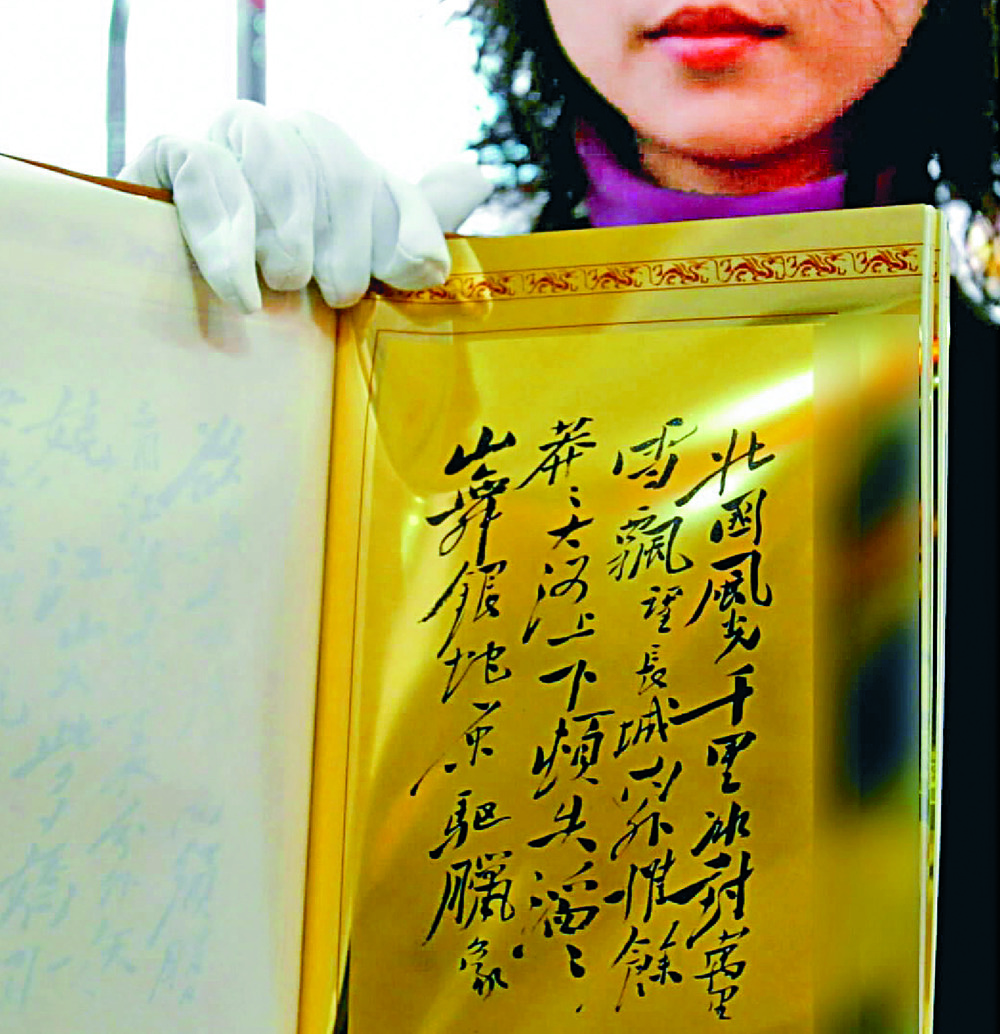
The theft of collector Fu Chunxiao's collection of Mao Zedong calligraphy and other relics relating to the late Chinese leader was covered extensively by media.
The stolen items were reported to be worth a staggering HK$4.1 billion, though some people are curious as to how that valuation was reached.
In any case, many people consider Mao, the inaugural leader of the people's republic, as the equivalent of the founding monarch of a nation.
In his ci poem Qin Yuan Chun, however, Mao commented on the lack of literary prowess and cultural finesse of prominent monarchs Qin Huang, Han Wu, Tang Zong and Song Zu.
He led the communists to victory against the nationalists to take over the country and devised military strategic theories like "encircling the cities from rural areas."
He also liked poetry, so he was rated as someone who was competent both militarily and literarily.
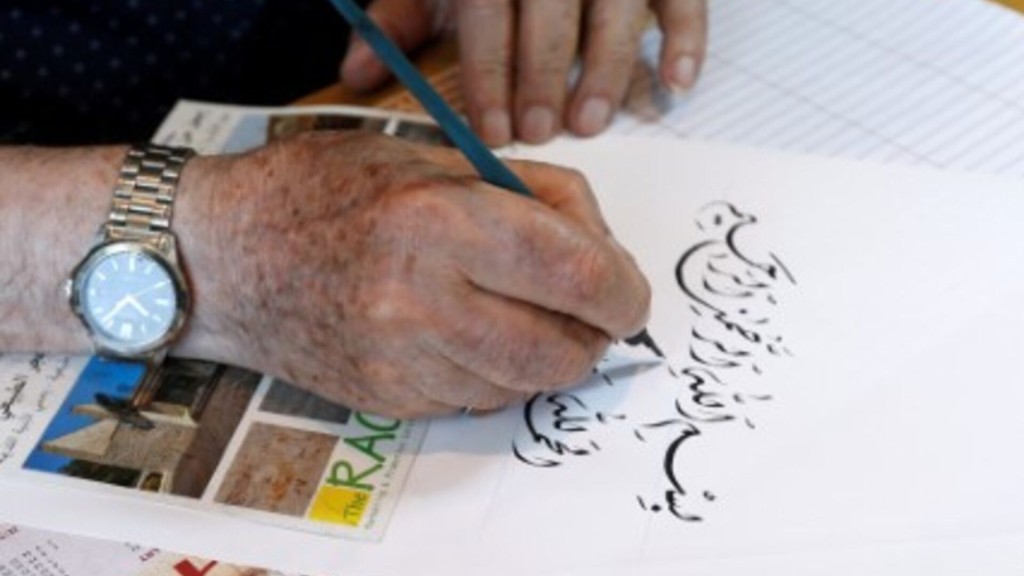
An expert in calligraphy, Mao believed in learning different scripts while developing your own.
His unique style is referred to in the calligraphy sector as Mao Ti.
When I was a boy, my mother often took me to yum cha at a pro-communist restaurant. On the wall of the shop hung a framed calligraphy work of Qin Yuan Chun in Mao Ti. I only realized later that it was the work of a mainland leader.
Mao penned numerous calligraphic works in his life, and some of the originals are put up for auction from time to time. Last year, a handwritten letter of his was sold for HK$5 million in London.
Mao was a political titan, so his handwritten works and calligraphy are invariably evaluated in their historical context, meaning they are not suitable for a simple comparison with other relics.
When I visited Xinhua some time ago, I saw a document Mao wrote for the news agency in his own hand. Someone in the party remarked that such a high value historical document would surely have been well secured, so what we saw could only be a hand-copied duplicate.
When you consider that Fu's cultural relics were in an ordinary flat when they were stolen, you cannot help but feel that someone made a bad mistake.
Siu Sai-wo is publisher of Sing Tao Daily
Mao's Qin Yuan Chun