With the advent of information technology in the construction industry, we are seeing a lot of recent innovations being applied to improve safety and administration of site work.
Building information modeling, modular integrated construction and other tools are being widely applied to make construction more efficient and we hope they will help to reduce costs and time.
But one factor that we need to focus on these days is safety. We just cannot allow the number of fatal accidents to go up.
I visited a construction expo in mid-December and was surprised to see recent progress and developments in these areas.
One such saw a tower crane being operated from a remote-control room.
As we know, the job of crane drivers is presently less than desirable. Perched a few hundred meters above ground, they have to climb from the ground to their cabins after every meal and toilet visit.
This has not helped attract new blood to operate this all-important equipment for the lifting of construction materials.
Some container cranes here are being remotely operated from central control rooms, transforming a job entailing arduous site conditions into one offering an office environment with full air-conditioning and quiet and clean conditions.
Using similar principles and 5G communications technology, construction professionals have created a prototype crane with remote control functions.
Very soon, apart from erecting, maintaining and dismantling tower cranes, operations can be carried out from remote offices with joysticks and video screens.
A leading contractor firm also showed it can apply AI to enhance site safety.
A lot of safety breaches ensue from inexperienced workers entering sites without proper protective gear, often forgetting hard hats and reflective vests, and jaywalking into areas that have been cordoned off because there may be high risks.
With video camera feeds to control rooms, AI systems can pick up such intrusions quickly and reliably,with minimum human supervision and error.
Once an intrusion or non-compliance is detected, alarms and audio warnings issue from loudspeakers to get offenders to back off the danger areas or to put their personal protection equipment back on.
AI devices can also detect smoke and fires that may break out in isolated parts of a site and sound the alarms to prevent a small fire from becoming a conflagration.
A further advantage is machine learning so a system can quickly follow any new or additional requirements to mitigate risks. It can also help track construction progress with clear records of activities, avoiding unnecessary arguments.
With many more construction sites set to sprout up in the coming years, to combat a building shortage and to cope with the expanding infrastructure works, demand for skilled workers will increase exponentially but their supply will continue to be scarce.
Easier operations and safer and more comfortable environments will attract some of a younger generation to join this important sector of our workforce.
They also enable more effective training and supervision, as monitoring in ground-level offices must be a lot easier than doing it at height in confined spaces.
I am optimistic that technology will help make our construction sites safer, more comfortable, more efficient and more effective.
Let's hope this trend grows fast to allow us to operate ahead of the curve in preserving site safety. We owe it to construction workers and their families.
Veteran engineer Edmund Leung Kwong-ho casts an expert eye over features of modern life
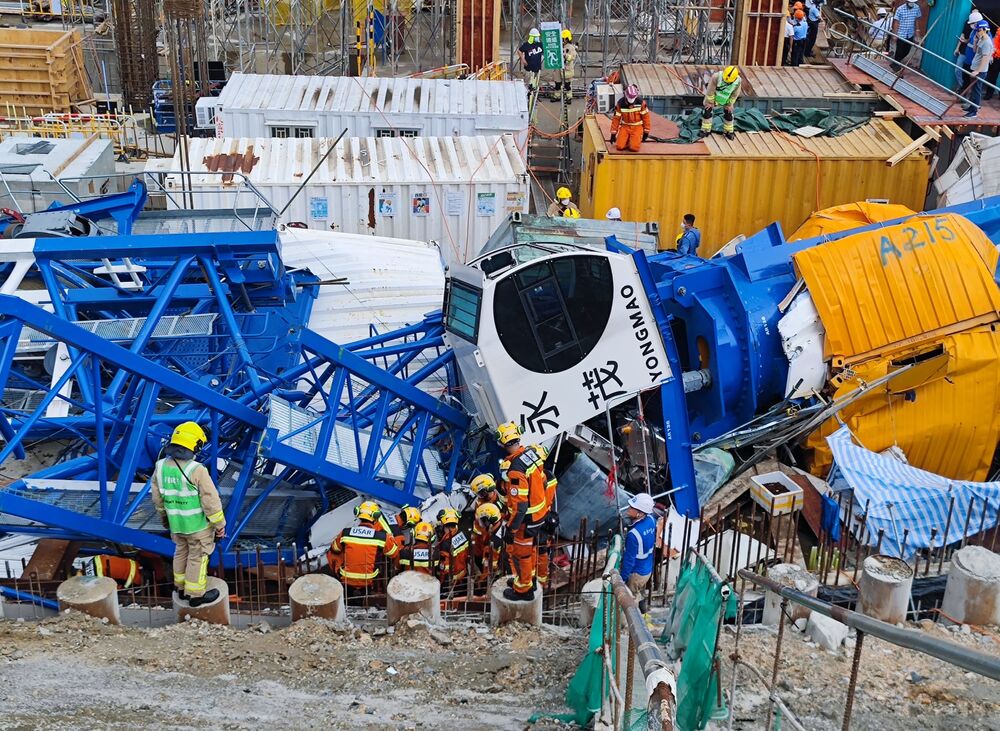
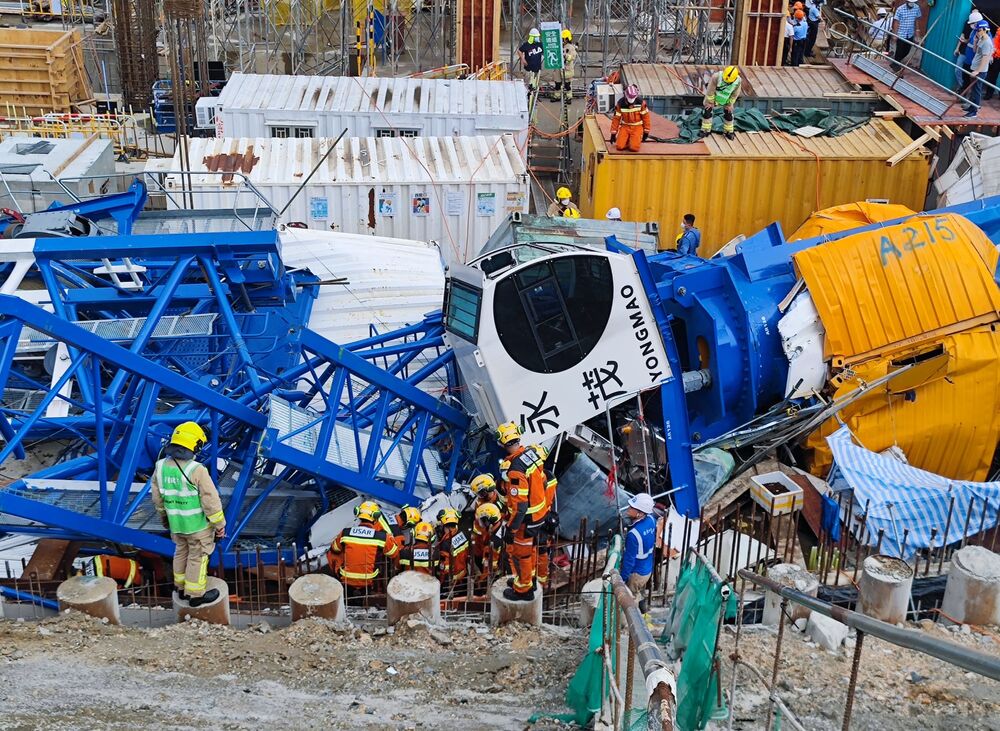
A Yau Tong building site accident saw a H-beam fall and crush a worker mid-December. Right: a Sau Mau Ping crane collapse killed three people in September.