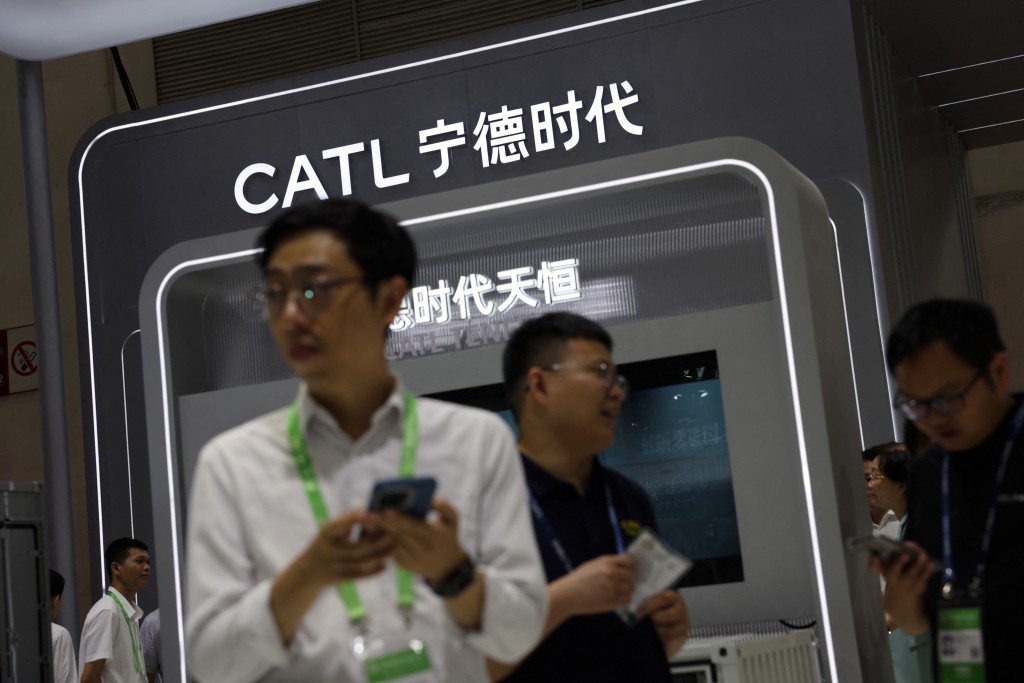
China’s CATL (3750), the world’s biggest battery maker, expects energy storage to account for half of its global sales by 2030, up from 25 percent now, a company executive told Reuters on Thursday.
Energy storage has already jumped from only 2 percent of battery sales five years ago, Kevin Tang, CATL’s director of energy storage systems for Europe, said.
Founded in 2011, CATL initially specialised in making lithium-ion batteries for electric vehicles, which currently make up about three quarters of its sales. However, an increasing need to complement intermittent renewables is driving demand for batteries for storage, Tang said.
“Once we have more renewable energy, we need energy storage,” he said on the sidelines of the International Photovoltaic Power Generation and Smart Energy Conference & Exhibition in Shanghai, the world’s largest solar conference.
In Europe, CATL’s third-largest energy storage market after China and the US, customers are investing in both renewables plus storage and grid-side storage, depending on where the congestion points in local power grids are, he said.
CATL has manufacturing plants in Germany and Hungary, and has broken ground on a new plant in Spain in a joint venture with car maker Stellantis.
Energy storage in Europe, unlike the automobile industry, has not faced calls for stricter requirements on local sourcing of components to protect domestic industries, Tang said. Still, making such projects profitable remained a challenge for the energy industry, he said.
CATL said this week it would invest 3 billion yuan (HK$3.47 billion) in an energy storage testing centre to simulate grids and investigate causes of energy storage-related fires and explosions - a major concern among customers.
Rising prices of raw materials including lithium, copper, and aluminium following the US-Israel war with Iran pose another challenge to energy storage manufacturers, but Tang expects costs to fall longer term as the supply chain matures.
CATL mines lithium in southern China to exert some control over the battery supply chain. It also operates the world’s largest recycling plant for recovery of the raw materials used in batteries, Tang said.
Reuters