Hong Kong's construction sector is embracing artificial intelligence (AI) to drive efficiency, safety and productivity, with the Construction Industry Council (CIC) leading the charge through a major thematic exhibition at CIC-Zero Carbon Park.
Titled "CITAC Themed Exhibition - AI to Streamline the Construction Workflow", the event ran from today to 31 March 2026, showcasing close to 20 innovative AI-powered ConTech solutions. These include computer vision systems for real-time site safety monitoring, generative AI for design optimisation, AI-equipped drones and robots for inspections, and digital twins for managing assets across a project's full lifecycle.
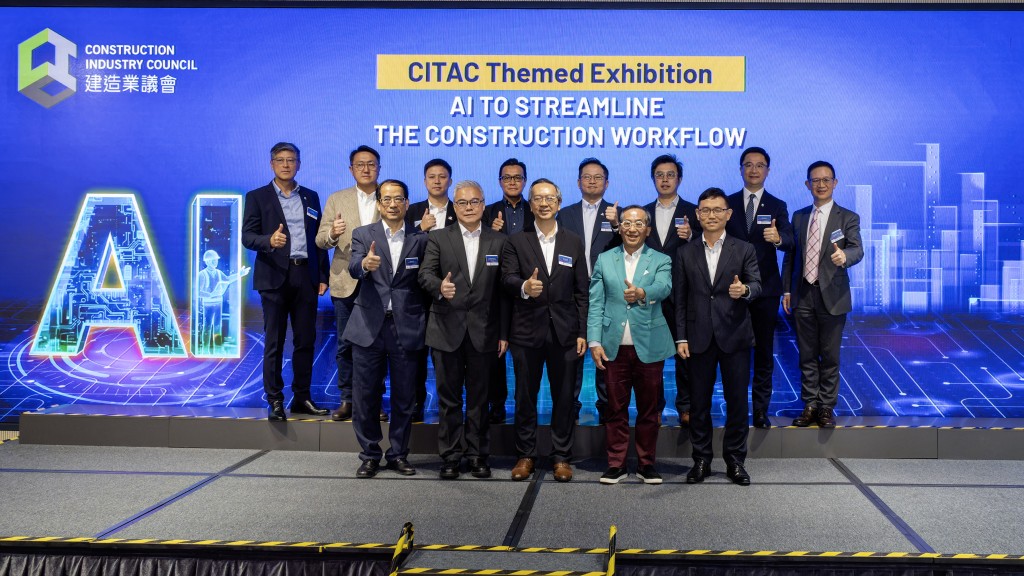
CIC Chairman Thomas Ho described 2026 as the industry's "Year of AI", with more than 50 AI-related initiatives set for rollout. " AI can help monitor energy use and optimise resources, driving the industry toward a greener, low‑carbon future. At the same time, AI can connect the entire process, from design and construction to operation and maintenance, enhancing decision‑making and management at every stage, truly enabling smart construction throughout the full project lifecycle. This CITAC Themed Exhibition features 21 exhibitors and over 50 real-world AI cases". He stressed that AI enhances precision, speed and safety. "We have seen robotics and 4S systems introduced; now AI takes it further for revolutionary improvements," he noted.
CIC Chairman Thomas Ho declared 2026 the 'Year of AI' for Hong Kong's construction industry.
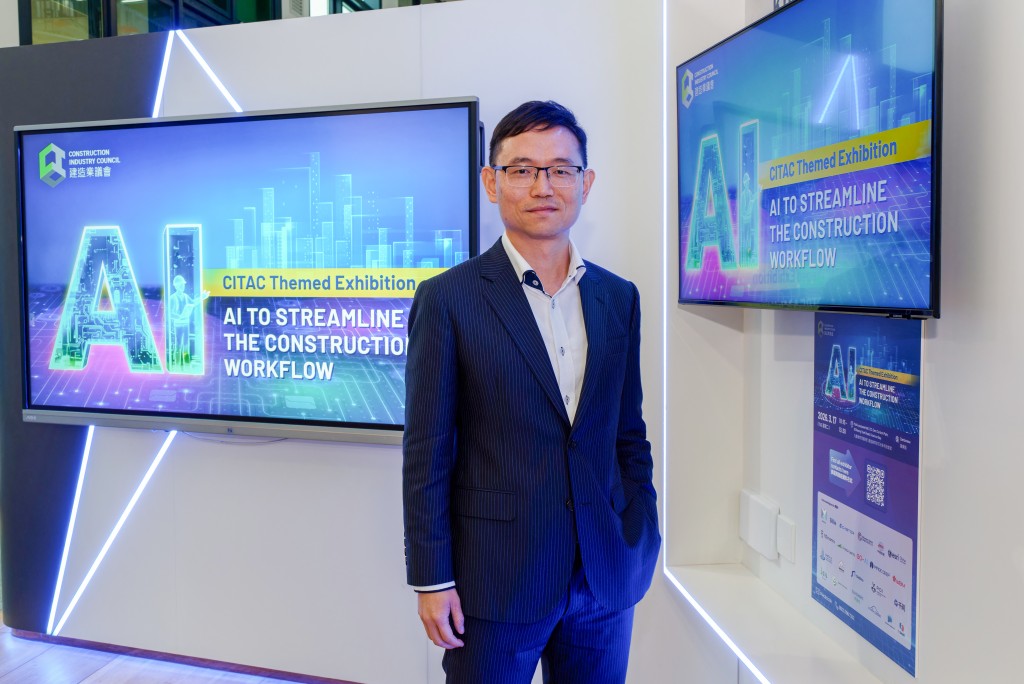
Felix Poon, Chief Assistant Secretary (Works) of the Development Bureau (DEVB), remarked that the uptake of AI has surged dramatically in recent years. Noting that the Government is actively driving the adoption of innovative technologies such as construction robots and AI, he said "These technologies have been piloted in some public works projects. If they prove effective and deliver results, we will mandate their application in suitable public works projects. Subsidies are also provided to the private construction sector through the Construction Innovation and Technology Fund (CITF). These measures are gradually establishing a robust ecosystem for the development of innovative technologies in the industry." He added that the DEVB issued the technical circulars last December and this March, requiring public works projects to adopt highly-effective construction robots and AI applications respectively.
Felix Poon, Chief Assistant Secretary (Works) of DEVB, highlighted the explosive growth in AI adoption across construction in the past few years, and the Government’s strategies in driving wider applications of innovative technologies.
The shift is also helping attract young talent to an industry long viewed as low-tech. Ho cited examples of craftsmen using AI-assisted robots for painting, plastering and drilling, with digital twins providing real-time alerts. "Sites now feel like flying a plane," he said. A 26-year-old worker proudly described training a robotic arm as "gaming and earning a living".
On job loss fears, Ho was clear: AI complements, not replaces. "Robots handle large, repetitive areas; skilled workers manage complex details and finishing. Basic craftsmanship remains essential."
Exhibitors demonstrated practical tools. OnSite CEO Yong Han Poh from Singapore introduced an AI messaging platform that organises chaotic WhatsApp chats—common in construction—into structured tasks. It transcribes voice messages in languages including Cantonese, auto-assigns tasks and organises photos/videos, slashing admin time and preventing data loss.
Yong Han Poh, CEO of OnSite (right), pictured with General Counsel Azfer Ishan (left).
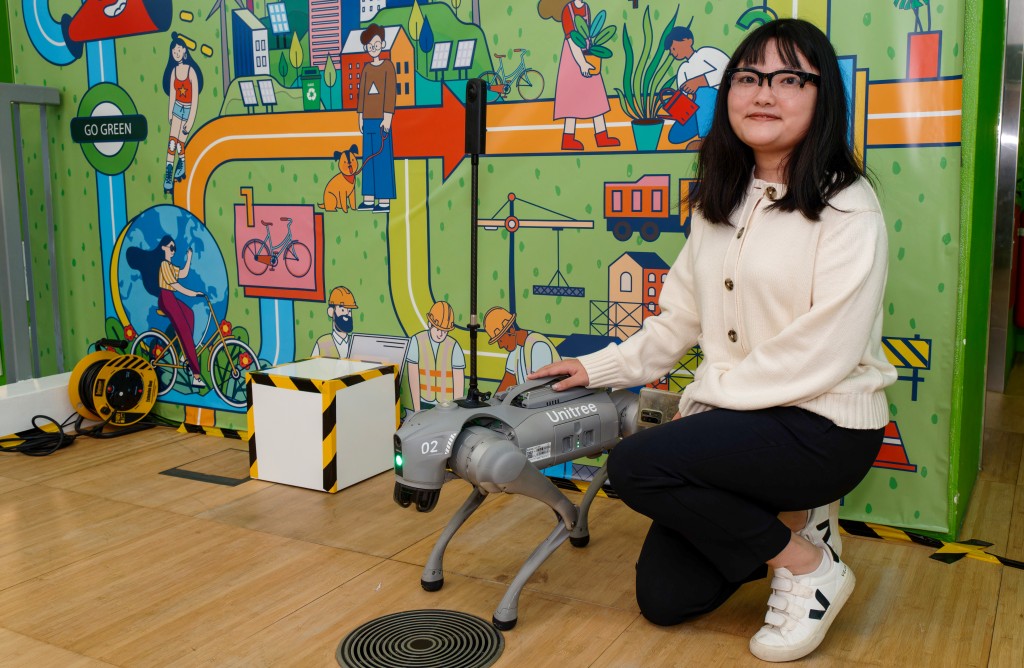
Other highlights included AI patrol robots for 360-degree inspections by a local company, cutting manpower in hazardous areas while generating custom reports, as demonstrated by GO-AI. Their multimodal LLM-powered robotic safety dog enables autonomous site patrols, real-time data collection, and customisable AI-generated reports to enhance safety monitoring and reduce human exposure to risks.
Evelyn Tandiono, AI Programmer at GO-AI, demonstrates their multimodal LLM-powered robotic safety dog, designed for autonomous site patrols and enhanced safety.
And Qianwen AI smart glasses for hands-free queries and photo analysis, demonstrated by retail representative Sun Xiangbo from the Shenzhen region distributor, overseas versions including Cantonese and English support are planned for later rollout.
Qianwen AI smart glasses on display
"CITAC Themed Exhibition - AI to Streamline the Construction Workflow"
Date: Today – 31 March, 2026
Venue: Construction Innovation and Technology Application Centre, CIC-Zero Carbon Park
Workshop Registration