Apple on Thursday forecast higher-than-expected revenue growth of up to 16 percent for the March quarter, powered by strong demand for its iPhones and a sharp rebound in China and accelerating demand in India.
That followed holiday-quarter results that beat estimates as well, with chief executive Tim Cook telling Reuters that demand for the latest handsets was “staggering.”
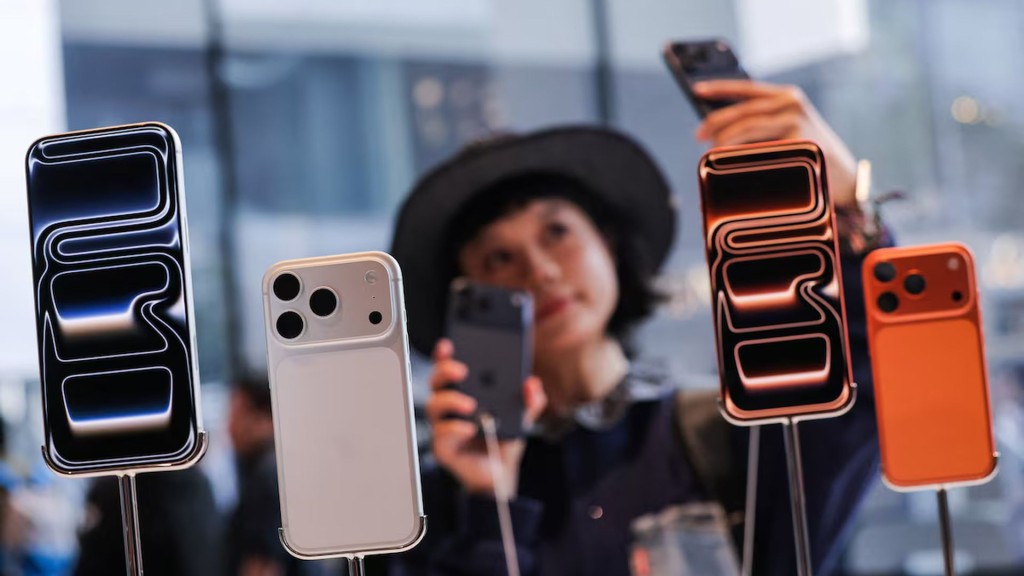
Apple’s iPhone 17 lineup helped lift sales across key markets in the company’s fiscal first quarter ended December 27, easing investor concerns about a hardware sales plateau.
Apple shares rose 3.5 percent in extended trading after the results were released, but later pared gains to trade up 0.8 percent.
Apple expects revenue for its fiscal second quarter to grow 13 percent to 16 percent, versus a 10 percent rise that analysts expected, according to LSEG. The company also forecast operating expenses of US$18.4 billion (HK$143.6 billion) to US$18.7 billion, slightly above spending in the first quarter.
The revenue forecast, however, bakes in some processor supply constraints that are affecting iPhone production, Cook told analysts on a conference call. Taiwan’s TSMC makes Apple’s chips.
“We’re currently constrained. And at this point, it’s difficult to predict when supply and demand will balance,” he said, adding, “we’re seeing less flexibility in supply chain than normal, partly because of our increased demand that I just spoke about.”
Before the call, Cook told Reuters in an interview: “The demand for iPhone was simply staggering, with revenue growing 23 percent year over year to achieve its biggest quarter in history.” He said on the call that the company gained market share in December.
MEMORY-CHIP CRUNCH TO PRESSURE Q2 MARGINS
Apple forecast gross margin of 48 percent to 49 percent in the second quarter. In the first quarter, it posted gross margin of 48.2 percent, above both its own guidance and analyst expectations of 47.45 percent, according to LSEG data. The result suggests that rising costs for DRAM memory chips and commodities such as gold have not yet shown up in Apple’s results.
Cook said the memory chip crunch would be “a bit more of an impact” to second-quarter gross margin. “Beyond Q2 … we do continue to see market pricing for memory increasing significantly. As always, we’ll look at a range of options to deal with that.”
A global shortage of memory chips has begun to ripple through the consumer electronics industry. The situation has been worsened by a sharp shift in production priorities toward artificial intelligence, where advanced and high-bandwidth memory used in data centers commands far higher margins. Samsung Electronics and SK Hynix, which control two-thirds of the DRAM chip market and count Apple as a customer, warned on Thursday that computer and smartphone companies were set to bear the brunt of a worsening shortage of DRAM chips. During the conference call, Cook noted that iPhones gained market share over Android devices during the holiday quarter, a possible sign that Apple’s buying power in the memory market could help it weather tight supplies.
IPhone revenue rose to US$85.27 billion in the fiscal first quarter, well above the US$78.65 billion analysts had expected. Apple said iPhone sales set records in every geographic segment, highlighting broad-based demand despite macroeconomic uncertainty.
“The backdrop of inflation-fatigued consumers and an ongoing memory chip shortage will pressure hardware margins in coming quarters, making that high-margin services momentum even more vital,” said eMarketer analyst Jacob Bourne.
Cook declined to answer a question from an analyst on whether Apple might raise product pricing because of the memory-chip crunch.
CHINA AND INDIA DEMAND IS STRONG
The iPhone maker posted quarterly revenue of US$143.8 billion, up 16 percent from a year earlier, topping analysts’ average estimate of US$138.48 billion, according to LSEG. Cook said the company now has an installed base of 2.5 billion devices. Earnings per share came in at US$2.84, comfortably ahead of the US$2.67 consensus. Earlier this month, Apple announced its partnership with Alphabet’s Google, to use Gemini for an improved Siri, and on Thursday, Apple also acquired Q.ai, an AI startup focused on determining speech, moods or heart rates from minute facial expressions, for US$1.6 billion in one of its largest-ever deals.
Sales in Greater China jumped 38 percent year-on-year to US$25.53 billion, far exceeding the Visible Alpha estimate of US$21.32 billion. A
One notable miss compared with Wall Street expectations came in Apple’s wearables, home and accessories segment, where sales were US$11.49 billion, missing expectations of US$12.04 billion. Apple last year released a product called AirPods Pro 3 that can translate between languages, and Cook said that demand for the new product caught Apple off guard.
Reuters