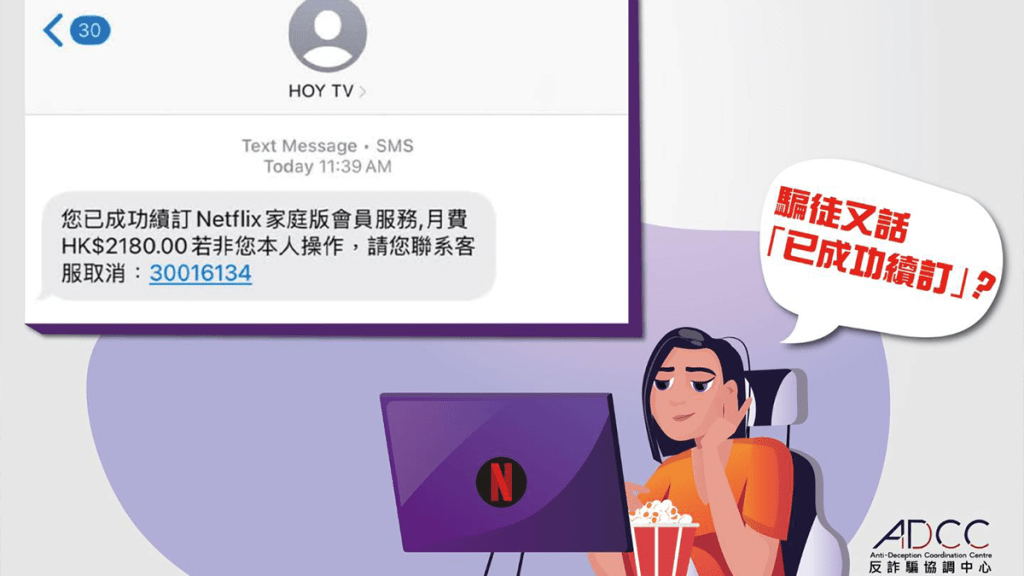
A recent surge in sophisticated phishing scams has prompted urgent warnings from Hong Kong authorities after fraudulent text messages, which impersonate local media outlets like HOY TV, tricked residents into fake Netflix subscription disputes. Reported losses from these scams range from HK$17,000 to a staggering HK$4.2 million.
The Anti-Deception Coordination Centre (ADCC) has noted over 35 related inquiries in recent weeks, with victims spanning a broad demographic, from graduate students to an 82-year-old woman who lost her entire life savings.
In that high-value case, the elderly woman received a suspicious message falsely alerting her to an unpaid Netflix family plan. When she called the provided number to dispute the charge, a scammer posing as a customer service representative convinced her she was liable for the payment.
Despite having no subscription and not requesting a cancellation, the victim was persuaded to transfer her savings in 14 separate transactions, culminating in a total loss of HK$4.2 million.
These scam messages, which have been widely discussed on social media, falsely claim to be from platforms like HOY TV and ViuTV.
A key identifier of the fraudulent texts is the absence of the "#" prefix, which is used to designate verified corporate sender accounts.
In response to the escalating situation, HOY TV issued a formal statement on Monday (Sep 29), urging the public to exercise extreme caution regarding fraudulent SMS messages that misuse its name.
The broadcaster advised anyone who has engaged with such messages to contact the Hong Kong Police immediately. It also highlighted its participation in a sender registration scheme, confirming that all official messages from accounts such as #i-CABLE, #iMobile, and #HKCableTV will always begin with the “#” symbol.
Meanwhile, police have reiterated calls for the public to avoid clicking suspicious links or returning calls to unknown numbers provided in such messages.
Authorities emphasized that scammers often use illegally obtained personal details to sound convincing and urged anyone with doubts to contact the 24-hour “Anti-Scam Helpline 18222” for assistance.