Read More
From robotic painters to AI-powered concierge services, the latest episode highlights how smart technologies are reshaping the property management landscape for efficiency, sustainability, and better resident experiences.
ADVERTISEMENT
SCROLL TO CONTINUE WITH CONTENT
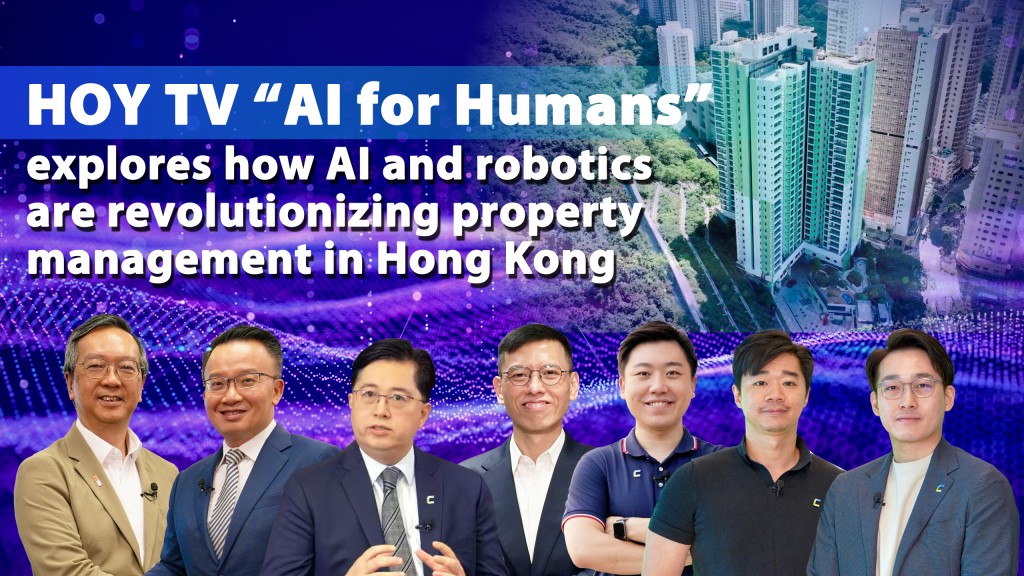
The latest episode of “AI for Humans” delves into the growing impact of artificial intelligence (AI) and robotics on the property management industry, shedding light on how these emerging technologies are enhancing efficiency, sustainability, and resident satisfaction—without losing the human touch.
The program examines how government initiatives, industry innovation, and real-world applications are working together to usher in a new era of intelligent property management.
Policy initiatives: driving smart and sustainable development
Under Secy for Housing, Mr Tai Sheung-sing, outlined how the Hong Kong government is actively integrating AI into the entire property lifecycle—from design and construction to ongoing management. Technologies such as Building Information Modelling (BIM) and robotics are already streamlining workflows. Notably, the use of robotic painters has halved the need for manual labor while attracting younger workers to the industry.
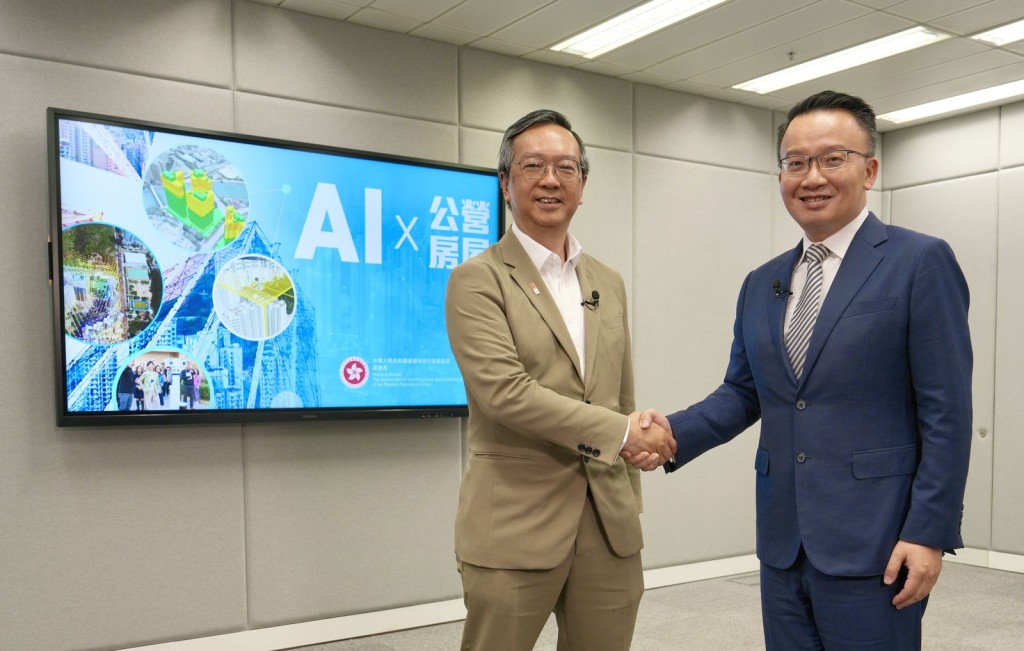
In support of Hong Kong’s 2050 carbon neutrality goal, IoT sensors are now being deployed by the Housing Bureau to monitor energy use and detect environmental risks. These are complemented by solar panels and energy-efficient lighting to reduce emissions and promote greener living environments.
Industry innovation: launch of Hong Kong’s first PropTech co-working space
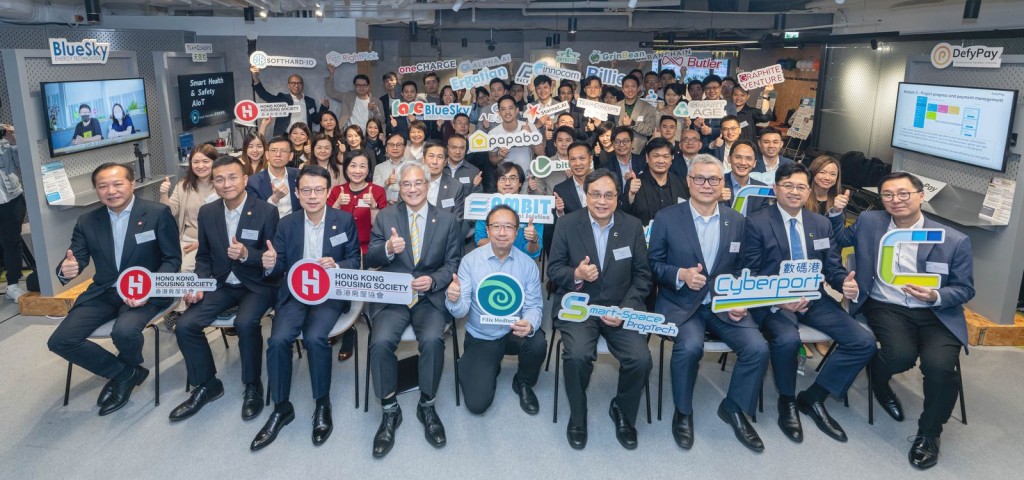
Cyberport’s Chief Public Mission Officer, Eric Chan, introduced Smart-Space PropTech, Hong Kong’s first co-working space dedicated to property technology (PropTech). Launched in partnership with the Hong Kong Housing Society (HKHS), the initiative provides start-ups with both a testing ground for real-life applications and access to financial support.
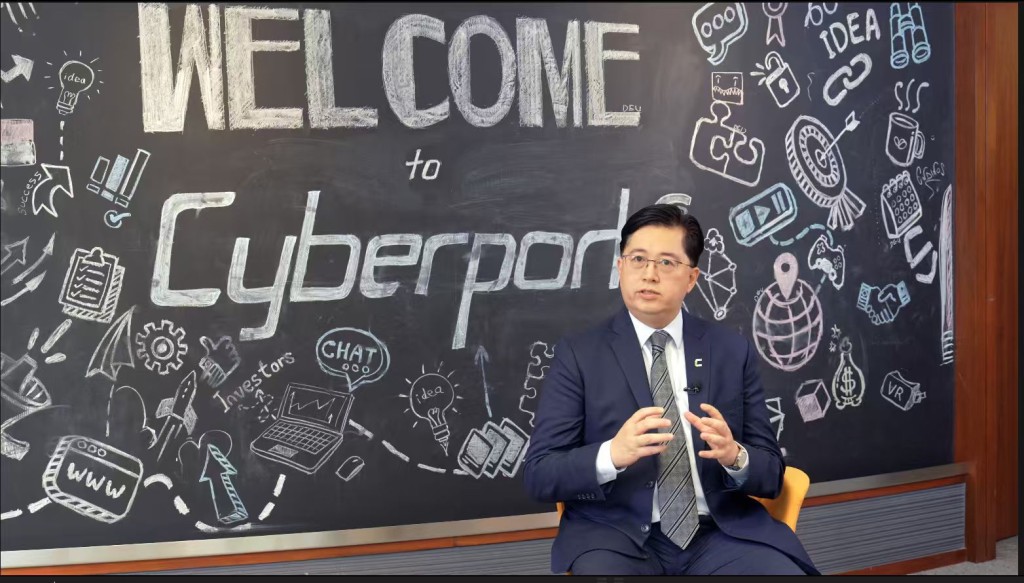
To date, 27 start-ups have joined the PropTech PoC Programme, developing innovative solutions for challenges such as building safety monitoring, façade damage detection, and smart parking systems.
“These innovations not only enhance operational efficiency in property management but also advance the development of smart, sustainable Northern Metropolis,” Chan said, noting this initiative has created a win-win situation for HKHS, industry stakeholders, and society.
HKHS: pioneering AI in everyday estate management
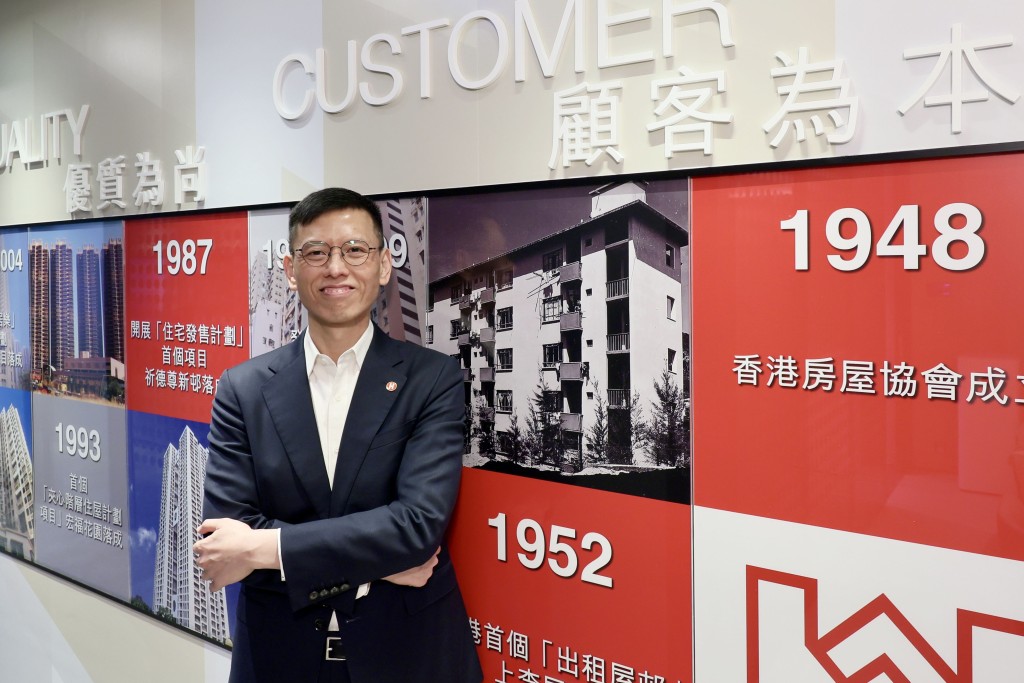
The Hong Kong Housing Society (HKHS), serving as a “housing laboratory,” manages over 20 rental estates and has been at the forefront of adopting Artificial Intelligence (AI) and smart technologies to boost operational efficiency and enhance the resident experience. This includes the establishment of Hong Kong’s first PropTech co-working space, launched in collaboration with start-ups to develop innovative solutions aimed at tackling tenancy abuse in public housing and improving the effectiveness of frontline security operations. Additionally, HKHS is piloting the use of AI-powered concierge services in property management.
“By rendering our contributions as industry exemplary, HKHS aims to encourage other industry stakeholders, including developers and property management companies, to jointly develop Hong Kong as a green and sustainable smart city,” said Chris Yeung, Assistant Director of Property Management of HKHS.
Real-world applications: from drones to AI assistants
Desmond Ho, founder of Alpha AI, demonstrated how drones equipped with AI can perform 3D modeling and inspect building façades in just days—offering up to tenfold savings over traditional scaffolding methods. These drones can also patrol infrastructure such as slopes and roads, boosting both safety and efficiency.

On the resident services front, Jonathan Lam and Angues Chan, co-founders of Butler, presented their AI-powered customer service assistant. Integrated with WhatsApp, the virtual assistant provides 24/7 support, creates work orders in real-time, optimise patrol records, and uses data analytics to improve resource allocation.
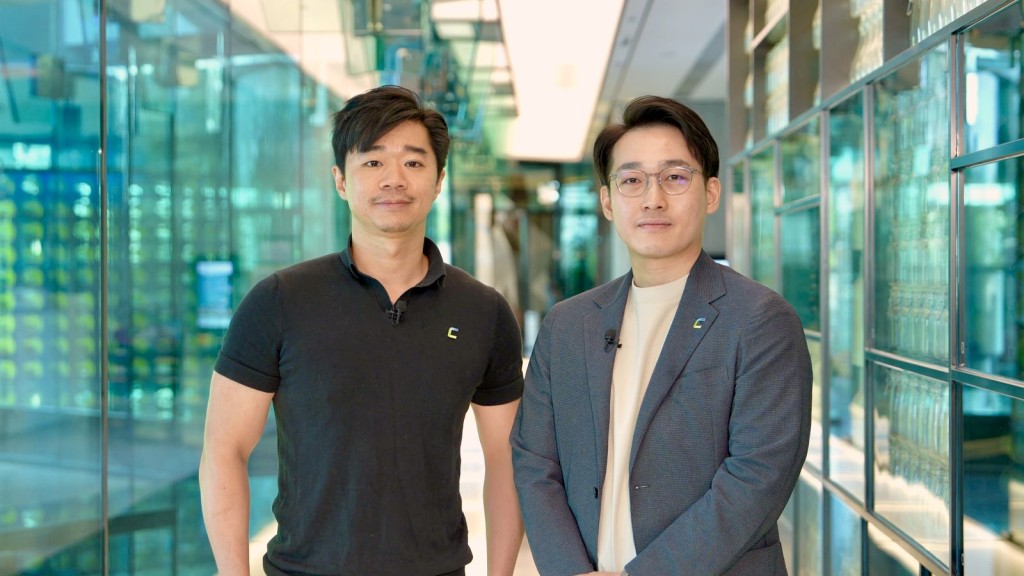
The property management team at The Quinn Square Mile praised the AI system’s ease of use, even for elderly residents, and noted that it has strengthened trust between management teams and tenants.
Looking ahead: a future that’s smart and human
The episode concluded by reinforcing the idea that the goal of AI in property management is not merely technological advancement—it’s about enhancing lives. Achieving a balance between automation, service quality, and emotional connection is key.
By freeing up human resources and automating routine tasks, AI and robotics allow property management teams to focus more on meaningful interactions with residents—creating living environments that are not only efficient and safe but also warm and welcoming.
With 17 episodes in total, “AI for Humans” continues to explore how artificial intelligence is transforming industries across the board. Stay tuned for more cutting-edge insights.