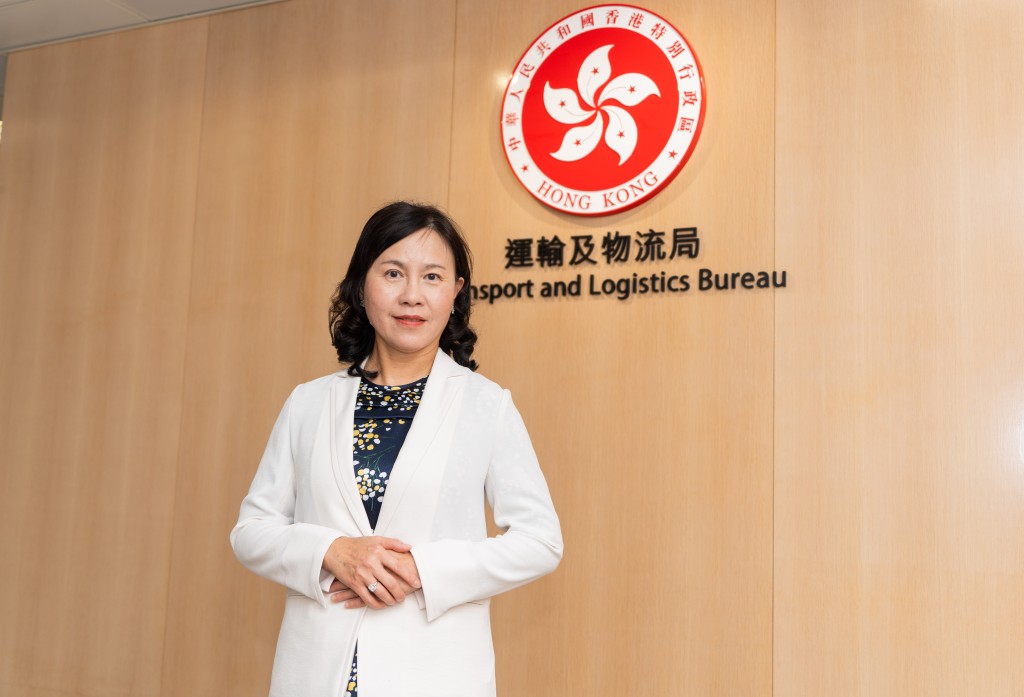
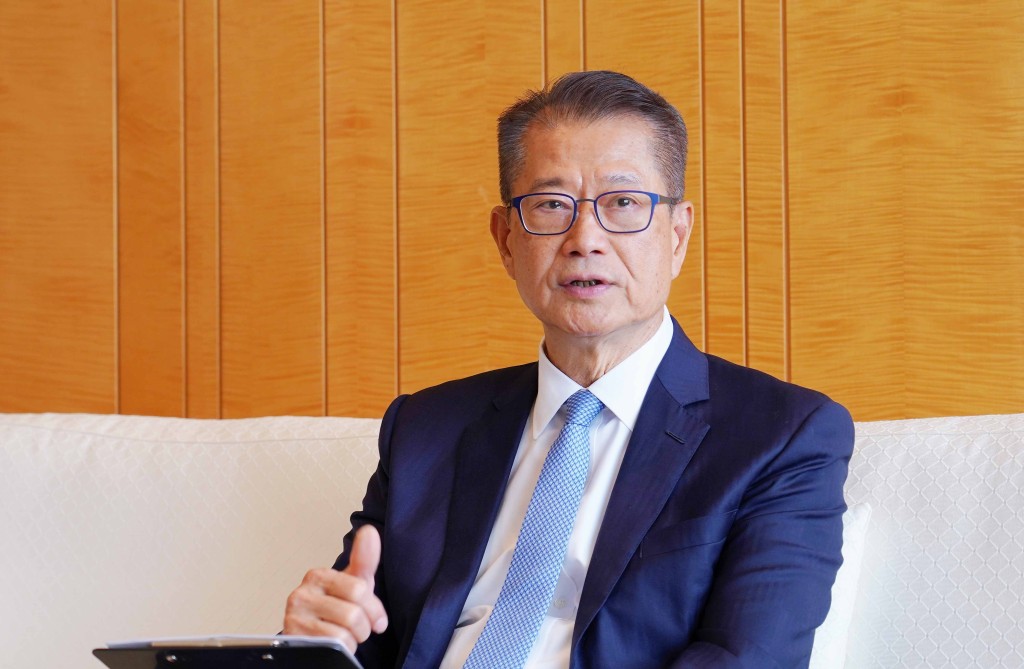
Hong Kong can serve as a two-way trade gateway connecting South America and mainland China, said Secretary for Transport and Logistics Mable Chan.
In an interview with Sing Tao Daily, The Standard’s sister newspaper, Chan emphasized that in response to unprecedented global economic shifts, Hong Kong must capitalize on its flexibility and status as a duty-free port with extensive international connectivity.
She said that in recent years, the city has seen growth in port throughput for Asia, Africa, and Latin America, particularly South America.
From 2018 to 2024, transshipments from the mainland to South America via Hong Kong recorded a cumulative increase of 14 percent, while imports from South America to the mainland through Hong Kong surged by 48 percent.
Chan has actively promoted Hong Kong’s transport and logistics services this year through visits to Guangxi, Chengdu, Chongqing and Shanghai.
She noted that the mainland is aggressively developing western logistics corridors, utilizing ports, canals and railways for export and transshipment trade.
"Hong Kong’s strength lies in its vast air and sea network," she said.
"Our international airport serves over 200 destinations, while our port connects to 400 ports worldwide."
One key initiative involves regular freight trains transporting goods from Chongqing or Chengdu to Shenzhen’s Yantian Port, with some cargo then transferred by barge to Hong Kong’s Kwai Tsing Container Terminals for global export.
Kwai Tsing Terminals also boasts Asia’s largest concentration of refrigerated container plugs, which Chan said reinforces its role as the "Gateway to South America" for cold chain logistics in southern China.
Chan noted strong demand for products such as cherries, explaining that South American cherries transported via the "Cherry Express" route reach Hong Kong before being shipped overland to mainland China, with the city currently supplying 40 percent of southern China's cherry demand.
Despite global uncertainties, Chan said the city’s efficient customs clearance, multi-port network and charter flight options helped maintain cargo volume growth, with May figures up 1.4 percent year-on-year to 420,000 tonnes amid trade tensions.
Enhanced multimodal transport links with the mainland, such as rail-to-sea routes via neighboring ports, have also bolstered business resilience, she said.
Looking ahead, Chan revealed plans to introduce a 50 percent tax concession next year for commodities traders and shipping firms establishing operations in Hong Kong, targeting metals, agricultural products and new energy sectors.
(Ayra Wang)