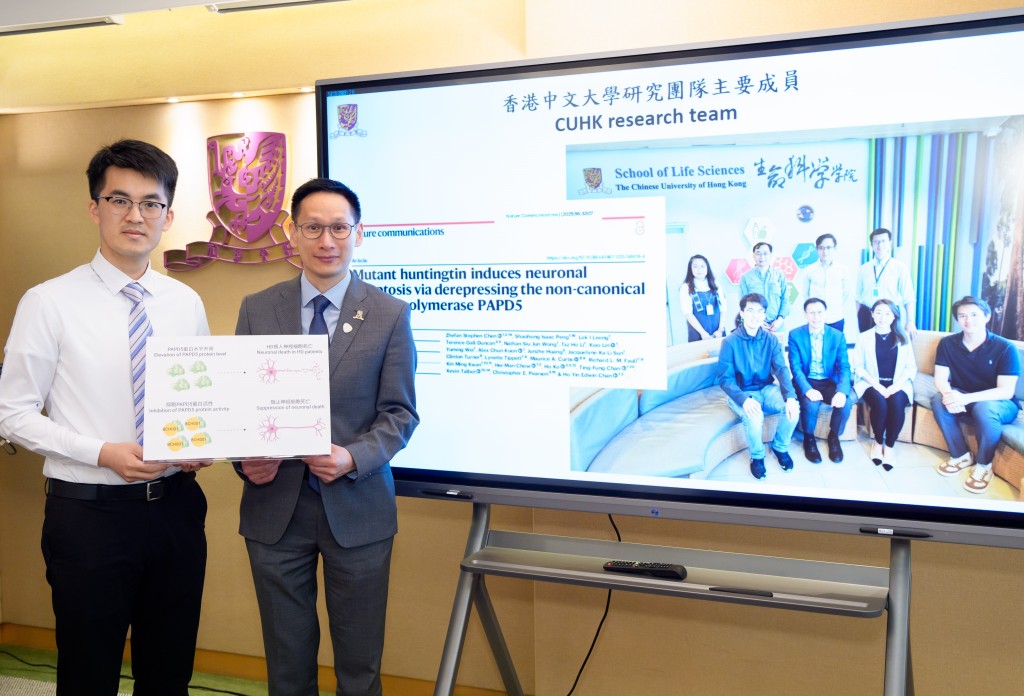
Researchers at the Chinese University of Hong Kong identified a novel molecular mechanism behind Huntington's disease -- an incurable neurodegenerative disorder -- and discovered that an inhibitor can alleviate its effects.
Huntington's disease, or HD, typically emerges in individuals aged 30 to 50, with patients suffering from uncontrolled muscle movements, cognitive decline, and in some cases, psychiatric disturbances.
In Europe, approximately seven out of every 100,000 people are affected by the disease, with cases also reported in Hong Kong and mainland China. Currently, available medications can only manage symptoms but do not offer a cure.
Led by Edwin Chan Ho-yin, professor at the CUHK School of Life Sciences, the team revealed that the levels of Poly(A) RNA polymerase D5 (PAPD5) are 4.5 times higher in the brains of HD patients than in healthy individuals. This increase triggers a signaling pathway that promotes neuronal cell death.
By understanding PAPD5's important role in the disease, CUHK researchers discovered that BCH001, a small molecule inhibitor of PAPD5, can block the harmful pathway and reduce neuronal cell death in various HD models.
Based on these findings, the team is now screening more drug candidates and testing their effectiveness in both cellular and rodent models of HD.
"Our study not only elucidates a novel disease mechanism but also identifies a potential drug candidate to address this devastating condition," Chan said.
"We believe our work opens new avenues for developing targeted therapeutic interventions for HD.”
(Cheng Wong)