Accurate and timely diagnosis is crucial for selecting the appropriate treatment plan, regardless of the disease. In the past, testing patient samples often involved multiple steps and complicated processing, requiring significant manual operation, making the entire process both time-consuming and labor-intensive. With advancements in medical technology, many testing procedures are gradually becoming automated and incorporating AI intelligent technology. The long-term goal is to reduce the time required for testing, enhance accuracy, and minimize manual operations to ensure standardsation.
Reducing the problems that can arise from manual operation
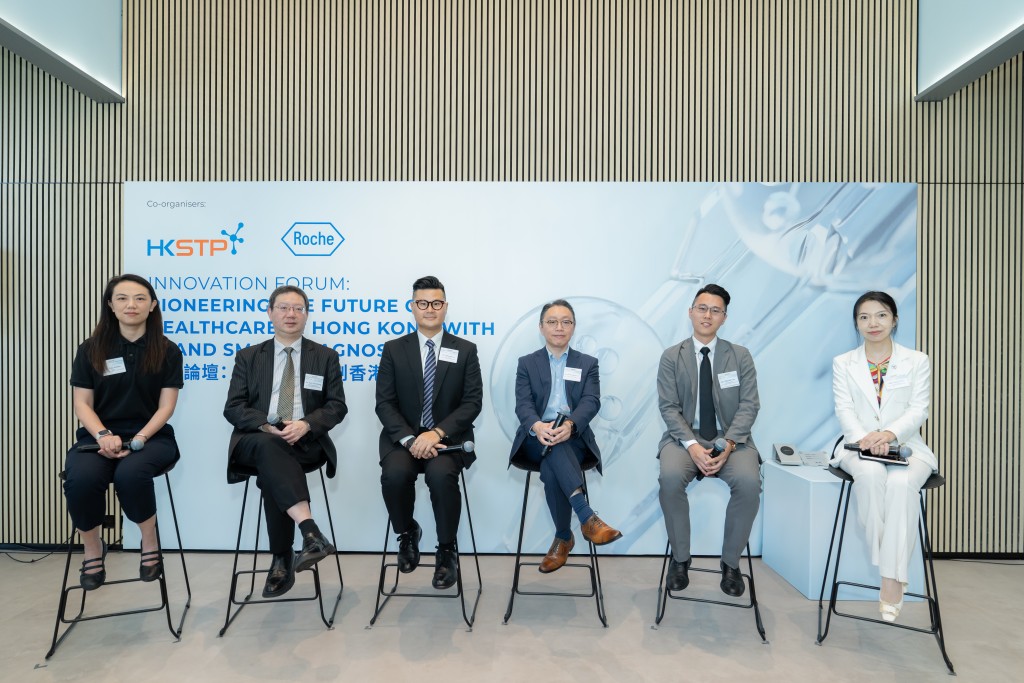
Recently, Hong Kong Science and Technology Parks Corporation (HKSTP) and Roche held a forum to explore the application and challenges of medical technology and automated testing in local hospitals. Several speakers shared insights into the current testing processes, the difficulties encountered, and the expected benefits of new technologies. Dr. Kan Chi Hang, Director of Histopathology Laboratory at St. Teresa's Hospital Hong Kong, stated that in the past, after receiving patient samples, a series of manual preparation procedures were required before the actual examination could take place. As each individual's operation might differ, the quality was difficult to standardise, and there was a risk of affecting the testing results.
Dr. Lai Koon Chi, Christopher, Assistant Professor (Clinical) in the Department of Microbiology, Faculty of Medicine, The Chinese University of Hong Kong, stated that the automation of the laboratory has greatly improved the lab's throughput, shortened diagnosis time, and enhanced accuracy. He gave the example that the laboratory often needs to handle a high volume of respiratory infection tests. If the testing time is too long, the patient's length of stay in the hospital or in the intensive care unit will increase. If doctors can get the test results quickly and prescribe the appropriate treatment plan, patients can be discharged sooner, which improves efficiency and reduces costs.
Integrating the future laboratory into the community
Mr. Lau Kwun Hung, Daniel, Council Member of the Hong Kong Institute of Medical Laboratory Sciences, briefly outlined the daily work of traditional medical laboratory technologists. Although over 80% of their time is spent processing samples, a significant amount of time is still required for handling documentation, instrument maintenance, and quality control. Therefore, he believes that laboratory automation can reduce their repetitive tasks, saving 8 to 10% of their walking, allowing laboratory technologists to focus more on case studies and provide doctors with more accurate and comprehensive test reports. He suggested that while many industries have already introduced AI, the technology is not yet fully standardised and still requires professional personnel to maintain oversight.
Regarding the positive evaluation and high expectations held by the diagnostics industry for the development of laboratory automation and intelligent diagnostics, Mr. Ronald Lo, General Manager of Roche Diagnostics (Hong Kong) Limited, believes it is crucial to integrate professional technology into the daily testing procedures of laboratory technologists and ensure its practical application in hospitals. He cited data indicating that by 2030, one in every six people will be aged 60 or above, and the number of patients suffering from chronic diseases will consequently rise. Therefore, he hopes to explore integrating immediate diagnostic testing (Point-of-Care Testing) into District Health Centres and community clinics to promote the early management of chronic diseases.