Hailed as a "gourmet paradise" for foodies, Hong Kong has a variety of cuisines on offer.
Perhaps one of the most well known cuisines to get in the city is dim sum – a traditional Cantonese range of small dishes typically served in steamer baskets.
"One cup, two pieces" refers to Hong Kong tea culture, meaning a customary cup of Chinese tea accompanied by two kinds of dim sum.
Dim sum – which means "to touch the heart" – has a history dating back thousands of years and was said to have started out as dishes for royal banquets before it was served at tea houses.
Today, it is known as "Yum Cha" – meaning to drink tea.
A brunch tradition, going to "Yum Cha" restaurants on the weekends is widespread throughout Hong Kong.
Also serving as cultural and leisure spaces, dim sum restaurants carry the city's memories, fostering a sense of togetherness where delicious food and fine teas bring everyone together in joyful gatherings.
Exquisite and delicately crafted, dim sum dishes come in what seems to be an endless variety of forms – from buns and dumplings, to rolls, slices, cakes, pastries and crispy treats, there is always something to suit people's taste.
Famous as the crown jewel of Hong Kong's dim sum, har gow – or crystal shrimp dumplings – always makes it to the dim sum table. Made of shrimp meat and steamed in a thin flour wrapper, the pinkish dumpling is a delicious staple that subtly shows off the shrimp meat within the translucent dumpling skin. Each har gow usually features at least seven pleats and is perfectly sized to be eaten whole in one bite.
Siu mai is another crowd-pleasing dumpling, typically featuring prawn and pork meat wrapped in a yellow sheet of dough and topped off with roe. It is also sold as a popular and accessible street food at affordable prices, substituting prawn for fish paste and complemented with sweet soy sauce and chili oil.
Inspired by the English custard tart, Hong Kong–style egg tart combines a Western style with Chinese flavor. With a smaller, one-portion size, the egg tart is usually filled with smooth, fragrant egg custard, and the shell made with a flaky crust. The technique of egg tart production has been formally included in the Intangible Cultural Heritage Inventory of Hong Kong Database.
While classic dim sum remains a staple Hong Kong people, the industry also innovates to meet different needs.
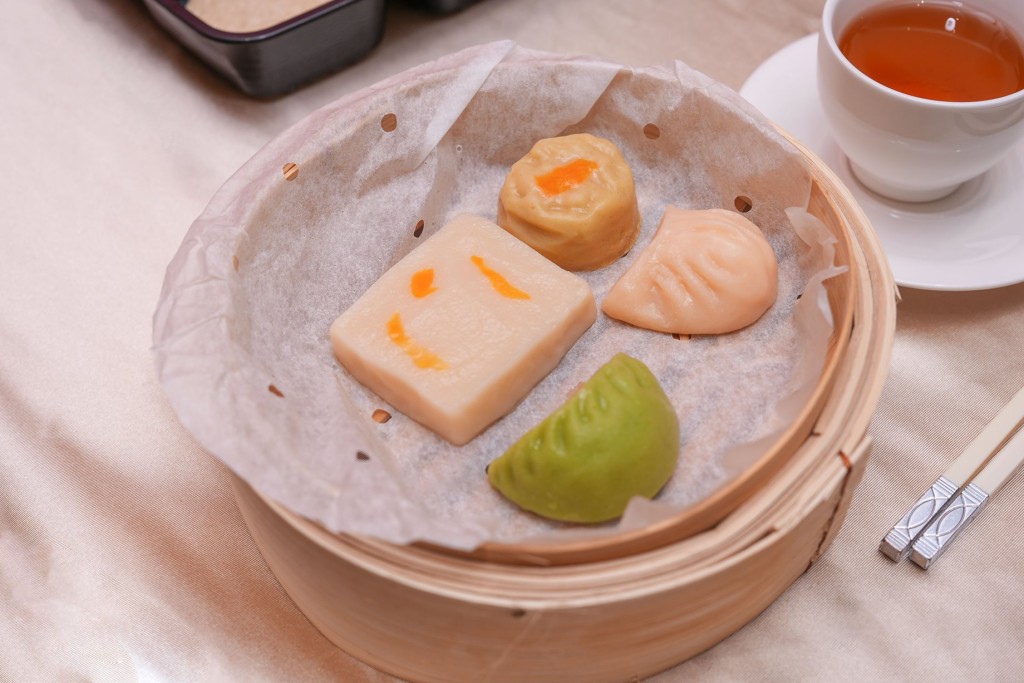
Maxim's Group, the owner of famous dim sum restaurant chain Maxim’s Palace, has launched the innovative "gentlemeal" project specializing in soft-textured meals designed to help individuals with swallowing difficulties enjoy classic tastes.
The project offers both Chinese cuisine and Western meal sets, including the dim sum platters featuring soft-textured versions of classic favorites like har gow, siu mai, chicken-and-shrimp dumplings and turnip cake.
With significant community support, Maxim's is collaborating with Towngas to distribute nearly 10,000 free gentlemeals to elderly care homes across Hong Kong in the coming months.
In addition, Maxim's will introduce its gentlemeals dine-in service at all Maxim’s Palace restaurants and over 20 selected Maxim's MX diners in July, extending its soft meal accessibility, as well as expanding the price range.
Notably, it provides elders with the opportunity to share a meal with family and caregivers, rekindling the simple happiness of dining together at the same table.
Dim sum represents more than just the food itself – it is a cherished tradition that strengthens emotional bonds through shared dining.
Helen Zhong