Read More




HK unlikely to be hit as Typhoon Champi gathers strength
15-10-2026 17:54 HKT
Elon Musk unveils Tesla's 'flying' car
14 hours ago
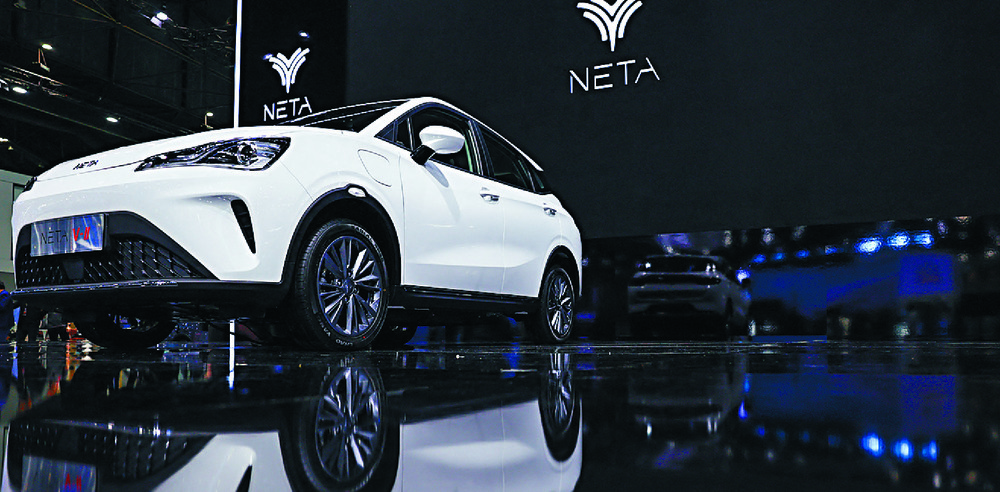
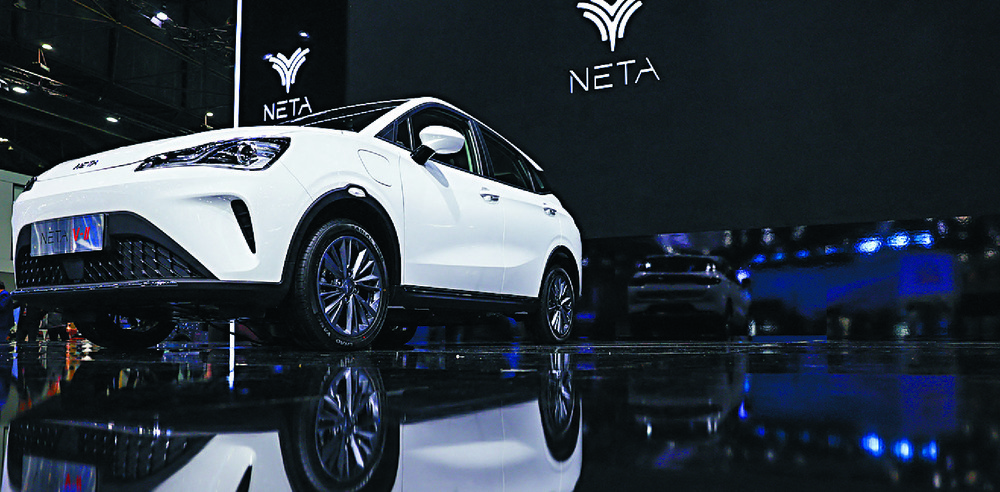
Hozon New Energy Automobile, the parent of electric vehicle brand Neta, is planning a first-time share sale in Hong Kong to fund its expansion overseas.
Neta's revenue rose 166 percent from 5.09 billion yuan (HK$5.47 billion) to 13.56 billion yuan from 2021 to 2023 but its losses widened to 6.87 billion yuan last year, pushing total loss over the period to 18.3 billion yuan, the prospectus shows.
Competitors Nio (9866) and XPeng (9868) both have more than 40 billion yuan in cash reserves.
However, Neta performed better overseas than the rival EV startups.It exported around 17,000 vehicles last year, accounting for 13.7 percent of sales and 12 percent of revenue.
Besides, it exported 16,458 cars from January to May this year, ranking first among all mainland EV startups like Nio, XPeng and Li Auto (2015), and was the fifth largest exporter after BYD (1211), Tesla, SAIC Motor and Chery.Neta was among the top three new energy vehicle brands in the Southeast Asian market in 2023 in terms of the number of cars with insurance, according to the prospectus.
This was uplifting news for the EV maker, whose sales in 2023 fell by 16 percent to 127,500 vehicles, less than half of its 300,000 annual target.And in the first six months of 2024, Neta has sold just 53,770 vehicles, less than 19 percent of this year's 300,000 target.
Overseas business accounts for less than 15 percent of Neta's revenue.In 2022 and 2023, Hozon raked in 240 million yuan and 1.62 billion yuan from overseas sales, which accounted for 1.8 percent and 12 percent of total revenue respectively.
As a young brand founded in 2018, Neta focuses on the middle and low-end market.Its flagship Neta V models target the electric SUV market below 100,000 yuan and were first launched at the end of 2020.
In 2021, as 360 Security Technology and Chinese battery giant CATL became key investors in Neta, the car manufacturer further concentrated on entry-level EVs by launching the Neta V Pro, priced between 76,900 and 80,900 yuan after discounts and equipped with intelligent systems and batteries with longer life.Sales surged 362 percent to 69,674 vehicles in 2021 and Neta surpassed Nio, XPeng and Li Auto in 2022, ranking first among Chinese EV startups by selling more than 150,000 cars.
However, the momentum didn't last as other rivals like Wuling Bingo and BYD Seagull swarmed into sub-100,000 yuan EV market segment in 2023.Neta needs to find another competitive edge besides low prices.
The company has been speeding up funding and in March, it signed an agreement with the Hong Kong government to become the city's strategic enterprise partner.It plans to build a big data center and an intelligent research center at its international headquarters in Hong Kong.
The SAR government has granted HK$200 million worth of subsidies to the firm and assisted in arranging US$200 million (HK$15.62 billion) of financing from cornerstone investors.In April, Neta won 5 billion yuan in investment from three state-backed institutions.
Hozon will use the proceeds from the initial public offering to expand overseas, enrich its product portfolio and enhance its smart vehicle hardware and software technologies.It plans to expand its sales, service, and charging infrastructure network in China and fund digital marketing and user community operations to enhance its global reach.
It has set a target of selling 100,000 vehicles overseas in 2024 and will focus on Latin America, the Middle East and Africa.