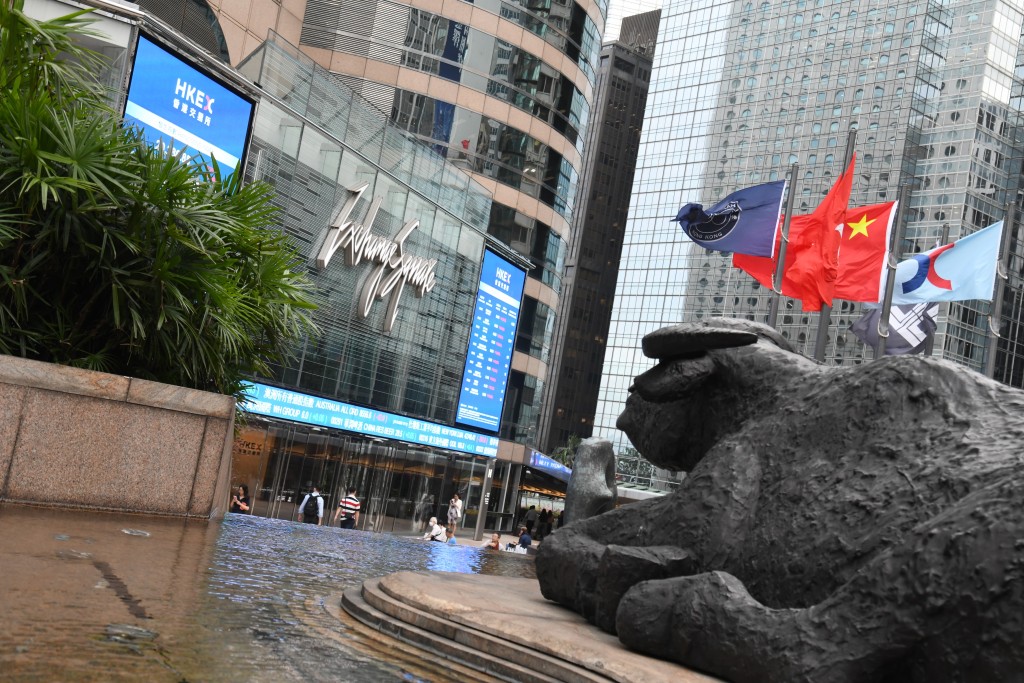
China has the largest carbon market in the world and Hong Kong can help connect it globally by establishing an Asia-focused carbon standard and developing a futures market, an energy expert says.
And retail investors can also participate in carbon trading, prices of which has been rising fast, AEX Holdings founder and chief executive Jeff Huang says.
He believes Hong Kong can help the mainland establish "efficient carbon pricing" and gain more influence in the global carbon market.
A former vice president for Asia at the Chicago Climate Exchange, and a former managing director for the Greater China region of the Intercontinental Exchange of the United States, Huang is well versed in China's energy and carbon markets and was also a consultant for the China Securities Regulatory Commission.
"For now, pain points in China can only be addressed in Hong Kong, which has a world-class regulator [the Securities and Futures Commission] and a robust market infrastructure with global connections," Huang told participants at seminar hosted by Maritime Silk Road Society earlier this month.
Huang emphasizes that Hong Kong's advantage lies in the SFC, which can address the pain points experienced in China's carbon market.
Trading opportunities
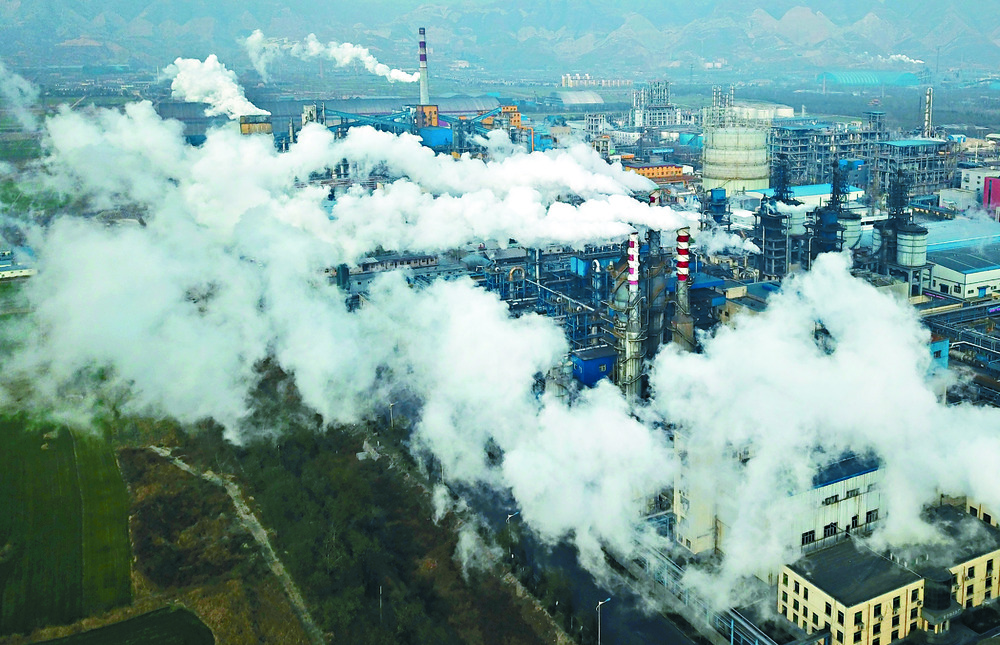
China launched its national carbon market, known as the emission trading system or ETS in July 2021 when the first batch of carbon emission allowances, CEAs, was issued.
The quotas for these allowances are allocated by the Ministry of Ecology and Environment in Beijing and are initially limited to the power sector.
However, there are plans to extend the system to eight other sectors to aid their transition to net-zero emissions.
Currently, only a spot market exists in China's ETS.
Companies are also allowed to use the voluntary market Chinese certified emission reductions, or CCERs, to offset up to 5 percent of their emissions covered by the ETS.
Indeed, carbon trading is not confined to institutional investors, and Huang helped arrange the first trading of CCER in Hong Kong back in 2021.
It was a forward with future delivery. The trade involved a specific type of CCER that met international standards, or a "high-integrity" CCER.
The purchaser was Christine Loh Kung-wai, the former undersecretary for the environment in Hong Kong, who is now chief development strategist at the Hong Kong University of Science and Technology's Institute for the Environment.
Another buyer was Ben McQuhae, a Hong Kong law firm that focuses on technology and environmental, social and governance issues.
McQuhae is also a co-founder and special adviser to the chairman of the Hong Kong Green Finance Association.
Prices on the rise
The carbon price of China's ETS has risen by 66 percent to about 80 yuan per tonne from 48 yuan when it was launched in 2021.
It is expected to increase to 105 yuan per tonne in 2025, the final year of the 14th five-year plan, and even 200 yuan a tonne during the 15th five-year plan which runs from 2026-2030, when China carbon emission peaks.
China's ETS currently encompasses over 2,200 firms responsible for approximately 5.1 billion tonnes of carbon dioxide emissions annually.
In comparison, the European Union's ETS accounted for 1.6 billion tonnes in 2021.
By 2030, China aims to increase its carbon allowance from 5 billion tonnes to 7 billion tonnes. The country has set dual carbon goals, aiming to peak carbon emissions by 2030 and achieve carbon neutrality by 2060.
However, China was criticized for shifting the focus of energy consumption control from energy intensity - the amount of energy used per unit of gross domestic product - to "fossil fuel intensity" without adjusting the 2.5 percent target, reflecting a lower level of ambition.
In 2023, China witnessed the trading of 212 million tonnes of CEAs worth 14.44 billion yuan.
The average price for carbon in China over 12 months was 79.42 yuan per tonne, which is five times lower than the EU's price.
This lower price may present difficulties for Chinese exporters when facing the carbon border adjustment mechanism or CBAM that's now been introduced by the EU.
The CBAM requires the average carbon price paid for emissions generated during production to be equivalent to that in the EU.
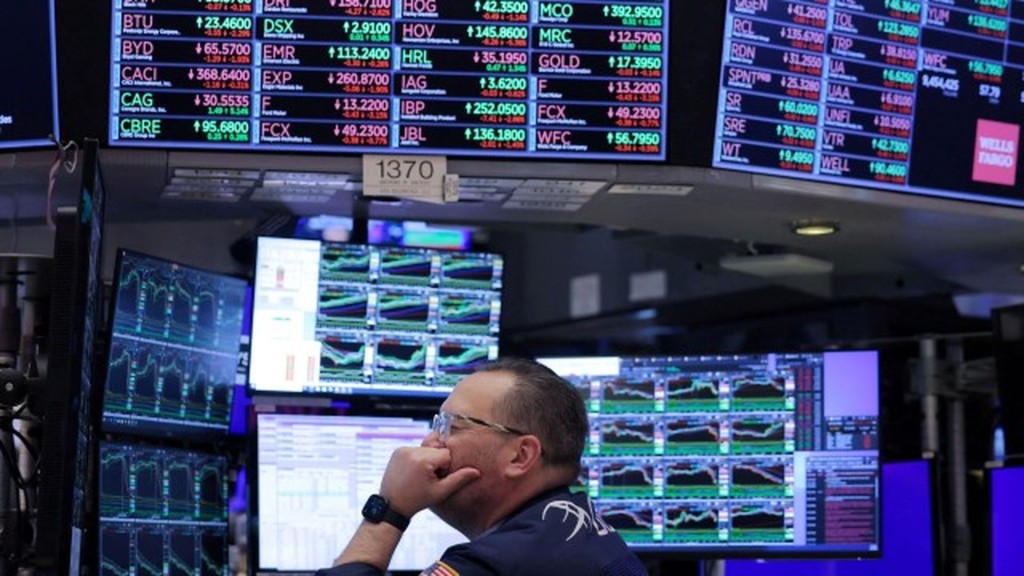
Huang suggests that in order to facilitate carbon price discovery and hedging in China, a forward price curve extending beyond 12 months is necessary.
Currently, China has about 130 futures and options contracts listed on onshore exchanges, but few of them extend beyond 12 months.
Open Interest push
Huang also highlights the importance of open interest or OI, which represents the number of futures contracts held by traders in active positions.
He notes that though China accounts for 17 percent of the global economy, it only holds 3 percent of global OI volume, indicating disproportionate participation from institutions and influence on commodity prices.
Ultimately, spot and future prices should converge as contracts expire, following the best practice in the price discovery process.
Meanwhile, the Guangzhou Futures Exchange is preparing to launch carbon and power futures, and Singapore's Abaxx Exchange and Clearing is poised to start trading of carbon, LNG and nickel sulfate future contracts.
RECs to the fore
Huang suggests that Hong Kong could explore over-the-counter trading of renewable energy certificates or RECs.
An REC is a prevalent method for organizations to offset their carbon emissions.
AsiaREC, a non-profit organization launched in Hong Kong last July, verifies and issues RECs to organizations based on the renewable energy they generate.
Energy consumers can then buy these RECs from the energy generators to offset their consumption and meet their carbon neutrality goals.
However, under international standards, RECs have an 18-month shelf life, meaning they cannot be sold for offsetting purposes beyond two years from their generation.
Blockchain technology is employed to ensure transparency and traceability of the data.
Financial markets in Hong Kong could enable efficient pricing of these RECs where buyers and sellers could hedge their forward exposures beyond two or three years, guaranteeing timely physical delivery.
RECs cover scope 2 carbon emissions, which are indirectly generated by an organization, such as those related to electricity or energy usage. Scope 1 and 3 encompass direct and other indirect emissions made by an organization, respectively.
Huang describes the REC issued in Hong Kong by a neutral standard NGO as a form of "green purification" for mainland Chinese wind/solar project developers, benefiting from Hong Kong's global best practices.
This neutral standard will also help bolster Hong Kong's role in the carbon markets as a bridge between China carbon markets and international investors.
RECs are gaining popularity as an investment avenue for renewable energy growth worldwide.
In Hong Kong, the two power suppliers, CLP Power Hong Kong and the Hongkong Electric Company, have been selling RECs for HK$0.5 per kilowatt-hour of electricity on top of the regular electricity tariff rate since 2019.
The charge for purchasing RECs is reflected in consumers' electricity bills, but the certificates cannot be traded to third parties.
The income generated from RECs is used by the power suppliers to fund the feed-in-tariff scheme, allowing consumers to sell the solar energy they generate back to the electricity companies.