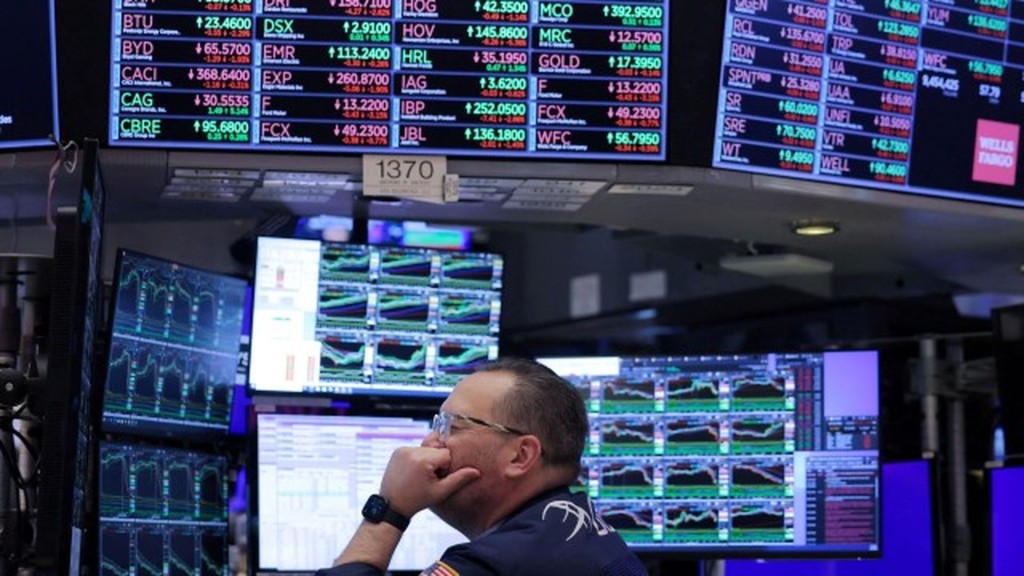
South Korea from today will reimpose a ban on short-selling shares at least until June to promote a "level playing field" for retail and institutional investors.
The news came as the Philippines ended a nearly three-decade wait, allowing traders to finally short-sell stocks.
South Korea's ban was lifted in May 2021 for trades involving the shares of companies with large market capitalization included in the KOSPI200 and KOSDAQ150 indices. The restriction has remained in place for most other stocks.
Short-selling involves selling borrowed shares to buy back at a lower price and pocket the difference.
"The measure is aimed at fundamentally easing 'the tilted playing field' between institutional and retail investors," Financial Services Commission chairman Kim Joo-hyun said.
"Amid continued uncertainty in financial markets, major foreign investment banks have been engaged as a matter of practice in unfair trades ... and we determined that it would be impossible to maintain fair trading discipline," Kim said.
Naked short-selling - in which an investor short-sells shares without first borrowing them or determining they can be borrowed - is banned in South Korea.
The Financial Supervisory Service in October said it would likely fine two Hong Kong-based investment banks it determined had engaged in naked short-selling worth 40 billion won (HK$240 million) and 16 billion won respectively.
Meanwhile, in the Philippines, 52 stocks and one exchange-traded fund, including all the equities on the benchmark gauge, will be available for short-selling from today after regulators signed off on a proposal first made by the Philippine Stock Exchange in 1996. "Without short selling or any index futures we will be a long-only market, so if there's uncertainty on the economy, the political situation or even in emerging markets, they will all sell," bourse president Ramon Monzon said.