The recent rally in Japanese stocks, which has coincided with Warren Buffett's visit to the land of the rising sun, is expected to continue as the mainland's reopening frenzy fades and global investors seek alternative opportunities to China.
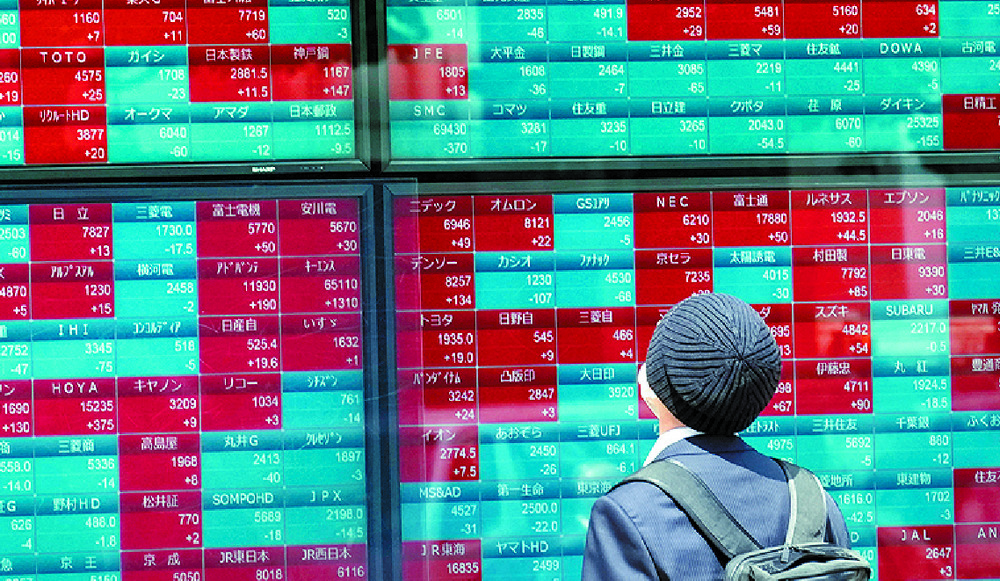
The Nikkei 225 index has jumped by 23.6 percent this year to a nearly 33-year high, boosted by an influx of foreign funds, solid earnings, signs of sustainable inflation, a weak yen and the continued easy-money policy.
"A reallocation away from China may in fact have catalyzed a wider rally across largely dispersed parts of Asia," says Aninda Mitra, head of Asia macro and investment strategy at BNY Mellon Investment Management.
Overseas traders bought 2.4 trillion yen (HK$133.9 billion) worth of Japanese stocks last month - the highest in a decade - on the back of 2.15 trillion yen purchases in April, marking a ninth consecutive week of inflows. That compared to a net sale of 12.1 billion yuan (HK$13.3 billion) worth of mainland shares via the Stock Connect in May and 4.55 billion yuan in April.
Buffett bets big
The shift towards Japan coincided with Buffett's trip to the country in April when the billionaire investor revealed that he had raised his holdings in Japan's five major trading houses to 7.4 percent from about 5 percent in 2020.
Japan's trading houses - or "sogo shosha" - have deep roots in the country's economy, dating back hundreds of years and providing everything from energy to food.
Buffett's conglomerate Berkshire Hathaway also sold 164.4 billion yen of bonds after he said he was "very proud" of the investments and was looking to increase his exposure to Japanese stocks. The remarks pushed the stocks up, with Mitsubishi Corporation, the biggest trading house, rising 32.3 percent in the second quarter and Mitsui up by 22 percent.
Room to run
Major Wall Street firms see further room for the rally to run.
BofA Securities says Japanese stocks will hit a record high as early as the first half of 2025. "We believe the stock-market high of 1989 set during the Bubble Economy will come into sight again, should a core consumer price index of 1.5 percent or more takes hold in Japan and return on equity rises into the double digits," a note by the chief Japan equity strategist Masashi Akutsu shows.
Goldman Sachs says the recent results season was "additional fuel for investors' bullish stance on Japanese stocks, providing some reassurance on the earnings outlook."
Four out of the five firms invested by Buffett saw their annual net profit hit a new high last year.
Other tailwinds include companies with low price-to-book ratios unveiling measures to improve their valuations, Goldman strategists note. "If progress is made in accordance with investor expectations, Japanese stocks could see a prolonged advance over the medium term, and we continue to see risk to the upside," they say.
Economy faces challenges
The Japanese economy, however, is still slowly climbing to recovery from the pandemic, as shown by the mixed economic data. While the unemployment rate fell for the first time in three months at a faster-than-expected pace to 2.6 percent in April, workers' real wages dropped 3 percent from a year earlier in April, slipping for the 13th month, as inflation rose at a quicker rate of 3.4 percent.
Major labor unions and employers in the country reached agreements to raise overall wages by a record 3.6 percent on average as of June 1, and 40 percent of the results were expected to have been reflected in April.
Nominal cash earnings only increased 1 percent from the previous year, versus a 3 percent growth needed for sustainable inflation suggested by the Bank of Japan officials.
Although governor Kazuo Ueda still sees inflation slowing below 2 percent toward the end of the fiscal year that started in April, current higher prices are sapping consumer appetite with household spending down 1.3 percent and retail sales 1.2 percent in April from March. Ueda has repeatedly maintained that the bank will continue with large-scale easing to achieve its 2 percent price goal in a sustainable and stable manner.
Yen's strength in weakness
The super-easy monetary policy, in stark contrast to other major economies like the US, sent the Japanese currency to a six-month low of 140.93 against the US dollar last month, making the loss reach 4.7 percent in the two months through May.
"The weaker yen seems to bring benefits like the stronger performance of equities and help with inbound tourism and Japan's attempt to invite foreign investment, while its decline is more gradual than last year," says Daisuke Uno, chief strategist at Sumitomo Mitsui Banking.
And the weakness may be "limited because of factors from the US side such as concerns about an economic slowdown and a potential pause of Federal Reserve's tightening, which will then turn to a rate cut eventually," says Kengo Suzuki, senior market strategist at Mizuho Bank.
It would also get some support from the recovery of tourism and possible government intervention if needed.
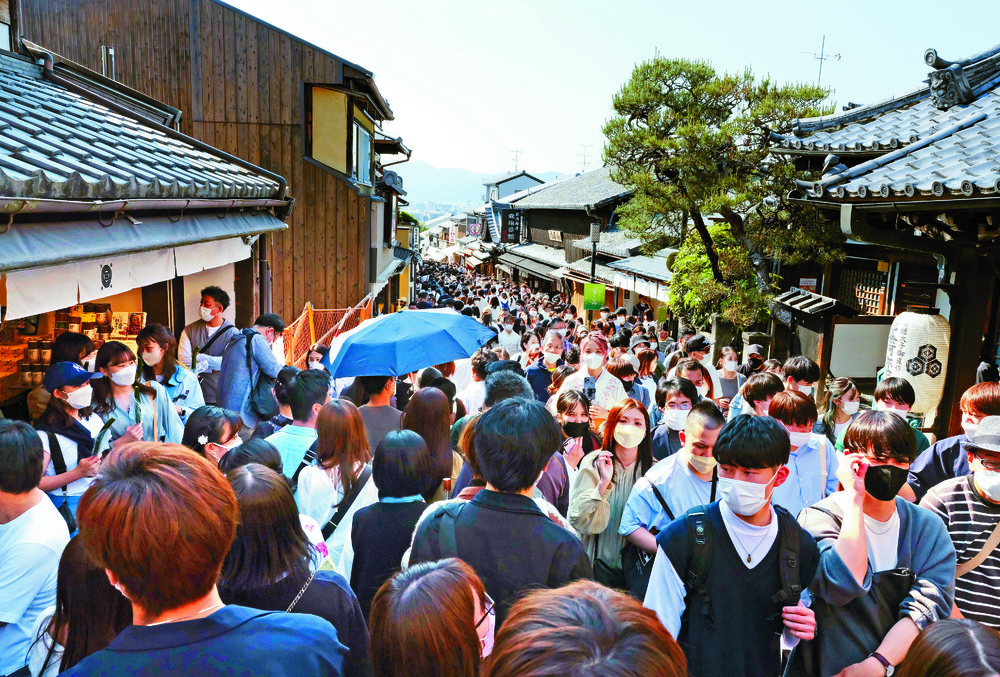
While it still has a long way to go before the number of foreign tourists returns to pre-pandemic levels of almost three million per month, overseas arrivals hit nearly two million in April, compared to less than 140,000 a year earlier. And the administration is targeting inbound spending to hit 5 trillion yen a year as soon as possible, to beat its peak of 4.8 trillion yen four years ago.
The US currency's gain may be limited to around 142 against the yen and then move toward 130 by year-end, Suzuki notes.
Advantage Hong kong
This could be good news for those who are looking to seize on Japan's market rally - they might profit from the foreign exchange spread on top of the capital gain from the equities. Given the Hong Kong dollar's peg to the greenback, local investors can enjoy a more than 20 percent discount on securities priced in yen compared to the end of 2019, if they have a Japanese stocks trading account with a broker.
But those who prefer to invest in the local stock market might be disappointed as there are only a few Japanese stocks listed here and they are very lightly traded.
Fast Retailing (6288), the parent of Uniqlo, has issued only 3.55 million Hong Kong depositary receipts or 35,478 shares in the city, accounting for 0.011 percent of the 318.22 million existing shares. Although its HDRs rose 27 percent year-to-date, in line with the performance of the stock in Japan, the average daily turnover in the past 30 days was 5,020 HDRs, or 50.2 shares, compared to 1.3 million shares in Japan.
Other Hong Kong-listed Japanese firms like Niraku GC (1245) and Dynam Japan (6889), which operate halls for pachinko gambling machines, are either low in market cap or return.
That makes funds, often with hedging against weakness in the yen, a more appealing option.
ChinaAMC MSCI Japan Hedged to USD ETF (3160), the only Japan-focused exchange-traded fund in Hong Kong, tracks the performance of MSCI Japan 100% Hedged to USD Index. The passive ETF has gained 22.1 percent year-to-date, compared to a 1.3 percent decline of the Tracker Fund (2800), which mirrors the performance of the Hang Seng Index.
The return of the ETF with a 0.5 percent management fee is even higher than other non-ETFs like JPMorgan Japan Yen Fund which has a 1.5 percent management charge and a 5 percent front load fee.
In China, some ETFs that track the Nikkei 225 index saw their assets more than double in May driven by the surging investment from retail investors, according to a note by Mizuho Securities. The asset under management for the China AMC Nomura Nikkei 225 ETF surged nearly 300 percent from end-April to 213 million yuan, while that for E Fund Nikko Asset Management Nikkei 225 ETF jumped 236 percent to 171 million yuan, the note says.
SUMMER’S HOT: Tourists are flocking into Japan, the economy is slowly recovering, and the stock market is applauding.