As Alibaba (9988) starts to break up its empire into six independent businesses, analysts say investors should place their faith - and their cash - on the tech-titan's cloud services and core operations as the new sectors go public.
Still, the historic move from the 24-year-old Chinese tech conglomerate will not necessarily boost productivity and regulatory risks could continue even after the overhaul, they say.
Under the revamp revealed last month, Alibaba will split into six main sectors - cloud computing, domestic e-commerce, global e-commerce, digital mapping and food delivery, logistics, and media and entertainment.
They will all explore fundraising or initial public offerings except the core domestic e-commerce business - Taobao Tmall Commerce - which will remain wholly owned by Alibaba and logistic arm Cainiao Network and grocery chain Freshippo have reportedly started preparing for IPOs in Hong Kong.
Flagship first
Taobao Tmall Commerce is Alibaba's only profitable segment which accounts for 68 percent of its revenue and remains the best bet despite an estimated limited rise in margins amid fierce competition.
JP Morgan analysts led by Alex Yao give the domestic shopping business a valuation of US$245 billion (HK$1.91 trillion) or 10 times its 2024 forecast earnings, surpassing Alibaba's valuation of US$231 billion last Friday. The value per American depositary share will stand at US$90, or about HK$88 apiece.
But Bloomberg Intelligence analysts Catherine Lim and Trini Tan say Alibaba may struggle to retain shoppers and merchants if rivals such as JD.com (9618) and ByteDance's Douyin offer them more subsidies.
To boost sales, Alibaba has further reorganized its Taobao and Tmall business by establishing three major industry development departments following the major overhaul.
Look to the Cloud
Apart from the core domestic businesses, Barclays analysts believe that the cloud, Cainiao and global e-commerce may be the most valuable and could go public first.
And JP Morgan notes that investors under-appreciated the earnings potential of non-core operations, expecting such operations to drive group revenue to grow at a compound annual growth rate of 10 percent and profit at a CAGR of 15 percent.
Analysts are upbeat about the medium to long-term potential of the cloud computing unit led by chairman and chief executive Daniel Zhang Yong, despite subdued revenue growth.
It was valued at US$87.7 billion by JP Morgan, or seven times its estimated sales for fiscal 2024, which could translate to US$32 per ADS or HK$31 apiece.
Bloomberg Intelligence's Lim and Tan say sales gains from the cloud will probably exceed those from commerce in the next three years as China's push for digitalization spurs demand for related services.
For the near term, Alibaba could cede profit gains from the cloud unit in the year ending March 2024 as the firm needs to boost investments, particularly in its ChatGPT-like tool, to fend off increased cloud and generative artificial intelligence rivalry from Tencent (0700) and Baidu (9888) this year, they note.
The cloud unit revealed its ChatGPT-like product dubbed Tongyi Qianwen earlier this month, which will be integrated into all of the company's apps in the near future.
The unveiling came as the Cyberspace Administration of China rolled out a new set of draft rules that require a security assessment of generative AI services before they can be released, saying services provider must ensure content upholds "core values of socialism" and should not suggest regime subversion and generate "false information."
But Lim and Tan believe that Beijing's heightened scrutiny of ChatGPT-style services will be unlikely to deter expansion in the field by tech giants as the proposed rules are in line with general directives already in place to govern local big tech.
Logistically speaking
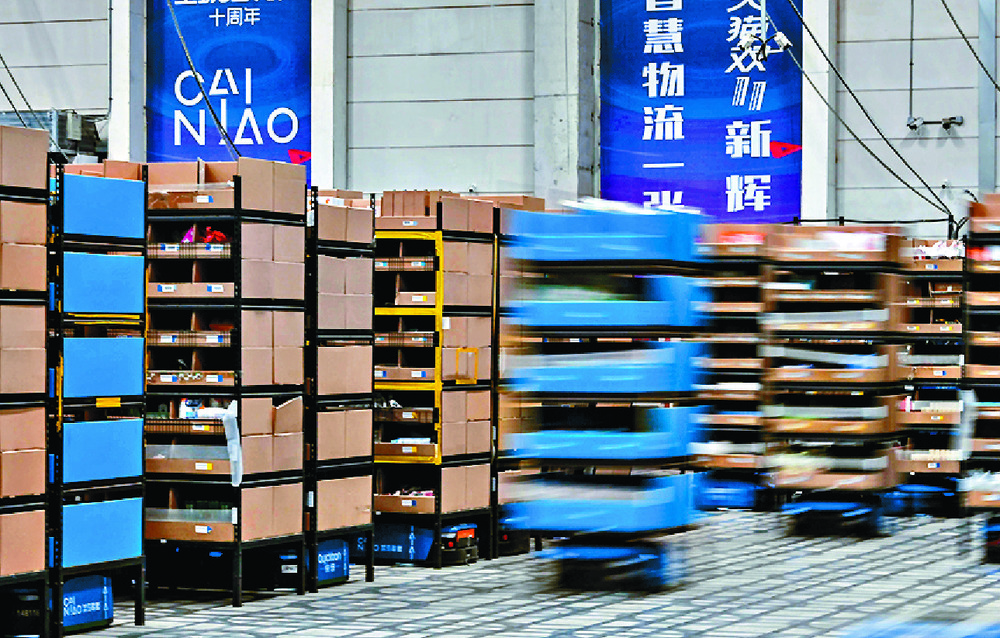
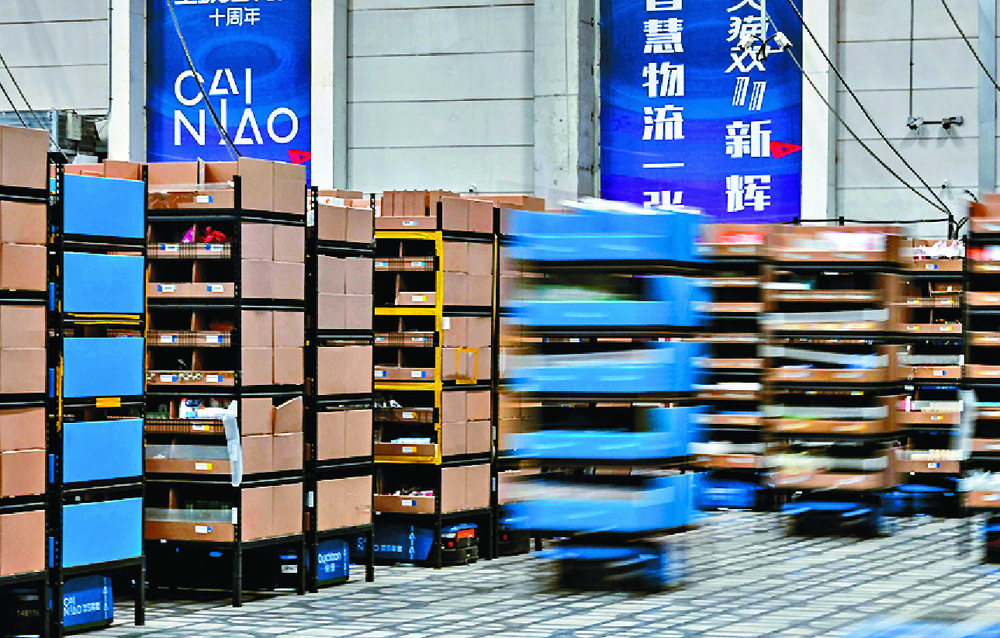
The logistics arm Cainiao is currently valued at more than US$20 billion and analysts say that its planned IPO in Hong Kong - which could happen as soon as this year - will be in high demand if market sentiment improves.
When Cainiao's peer JD Logistics (2618) went public in Hong Kong in 2021, its retail tranche was 715 times oversubscribed, however its shares are currently trading 70 percent lower than its offer price due to the tech crackdown and its unsustainable profitability.
At US$20 billion, Cainiao's valuation would be two times the revenue JP Morgan analysts estimate it'll generate in fiscal 2024 while JD Logistics currently trades at 1.8 times its sales.
Although the two rivals are both backed by e-commerce giants, they have different business models. JD Logistics is known for its asset-heavy model with a sprawling self-owned warehousing network while Cainiao is an asset-light logistics data platform that outsources delivery to third-party firms.
But overall, Mizuho Securities analysts believe JD.com's spinoff is a good case study.
After the public listings of JD Health (6618) and JD Logistics in 2021, the revenue growth for the two units outperformed their parent by 22 percentage points over the last two years as they were able to accelerate external revenue with a strategy independent of JD, they note.
For Alibaba itself, analysts say the split would likely significantly unlock value as investors may start using the sum of the parts or SOTP valuation for the stock instead of a framework like forward price-to-earnings, with JP Morgan seeing the potential for shares to more than double to US$210 or HK$205 in the bullish scenario as news on new IPOs hit the market.
Other investment banks such as Mizuho Securities are eyeballing US$155 for Alibaba based on SOTP valuation, which will also include Alibaba's stake in its financial arm Ant and other investments.
Break-up costs
Meanwhile, although many believe the break-up will boost worker vitality and help the units became more adaptable, economics professor Li Jin and law professor Angela Zhang Huyue at the University of Hong Kong fear the split will increase costs and may not boost productivity and agility.
Resources in risk management, legal affairs and government relations may need to be replicated across the units while compliance costs will also likely rise due to increased oversight from the board, investors and financial regulators, they say.
Besides, a holding company is unlikely to have the same access to information about independent units as a company headquarters has about the divisions it oversees, let alone the same ability to leverage such information to optimize resource allocation, they note.
The structure of a holding company also cannot allow for the fine-tuning that a headquarters could have to adjust the extent of centralization to deal with evolving market conditions.
The restructuring is neither the least costly nor the least disruptive way to boost agility, they say.
Regulatory risks remain
On the regulatory front, Alibaba's split was seen by many as signaling the end of Beijing's two-year tech crackdown and easing concerns over big tech's concentrated power and data. It also sets a template for other giants like Tencent and ByteDance to break up their businesses in the future, if needed.
But others remain doubtful as regulatory oversight in the country has become the new normal with antitrust and "common prosperity" continuing to be a top focus.
Also, Chinese government entities have been acquiring minority stakes with special rights in units of tech firms including Alibaba in recent years and expanding co-operation in areas like cloud computing and AI.
Caixin reported earlier this year that Alibaba and Ant have set up three corporate Chinese Communist Party committees, which include more than 150 party branches altogether.
And China Banking and Insurance Regulatory Commission chairman Guo Shuqing has said the authorities will implement "normalized regulation" going forward, and encourage platform companies to operate in a compliant manner.
Anli Asset Management's managing director Matthew Kwok Ka-Yiu sums it up by saying that while there have been favorable signs of changes in broad policy, regulatory risks remain and "investors are still waiting to see the growth in revenue to finally believe the crackdown has eased."