
Read More
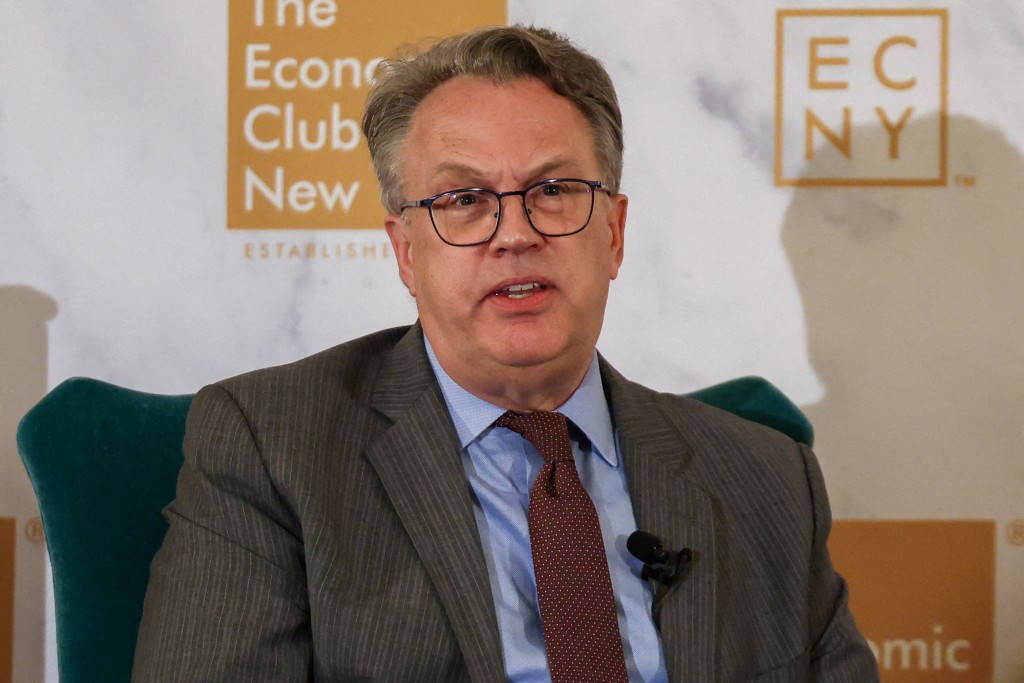
New York Federal Reserve President John Williams said on Thursday it was reasonable to think that the U.S. central bank might need to raise interest rates again before the end of the year to help bring down inflation risks.
ADVERTISEMENT
SCROLL TO CONTINUE WITH CONTENT
Forecasts among market participants showed investors thought "it's likely that another rate hike may be appropriate by the end of the year. That seems to me a reasonable way of thinking about it," Williams said.
"But we have to see. We're going to collect the data and do what we did between July and September" in assessing the information, he told a conference in London organised by the National Institute of Economic and Social Research, a think tank.
Williams stressed the high levels of uncertainty clouding the economic outlook.
The U.S. central bank under new Fed Chairman Kevin Warsh last week raised its policy rate to the 3.75 percent-4.00 percent range and 16 of 18 policymakers signalled the Fed would probably need to deliver at least one more rate hike before the end of 2026.
Williams — who also serves as vice-chair of the interest rate setting Federal Open Market Committee — said the US and other economies around the world had proven resilient to the shock of higher energy prices caused by the Iran war.
But inflation posed the "big challenge" for policymakers seeking to balance growth and price risks.
"We really want to see not only inflation get back to 2 percent which is absolutely essential to achieve that, but also we want to see that happen ... in a timely manner," Williams said.
The Fed lifted rates last week to target inflation pressures that have overshot its 2 percent target for years and are building further on the back of President Donald Trump’s trade tariff agenda and the Middle East war.
Fed officials now expect inflation will not be back at target until 2029.
Futures markets are putting strong odds of another increase to borrowing costs at the Fed's October policy meeting, as well as another increase in December.
Asked about the likely timing of the next rate hike, Williams noted that September's move had been triggered by a build-up of pressures rather than a sudden change in data.
Reuters