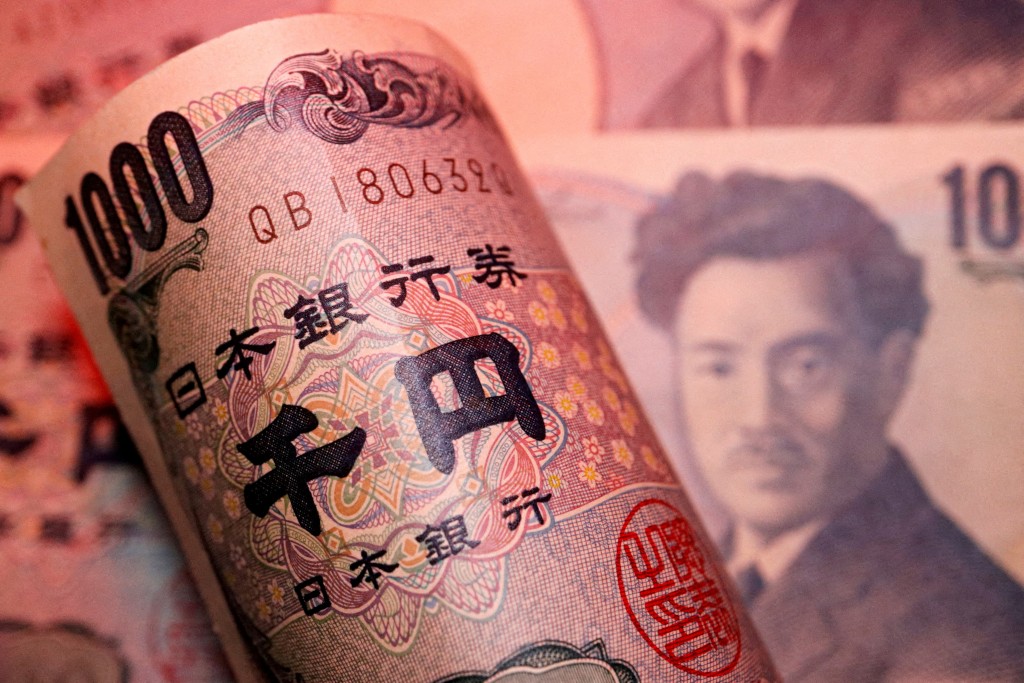
The yen extended gains on Thursday after a sudden burst higher in the previous session, though traders stopped short of attributing the move to intervention by Japanese authorities and instead pointed to rising bets on Bank of Japan rate hikes.
The yen rose almost 1.5 percent to a high of 156.36 per dollar, its strongest in a month, extending its 0.9 percent jump overnight.
Markets were on alert for any official intervention from Tokyo, though analysts suggested the move was more orderly than is typically the case when Tokyo steps in.
The Japanese currency's rally was broad-based, with the euro sliding more than 1 percent to 181.62.
"I believe there's little incentive for Japanese government to intervene at this moment," said Kazumasa Ishii, a strategist at UBS SuMi Trust Wealth Management, citing "limited" signs that dollar could scale a new multi-decade high in the near term.
The renewed yen strength follows hawkish comments from Bank of Japan board member Hajime Takata, who said on Wednesday the central bank should conduct interest rate hikes nimbly to counter intensifying inflationary pressures, rather than adhere to a fixed semiannual pace anticipated by markets.
" remarks are the strongest messaging we've heard from the board and reintroduces the idea of an expedited rate hike trajectory," Citi said in a client note, adding that the market is taking Takata's comments "more seriously".
A BOJ rate hike this month is nearly fully priced in by markets. 0#JPYIRPR
Since a rare joint yen-buying intervention between the US and Japan on July 31, the yen has struggled to find lasting support, coming under pressure from still-wide interest rate differentials, fiscal worries and a renewed spike in energy prices.
Chris Turner, global head of markets at ING, said a Federal Reserve rate hike in September — which markets are increasingly pricing in after Chair Kevin Warsh's hawkish speech last week — would likely limit the dollar's fall against the yen.
"Any sustainable turn lower in now probably requires a much more hawkish Bank of Japan and some new initiatives to encourage domestic investment in Japan," he said.
WAITING ON PAYROLLS
In the broader market, the yen strength left the US dollar on the back foot, with the euro up 0.2 percent to US$1.161. Sterling rose 0.1 percent from a three-week low and last bought US$1.35.
Against a basket of currencies, the dollar dropped 0.4 percent to 99.25.
The New Zealand dollar rose 0.3 percent, having slid 0.7 percent on Wednesday following a dovish hike from the country's central bank.
The Canadian dollar extended overnight gains after the Bank of Canada held rates on Wednesday but signalled its readiness to tighten policy to rein in inflation.
All eyes are now on Friday's US nonfarm payrolls report, where analysts forecast an increase of 56,000 in jobs, following July's shock drop of 23,000, with unemployment holding at 4.1 percent.
A much weaker outcome would probably be needed to greatly lessen the risk of a September rate hike from the Federal Reserve, with markets now pricing in a 61 percent chance of a move.
"Payrolls, I think, could come in solid again, given the supply shocks like the lower immigration and increased retirement," said Carol Kong, a currency strategist at Commonwealth Bank of Australia, "that would give another boost to FOMC rate-hike pricing."
Reuters