
Read More
Hong Kong’s international character has built a connectivity bridge with Canada based on mutual understanding and affinity, which creates a springboard for the entire Asia-Pacific region, says Alex Tam, chairman of the Canadian Chamber of Commerce in Hong Kong.
ADVERTISEMENT
SCROLL TO CONTINUE WITH CONTENT
With over 300,000 Canadians in Hong Kong and almost 500,000 Hongkongers in Canada, Tam sees the city’s international awareness as one of its key competitive factors that cannot be seen in other places.
“You have people in Hong Kong that understand Asia and Canada at the same time, because of that internationalization, and Asian companies looking for contacts and consultation to invest and trade with Canada and the West,” Tam commented in an exclusive interview with The Standard.
He explained the role of Hong Kong as a connector, not just to the Chinese Mainland but also to the Asia-Pacific region – a great stopping point for Canadian businesses planning to invest and trade in China, or other Asian countries.
Delving deeper into the bridging role between the two places, Tam emphasized that the presence of a large Hong Kong community in Canada, alongside Canadian university alumni and Canadians living in Hong Kong, has forged a channel of mutual affinity and understanding – a competitive advantage shared by both places, and unmatched by any other financial hub in Asia.
The Canadian Chamber of Commerce in Hong Kong represents 3,200 members and is growing, highlighting successful stories such as those of Canadian insurance companies Manulife and Sun Life, and exceptional leaders in the business community. The Chamber works in many directions - helping Hong Kong and regional investors better understand and access opportunities in Canada and unlocking the full potential of the Canada-Hong Kong relationship by leveraging the strong Canadian community here.
When asked about the city’s role in the broader regional economy, Tam described it as “second to none” in Asia. Among the top three financial centers and largest IPO centers globally, Hong Kong offers access to more than 140 banks, major financial sponsors, a well-regulated market and free capital account system, a free port, as well as a sound legal system. Potential investors find it easy to access capital and tap into financing safely as risks are minimized, and rules of engagement and business are transparent, offering strong investment and trade protection.
Thanks to the common law framework, the city has top lawyers from leading global jurisdictions, in addition to a strong foundation of accounting firms and other financial and business services providers that accommodates businesses’ needs, helping boost investor confidence.
Tam acknowledged the commerce-oriented approach of the Hong Kong Monetary Authority, which embraces economic and global financial technology such as stablecoins, central bank digital currencies, and tokenized assets, thus ensuring that people can benefit from financial innovation, while being protected against the potential risks. The regulator also provides easily accessible and well-governed banking as well as sophisticated investment and wealth management capabilities. Tam regards this combination of factors as being unique to Hong Kong within the region.
Beyond its global financial interface, Hong Kong boasts a world-class, affordable, and punctual public transport network, alongside an airport that offers convenient international flight connections. This is combined with 22 degree-awarding higher education institutions, five of which consistently rank among the world’s top 100, and a diverse ecosystem of international and local schools, including four Canadian accredited K-12 international schools. All this not only attracts talent but also serves talent, which in turn helps to grow the city’s financial sector and others, Tam says.
But what really attracts talent to Hong Kong is opportunity, says Tam. Situated on the doorstep of one of the world’s largest growth market - Chinese Mainland - and just a short flight from key Asian hubs, this unparalleled accessibility makes the region a magnet for Canadian enterprises seeking to scale into Asia.
Recognizing the “can-do” attitude, hospitality, and driven mindset of local Hongkongers, Tam believes all businesses that come to the city incubate a unique quality of resilience and efficiency, regardless of their geographical background.
“Whether you’re Cantonese, Shanghainese, a Western expatriate or Canadian, you become a Hongkonger. And I don’t think you can find that anywhere else in the world,” Tam added.
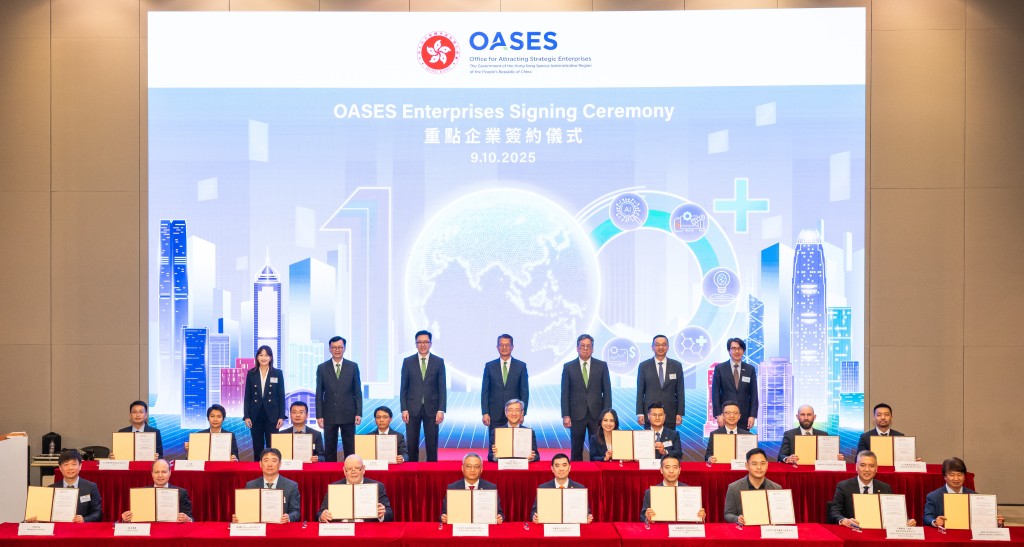
Canadian companies are among the strategic enterprises attracted by OASES to establish or expand their operations in Hong Kong.
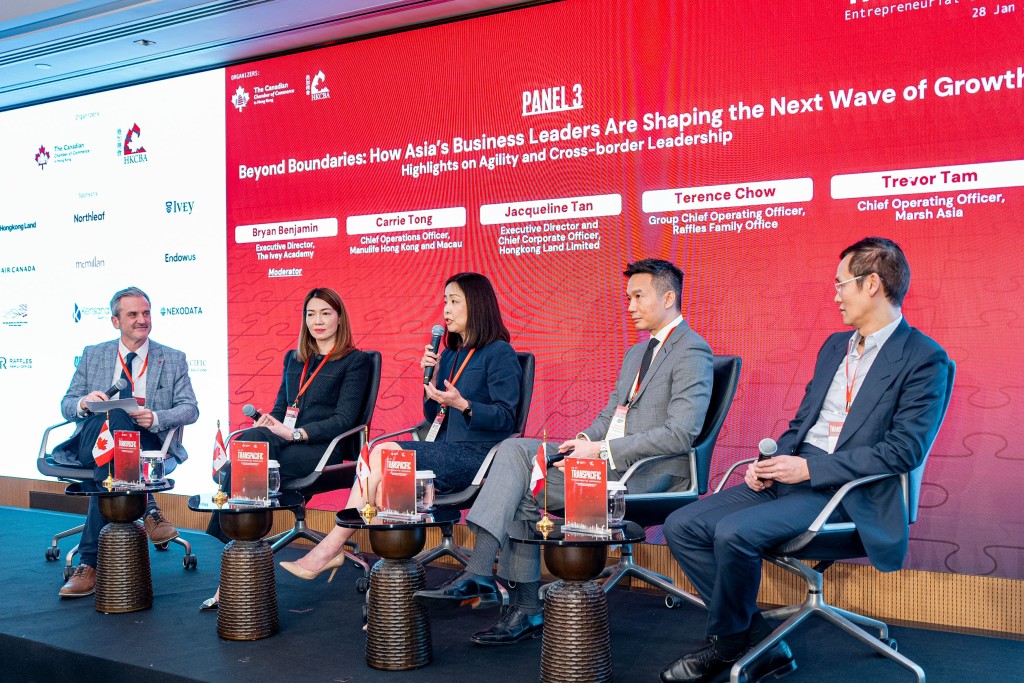
The 2026 TransPacific Entrepreneurial Conference held in conjunction with the Asian Financial Forum brought in delegates from Canada and connected them with CanCham members.
HK-Canada ties power global coexistence
The Chamber aims to strengthen and deepen the long-standing relationship between Canada and Hong Kong, which is built on strong economic ties and deep people-to-people connections. While business trends come and go, Canadian institutional capital has deep roots in Hong Kong. Apart from household names in the insurance industry, major Canadian banks, including the Canadian Imperial Bank of Commerce, have operated in the city for 60 years or longer, says Alex Tam. They bring financial expertise, capabilities and jobs, which help to build the international financial ecosystem.
The Chamber focuses on connecting people for business opportunities and offers numerous insightful events like its leadership and mentorship programs. It also promotes Hong Kong’s advantages support programs to its membership, by well augmenting the Hong Kong government’s structural frameworks, such as the Office for Attracting Strategic Enterprises (OASES), the “Hong Kong Talent Engage” initiative, and localized AI training courses, which are highly promoted among members.
Tam suggested that the diverse and comprehensive Chamber services are made possible because of the prominent Canadian presence in Hong Kong.
“There is an educated, highly capable Canadian presence in every single boardroom in Hong Kong,” Tam said, noting that there are currently over 200,000 Canadian university alumni professionals in Hong Kong.
Tam highlighted the ongoing OASES program carried out by the Hong Kong government, which has helped multiple Western firms establish a presence in Asia through opportunities in Hong Kong, with Kensana Health from Canada as a most recent example. Intact Financial , also from Canada, set up in the Hong Kong Science Park, capitalizing on the city’s FinTech ecosystem.
The Hong Kong-Canada synergy culminated brilliantly at the Chamber’s recent 2026 TransPacific Entrepreneurial Conference, held in conjunction with the high-profile Asian Financial Forum and attracting over 800 attendees from 18 countries and territories. Looking to the future, the Chamber expressed optimism regarding the city’s growth potential with new projects like the Northern Metropolis project, which is expected to elevate the local innovation ecosystem alongside existing institutional strongholds such as Hong Kong Science Park and Cyberport.
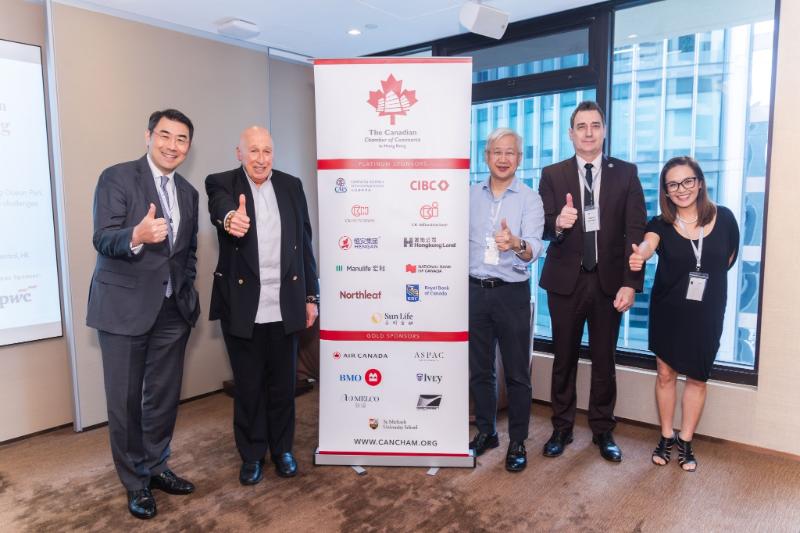
With over 15 committees to support 3,200 members, CanCham holds about 70 events each year connecting members with opportunities in Hong Kong, Canada, and Asia.
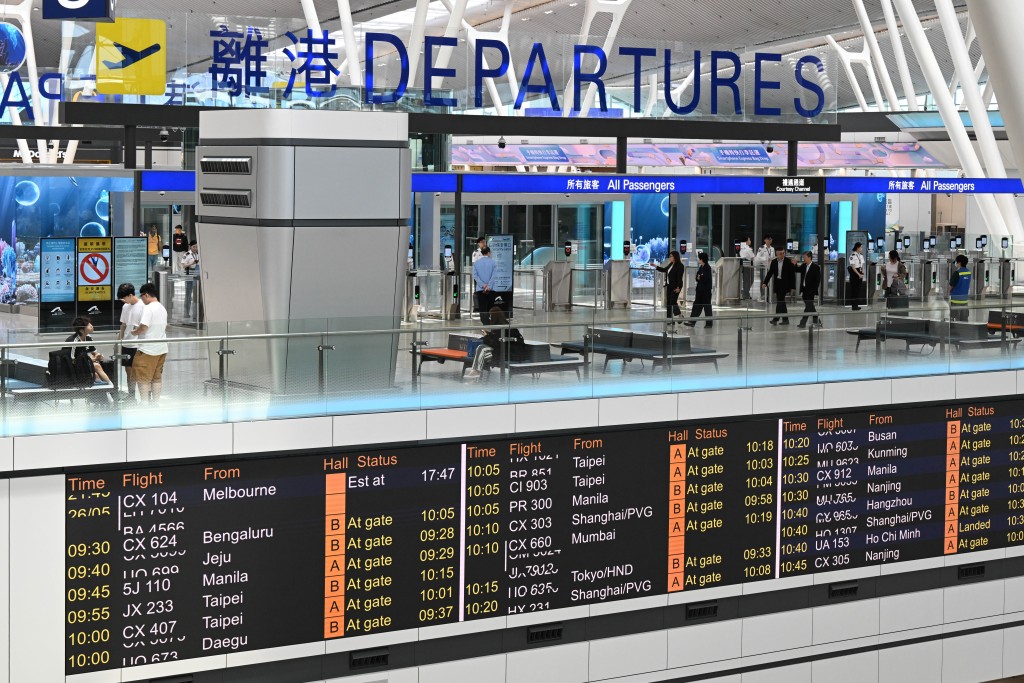
The opening of Terminal 2 of the Hong Kong International Airport expands the city’s global flight capacity and connectivity.
A home away from home
To understand the modern Hong Kong Canadian identity – which is increasingly more common nowadays – one needs to look no further than Alex Tam. Born and raised in Canada by his Hong Kong parents, his life has been a fluid motion between the two cultures.
Relating to his Hongkonger identity, Tam agreed that locals are “efficient and fast."
“Hong Kong is the fastest place in the world. People here just get things done, and make sure things are done quickly and well,” he said.
“It’s difficult to compare which one is ‘better’. It’s not in competition, the sum is stronger and shares common values.”
Tam decided to relocate to Hong Kong in 1997 from a major Canadian bank. Driven by a deep personal affiliation with the city of his parents, he built his career here.
It was in Hong Kong that he met his wife, a Singaporean national whose family also happened to attend university in Canada. Their two sons were born and educated in local and international schools in Hong Kong.
However, it was not just the corporate hustle that kept him anchored. It was also the discovery of an international community that surpassed expectations.
He emphasized Hong Kong’s key strength as a truly international city, where people have “an understanding that they might not get elsewhere in other places.” This environment proved essential to his growth, especially through the Chamber. There, he found more than just business connections; he became a key architect of Hong KongCanada trade, leveraging the network’s camaraderie to foster powerful synergies while solidifying his own leadership.
For him, the sheer scale of the Canadian population in Hong Kong made it easy for him to get connected and fit in to his home away from home.
Despite living in Asia for nearly three decades, the Canadian lifestyle remains a core part of the Tam household. Having grown up skiing and playing ice hockey on frozen Canadian rinks, Tam preserves that connection by organizing an annual family ski trip to hit the ski slopes in Canada, and stay in touch with family and friends there.
Locally, he has traded the ice rink for Hong Kong’s accessible, highly active tennis community, noting that the city offers a vibrant sports culture.
Yet he finds his greatest comfort in the quiet, tight-knit neighborhoods of the city.
He speaks fondly of spending time in Happy Valley, enjoying its village-like atmosphere, ducking into local “cha chaan tengs” for traditional egg tarts and wonton noodles, or spending an afternoon in a coffee shop – embracing flavors of both the East and the West.

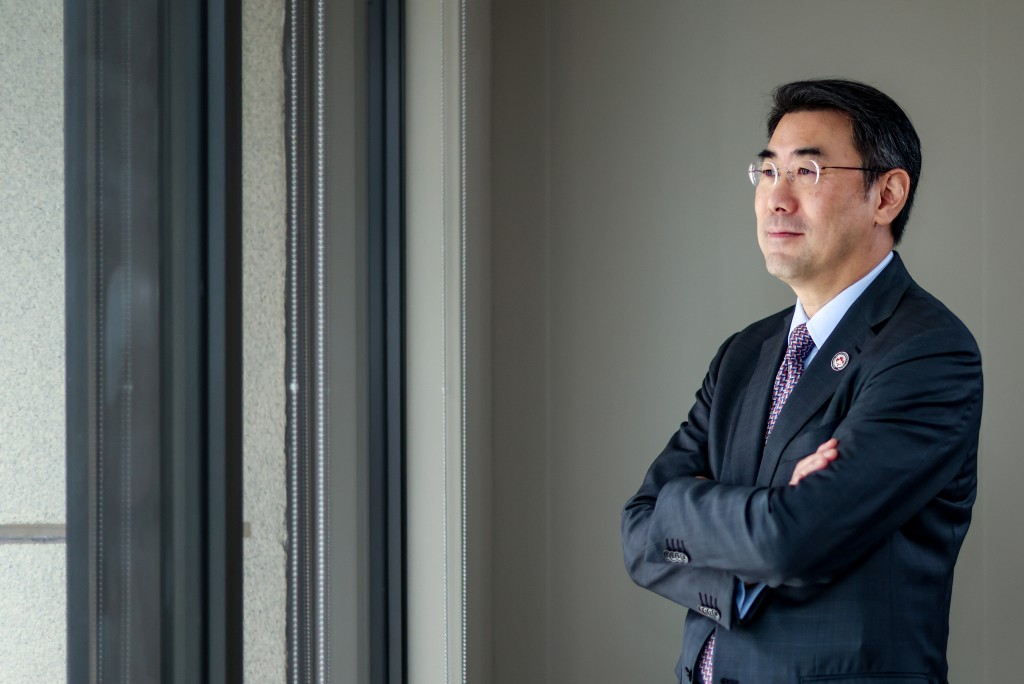
Alex Tam