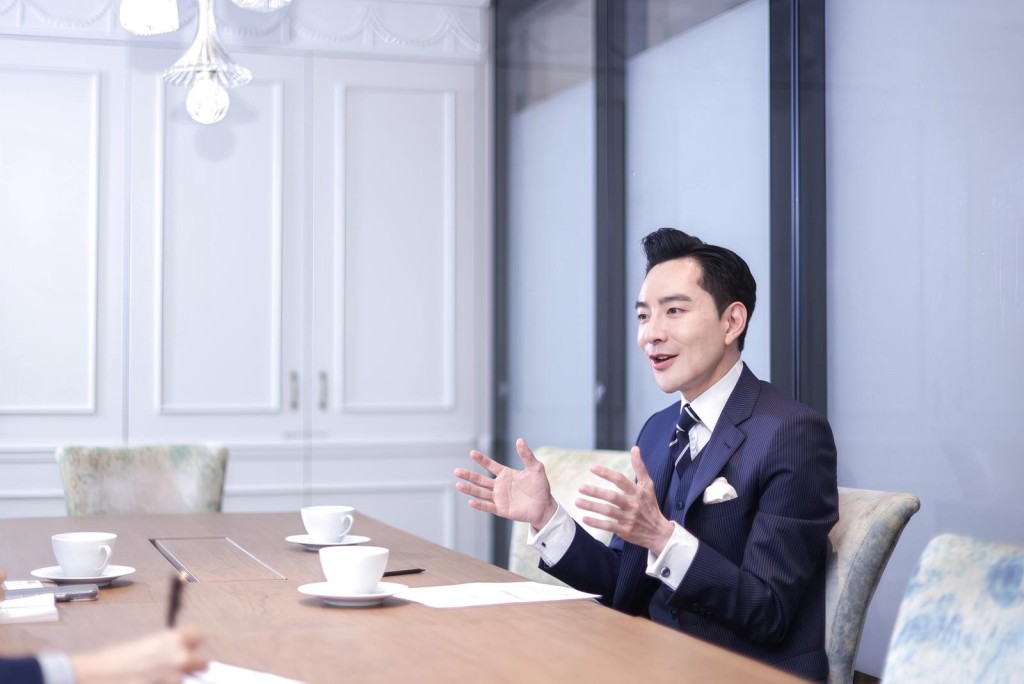
While technology can be replicated and capital secured in any market, an artificial intelligence company’s true value ultimately lies in its founders’ capabilities, said Calvin Lo, chief executive of R.E. Lee International.
In the international capital market, this scenario is called “founder risk,” where a company’s thinking, creativity, major decisions, investor relationships, financing capability, and even market confidence all become dependent on one individual – the founder, who becomes the company’s greatest risk, Lo said in an exclusive interview with Sing Tao Daily, The Standard’s sister publication.
Lo’s remarks came after high-profile chief executives at several AI companies recently resigned, causing their stock prices to plunge by up to 5 percent in a single day, wiping out their market value by US$225 billion (HK$1.76 trillion).
He believes founder risk cannot be eliminated, but it can be significantly reduced if founders begin to address three key areas: leadership continuity, succession planning, and business continuity.
Founders need to establish leadership continuity plans early to reassure market confidence, rather than waiting until crises arise. “Who has the authority to represent the company? Who speaks to the banks? Who reassures investors? Who makes decisions that simply cannot wait?” Lo said, noting that markets tend to be more resilient when dealing with disappointing results, economic downturns, and strategic errors, but less so when facing uncertainty.
Lo also pointed out that founders should consider whether the shares are inherited by spouses, children, or business partners, and whether it is appropriate to pass the legacy to family members with no experience running the business. “Many founders spend their lifetime building a company, but they have never thought about who will succeed their business when they pass away,” Lo said.
For that reason, many sophisticated businesses establish succession structures years ahead, he said. Buy-sell agreements, for example, enable shareholders to decide in advance the transfer of ownership and its value in the event a shareholder dies or becomes permanently unable to operate the business.
Lo highlighted keyman insurance – insurance that a business takes out on its key employees – as a tool for large corporations to “buy time” in continuing business operations, which helps stabilize markets, avoid fire-sale asset sales, and maintain bank support during vulnerable periods.
Early in his career, Lo participated in one of the largest keyman insurance arrangements of its time for the founder of a globally recognized software company. The amount at risk was so substantial that multiple international insurers were required to share the exposure.
“What everyone focused on wasn’t the premium. The only question anyone cared about was this: if this individual suddenly disappeared tomorrow, how much disruption would the entire organization face? The arrangement wasn’t designed to make shareholders richer. It was designed to give the company time. And sometimes, time is the most valuable form of capital an organization can possess,” he said.
As the FIFA World Cup once again captures global attention, Lo said professional football is an example of how organizations increasingly depend on exceptional individuals. “A world-class footballer isn’t simply an athlete. That individual supports an entire commercial ecosystem. Broadcasting rights, sponsorships, merchandise, ticket sales, licensing revenue, and even club valuation may all be connected to one person.”
Meanwhile, Lo said that as AI, data, and analytical tools become universal, investors will not be asking who owns a particular AI tool but who creates a better outcome from it.
“AI can provide answers, but people still decide the direction. AI can analyze risk, but responsibility still belongs to people.
“The real responsibility isn’t simply to build a successful business. It is to build an institution that continues to thrive long after you’re no longer part of it,” he said.