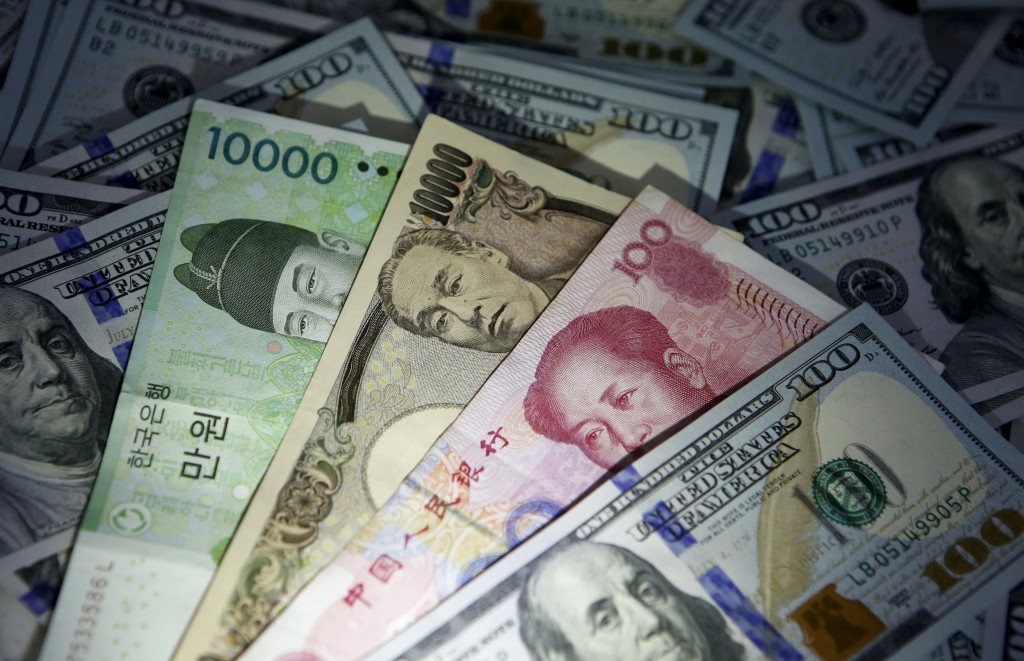
South Korea’s state-run pension fund carried out foreign exchange hedging on Monday that helped to lift the won from 17-year lows, two sources with knowledge of the matter said, as policymakers vowed to curb volatility in the currency market.
The move boosted dollar supply in the onshore market and signals that the National Pension Service (NPS), a major market player, sees the won near a short-term bottom.
“There was dollar selling by the pension fund as dollar-won exchange rates were at high levels,” one of the sources said, declining to be identified due to the sensitivity of the matter.
The NPS did not immediately respond to a request for comment outside normal business hours.
The won rebounded nearly 2 percent on Monday to 1,529.8 per dollar, after hitting its weakest since March 2009 at 1,561.5 on Friday, as authorities warned against excessive volatility.
Foreign exchange authorities issued verbal warnings for the first time since May 22, with traders also suspecting official dollar-selling operations.
“It seemed there were dollar sales by both authorities and the pension fund today,” one local currency trader said.
The central bank does not comment on currency intervention rumours.
Earlier this year, the NPS raised its hedging ratio to 15 percent from 10 percent and adopted a more flexible approach as part of broader efforts to curb persistent currency weakness.
On Monday, authorities also met local banks, urging cooperation to prevent currency market disruption.
Reuters